What is RAG (Retrieval-Augmented Generation)? A Marketer's Guide
by Shai Belinsky9 Min.
Oct 01, 2026
For the past year, the big question in digital marketing has been: are we showing up in AI answers? Reasonable question board level question that induces valid panic in marketing teams across the globe.
But (it’s a pretty big but)… what does visibility actually give businesses? Cue more panic, as there’s currently no answer.
Visibility is a tricky metric to measure anyway, and the attribution of impact is pretty much non-existent. So at Similarweb, we wanted to fix that and provide some benchmarks for the impact of visibility.
The findings, upfront:
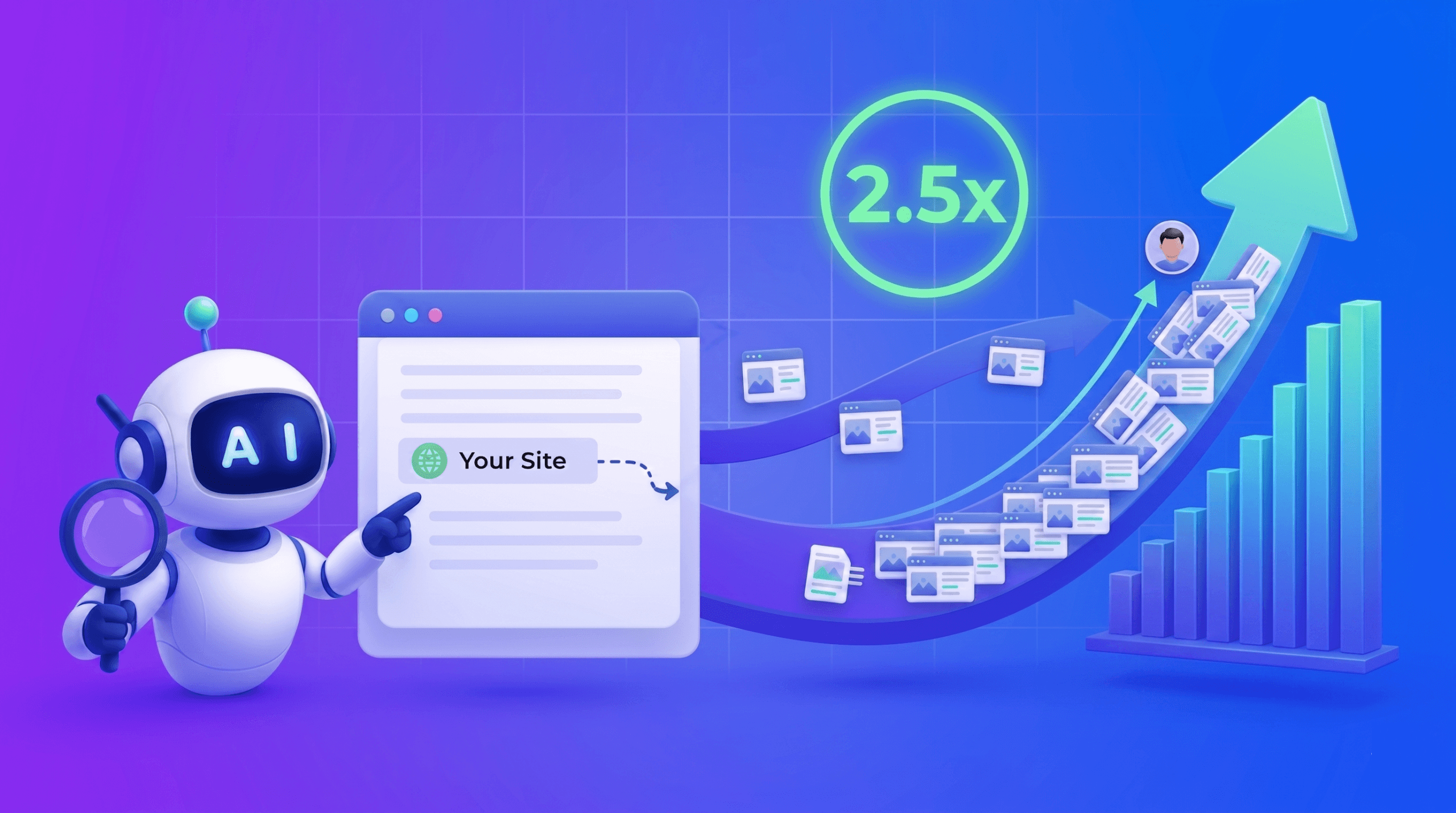
🔍 Being recommended in AI makes users 2.5x more likely to visit your site in the next seven days, even with no ‘direct’ referral to track
📊 That traffic largely arrives via branded search, not AI referrals, so optimising and protecting your brand on SERP should be tied to your AI visibility strategy
🚀 AI-influenced visitors view nearly twice as many pages and spend twice as long on site compared to standard visitors. They arrive ready to engage.
📉 None of this shows up properly in your analytics. Yet.
I want to start by saying the power of visibility is complex. Anything that involves brand and influence always is. It’s not an exact science for measurement and downstream traffic attribution isn’t the only factor.
But it is an import metric. Especially given most brands are losing traffic right now, and with it their way to make money. There isn’t a simple answer to “how do we get our traffic back”, especially with an agentic future knocking at the door.
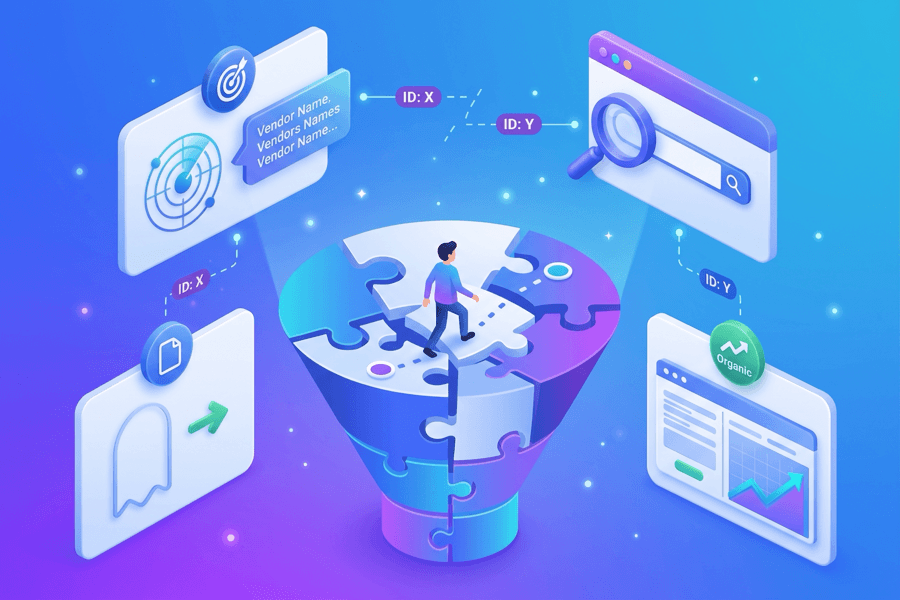
But back to the study. When a user asks ChatGPT for a product recommendation, reads the answer, and then searches for that brand three days later, your analytics has no idea those two things are connected. It logs a branded search visit and moves on. The AI recommendation gets zero credit.
But that AI-influenced traffic is real. It’s just hiding.
To prove it, we tracked thousands of real user journeys across Finance, Travel, and Beauty. We followed users who asked ChatGPT an industry-relevant question, received a brand recommendation, and then watched what they did for the next seven days. We only included users who hadn’t visited the brand before and hadn’t already mentioned it in their prompt (so we were measuring genuine influence, not confirmation bias).
The result is the first study to connect AI recommendations to real downstream behaviour using actual user data.
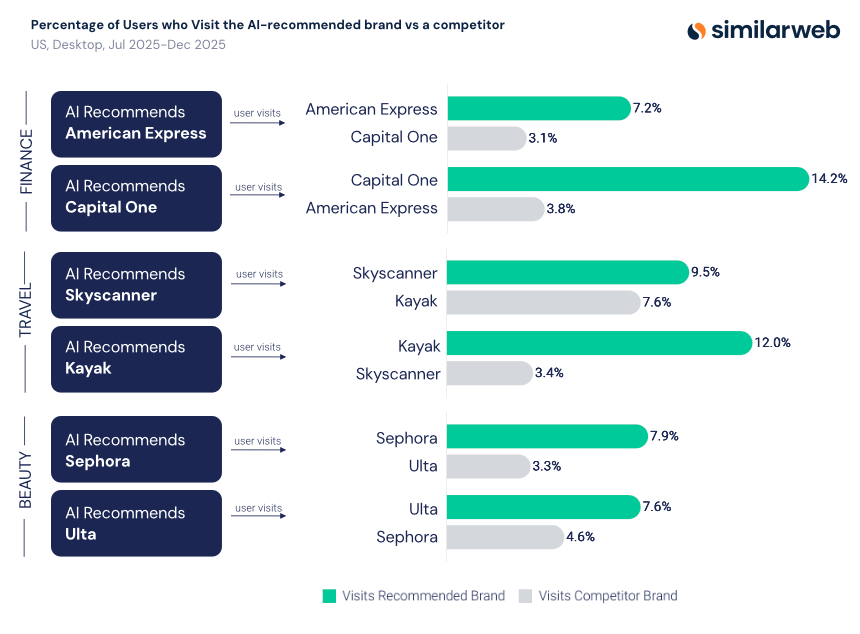
Across all three industries, users who received an AI recommendation were 2.5 times more likely to visit that brand’s website in the seven days that followed.
And it works both ways. When the AI recommended a competitor instead, the traffic went to them.
Rand Fishkin, co-author of Zero Click Marketing and founder of SparkToro, summed it up well:
“This study is a near-replica of how advertisers in the 20th Century measured the impact of billboards, TV, and radio advertising using lift in store visits or sales. Whether we’re talking about a brand’s visibility on the side of a highway in 1926 or its presence in an AI tool’s response in 2026, it’s clear that influence is happening. What marketers must do now is change the way they run measurement and attribution.”
When AI-influenced users do visit a brand, over half arrive via a branded search query.
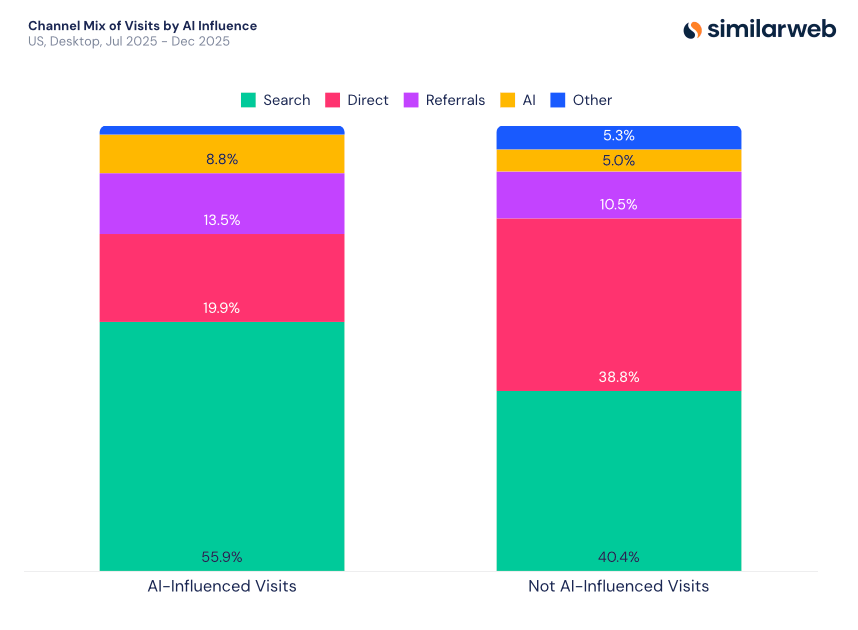
For standard visits, search accounts for around 40% of traffic. For AI-influenced visits, it’s closer to 56%. AI is essentially priming people to search for brands by name.
Which means branded search is more important than ever, and your internal strategy should be to optimize for SEO and protect with paid. With fewer clicks available in search overall, competitors are already bidbing on branded terms to hoover up demand they didn’t generate. If you’re investing in AI visibility and not protecting your brand on the SERP, you’re going to lose custom.
AI visibility is real, it’s measurable(ish), and it has a downstream impact on traffic and revenue. It’s just operating on a timeline and through channels that your current attribution model can’t see.
Three things to keep a close eye on: visibility (being present within the right conversations does equal more brand recognition and visits), referral traffic from AI (still small, but evolving fast – lately it’s been sending out x3 more traffic recently), and paid placements in AI from ChatGPT and Google, which are becoming a real lever for brands that need to close visibility gaps quickly.
Invisible brands don’t just miss the mention. They lose the visit and hand it straight to a competitor.
by Adelle Kehoe
Director of Product Marketing
Adelle is the Director of Product Marketing at Similarweb. She works closely with the SEO and Marketing industry to bring meaningful data, stories, and products to life.
Give it a try or talk to our insights team — don’t worry, it’s free!