What is RAG (Retrieval-Augmented Generation)? A Marketer's Guide
by Shai Belinsky9 Min.
Oct 01, 2026
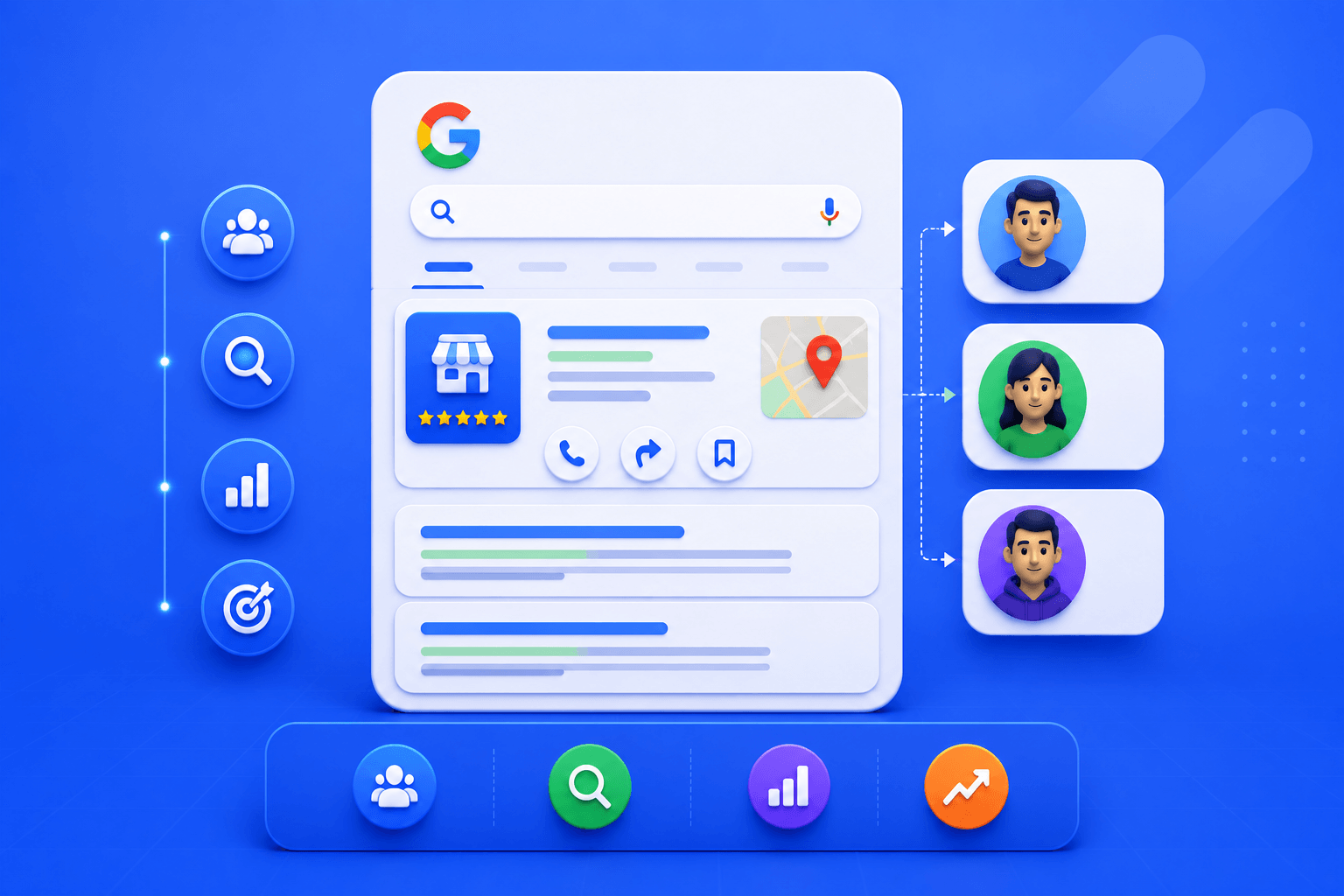
Google Search Profiles are claimable, branded landing pages inside Google Search and Discover. They give publishers a direct audience follow mechanism, a dofollow link from Google’s own domain, and a strengthened entity footprint in the Knowledge Graph.
On June 4, 2026, Google gave publishers something they have been quietly demanding for years: a claimable, branded landing page inside Search itself. Not a ranking factor. Not a schema type. An actual owned surface: a follow button, a content aggregation layer, and a direct URL you control.
The feature is called Search Profiles, and the timing is not accidental.
A randomized field experiment by researchers at the Indian School of Business and Carnegie Mellon University, published in early 2026, measured a 38% drop in outbound organic clicks on queries where AI Overviews appeared. Zero-click searches on those same queries jumped from 54% to 72%.
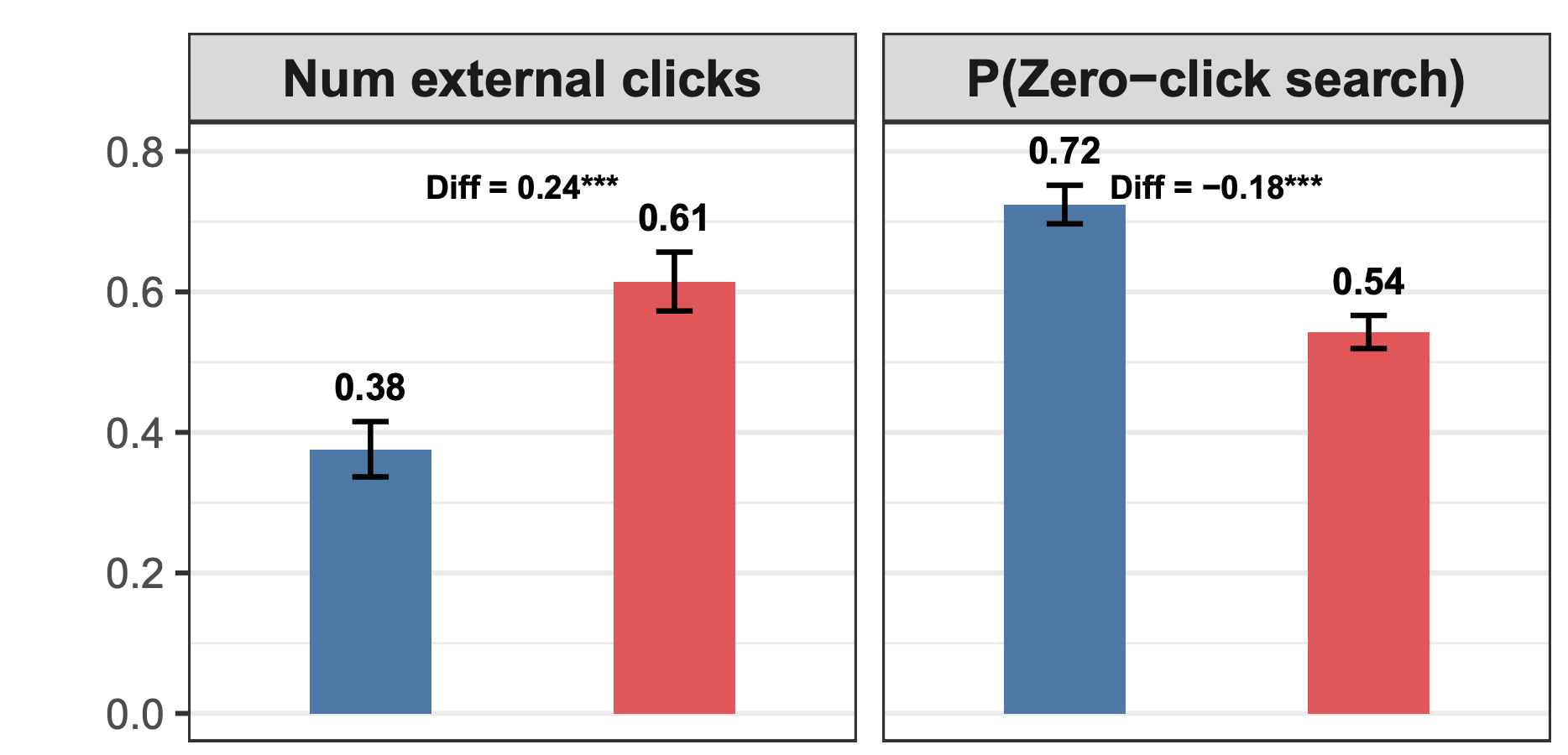
Google built a feature that keeps users on Google. It works. The question for publishers is what, exactly, you can do about it.
Search Profiles are one of the more concrete answers Google has offered in a long time. This guide covers what they are, who qualifies (including the exact follower thresholds), how to claim yours step by step, and what the actual SEO implications are, including a detail most coverage has glossed over entirely.
A Google Search Profile is a claimable, public-facing landing page inside Google Search and Discover that aggregates a creator or publisher’s articles, videos, and social posts in one branded space. It includes a follow button that increases the likelihood that the publisher’s content will appear in followers’ Discover feeds, and a shareable URL that can be embedded anywhere: newsletter footer, social bio, author byline.
Think of it as Google’s answer to link-in-bio tools, but positioned upstream. A Linktree page activates after someone lands on your social profile. A Search Profile activates at the search itself, when someone types your name or taps your byline in their Discover feed. The reach window is fundamentally different.
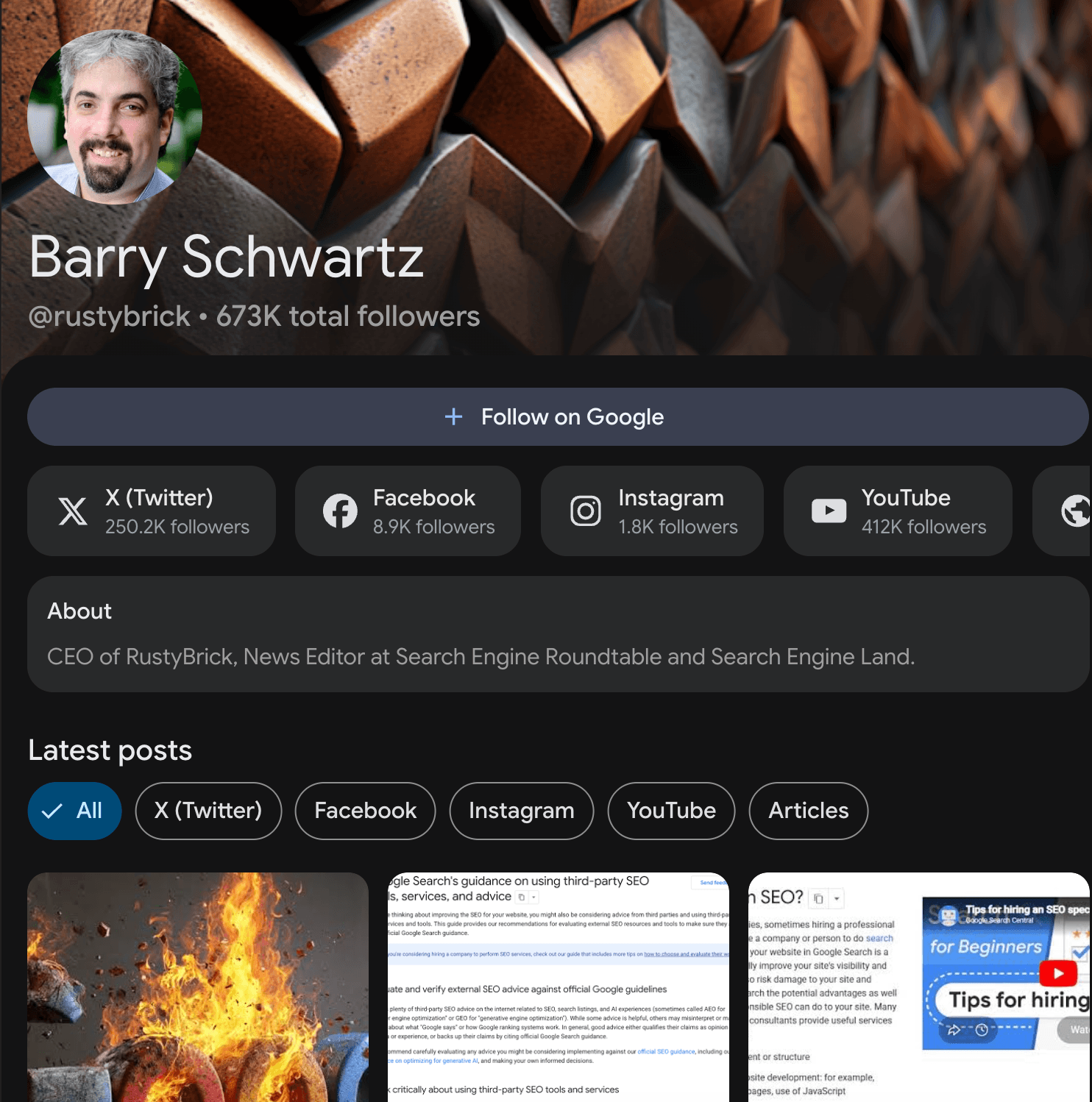
Google product manager Ibrahim Badr described it as “a dedicated, shareable space to highlight content across platforms, and help audiences find accurate, up-to-date information about sources on Search.” The profile can be accessed through three entry points on mobile:
Each entry point includes the follow button. When a user follows you, Google will surface your content more prominently in their Discover feed, the personalized feed on the Google app home screen. That is the primary visibility mechanism.
Once claimed, a profile displays:
Content from linked platforms syncs within approximately 24 hours of setup. The profile does not require ongoing manual updates. It automatically pulls from your connected accounts.
Google Search Profiles are currently available in the US to publishers and creators with a sizable following on at least one major platform. The minimum thresholds are 100,000 followers on YouTube, Instagram, or X, and 300,000 on TikTok. The managing account holder must be 18 or older.
| Platform | Minimum following required |
| YouTube | 100,000 subscribers |
| 100,000 followers | |
| X | 100,000 followers |
| TikTok | 300,000 followers |
The thresholds are deliberately high. This rollout is built for established publishers, named creators, and brands with a real audience on at least one platform, not accounts that are just getting started. Google has confirmed that availability will expand over time, both in terms of eligibility requirements and geographic reach beyond the US.
A few account rules that the headlines have tended to skip:
An adult can claim and manage a profile on behalf of someone under 18. You can also maintain separate profiles for separate brands or identities, but each one requires its own Google Account. The handle attached to your profile defaults to match your most-followed linked account.
A practical note: rollout has been uneven. Some publishers from Google’s private beta hold active profiles without meeting the stated thresholds, a detail documented shortly after launch. If you’re close to the follower line, it’s worth checking your eligibility directly at creators.google/profile rather than assuming the public rules are the whole story.
Most brands and individual SEOs won’t hit 100,000 followers tomorrow. That doesn’t mean there’s nothing to do. The right response is to treat the qualification bar as a signal of what Google is building toward and to start building the entity signals that will matter when eligibility opens.
Keep your entity signals consistent across your site, LinkedIn, and major platforms. Google needs to identify a single entity before it can build a profile around it. Inconsistent name formatting, mismatched descriptions, and disconnected web presence slow that process down.
Pick one platform and concentrate there. Spreading effort across four platforms at 25,000 followers each gets you nothing. One platform at 100,000 gets you a profile. The math is unambiguous.
Invest in AI brand visibility. How AI engines describe your brand right now, including the language they use and the attributes they associate with you, is being built from your existing web presence. That’s a separate optimization problem from the Search Profile eligibility question, and it doesn’t wait for you to cross a follower threshold.
You claim a Google Search Profile at creators.google/profile. The process takes one session. Here is the full flow:
Your profile URL will be at profile.google.com/@[handle]. Share it in your newsletter footer, in your author bios, in social media profiles, and anywhere you currently point people to a central hub.
This is the part most setup guides skip over. Claiming a profile may trigger the creation of a Knowledge Panel for eligible publishers and creators who don’t have one yet. If you already have a Knowledge Panel, it gets enhanced: your updated avatar, latest content, and a direct link to the profile get added.
From an entity SEO standpoint, that connection matters more than most coverage has acknowledged. The Knowledge Panel is how Google communicates to users, and to its own systems, that a given entity is real, verified, and understood. Strengthening it strengthens your entity footprint in the Knowledge Panel infrastructure, which in turn supports AI retrieval and citation eligibility.
The profile isn’t just a discovery surface. It’s a structured signal about who you are.
Google Search Profiles do not affect organic search rankings. Google’s official documentation is explicit on this point, and multiple independent analyses have confirmed it. If someone claims a profile expecting their pages to start ranking higher, they will be disappointed.
That’s the accurate answer.
Here’s the more interesting one: profiles do something rankings can’t measure. They build entity signals, earn link equity from Google’s own domain, and create a direct distribution channel that bypasses the algorithm entirely.
There are two specific implications that most coverage has underweighted or missed entirely:
Cyrus Shepard of Zyppy SEO, and a practitioner whose observations on this topic I take seriously, noted shortly after launch that all links in Google Search Profiles are currently followed. Not nofollow. Followed.
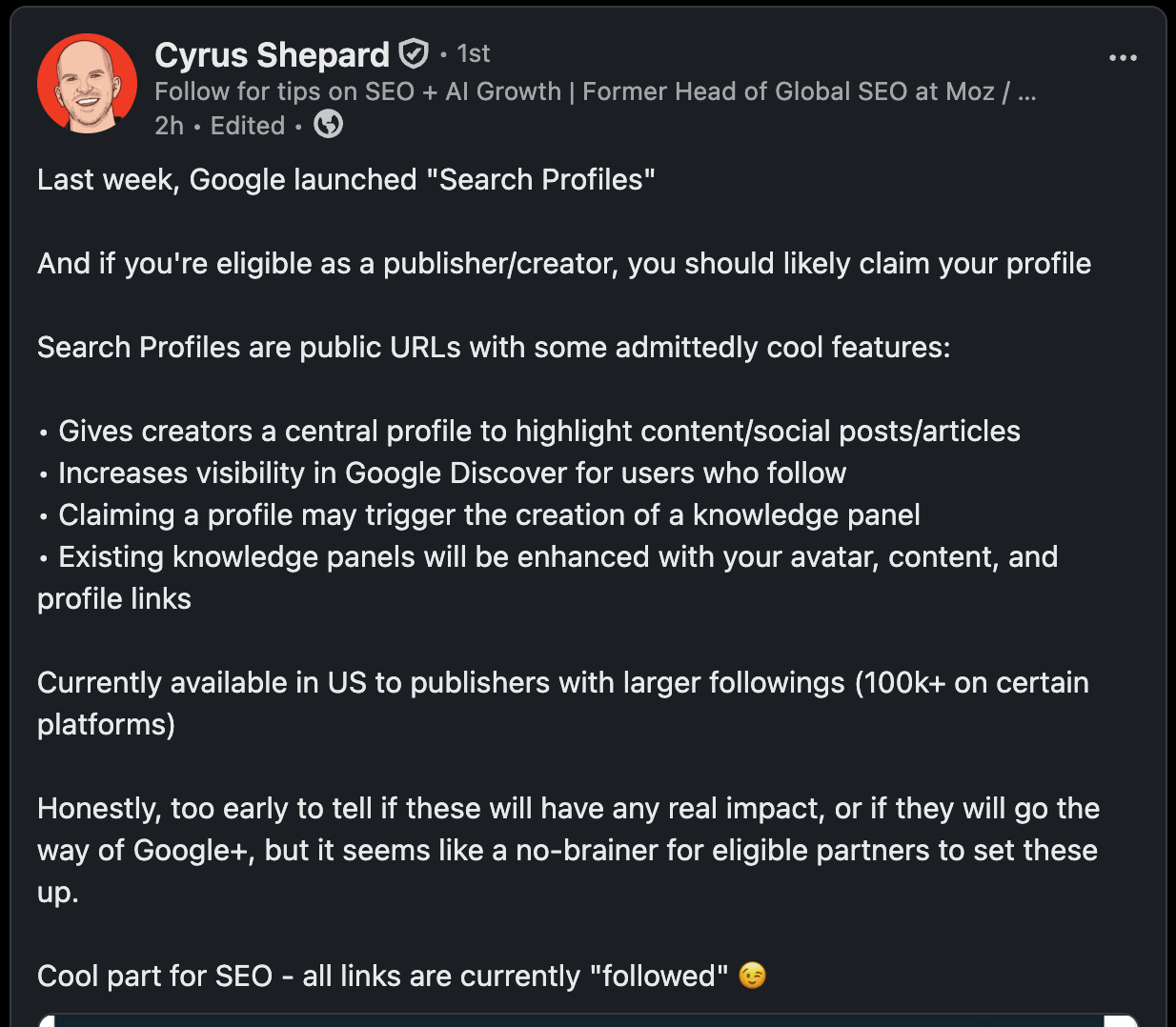
Let’s think about this for a moment: You have the opportunity to earn a dofollow link from Google-owned domain profile.google.com that points directly to your website. This is not an argument that it will dramatically affect rankings. The argument is that if you qualify, there is no rational reason not to claim the profile. The link equity alone justifies the 30 minutes of setup time.
Whether Google changes the link treatment as the feature scales is an open question. The answer right now is dofollow.
The second implication is less talked about but potentially more durable.
Google’s understanding of who you are as an entity (publisher, brand, creator) determines how confidently it surfaces you in Search, in AI Overviews, and, increasingly, in AI search engines that use Google’s entity data as a credibility signal. A Knowledge Panel is the clearest public expression of that understanding. A strong entity footprint means Google has connected the dots between your site, your social presence, your authorship, and your area of expertise.
A Search Profile, particularly one connected to a Knowledge Panel, feeds directly into that entity footprint. It centralizes the signals Google uses to build entity understanding in the Knowledge Graph: your name, your bio, your website, your connected accounts, and your content history. The cleaner and more consistent those signals are, the more confidently Google can represent you, and the more confidently AI engines trained on Google entity data can cite you.
This is the connection that makes Search Profiles relevant beyond the 100,000-follower club. The eligibility bar is temporary. The entity optimization principles that it surfaces are permanent.
Then there’s the pure Discover play, which, in a world where organic search clicks are declining, deserves more credit than it usually gets.
Discover is Google’s personalized content feed, surfaced on the Google app’s home screen. For publishers in the right niches, it drives significant mobile traffic, often outperforming organic search during peak cycles. The channel matters, and a Search Profile gives you the most direct way into it: a follow button that puts your content in front of users who have explicitly said they want it.
Google Discover SEO comes down to one mechanism: Google Discover SEO comes down to one mechanism:
earning follows. When someone follows your profile, your content bypasses the algorithm entirely for that user.
When someone follows your Search Profile, Google explicitly commits to prioritizing your content in their Discover feed. That’s not an algorithm you’re trying to optimize. It’s a direct, declared relationship between your brand and a specific user’s feed. In an environment where AI Overviews have cut organic click rates by 38% per the ISB/CMU study, a mechanism that builds a direct, personalized content relationship with users is worth taking seriously.
If you’ve claimed a profile and want to know whether it’s working, Google is building the infrastructure to tell you, but it hasn’t rolled it out broadly yet.
As of June 8, 2026, Search Engine Roundtable reported that Google is testing a native Insights section inside Search Profiles, surfaced by developer Jane Manchun Wong. The beta dashboard shows:
That data will matter a great deal when it’s widely available. Until then, here’s how to get a meaningful signal now.
Google Search Console: Look at branded query performance. If your Search Profile drives Discover traffic, it will appear in the Discover performance report. Track impressions and clicks from Discover as a separate line from traditional organic search. A growing Discover footprint post-profile-launch is the signal to watch.
Profile URL traffic: Your profile URL (profile.google.com/@handle) is shareable and indexable. Track referral traffic from that URL in your analytics platform. Any direct link placements (newsletter footers, social bios) will generate trackable referral traffic immediately.
AI brand visibility: Over the long term, a stronger entity footprint should correlate with more consistent brand mentions and citations in AI search results. Similarweb’s AI Search Intelligence tracks brand mention rates and citation frequency across AI engines. If your entity signals strengthen as a result of profile claiming and Knowledge Panel enhancement, you should see that reflected in how AI systems describe and cite you over time.
| Measurement surface | What it shows | How to access |
| Google Search Console: Discover report | Impressions and clicks from Discover to your content | GSC > Search Results > Discover filter |
| Google Search Console: branded queries | Whether profile claiming is driving branded search growth | GSC > Search Results > filter by brand name |
| Profile URL referral traffic | Direct referral from profile.google.com to your site | Analytics platform > referral source |
| Search Profile Insights (beta) | Clicks, impressions, top posts, geography | profile.google.com (limited availability) |
| Similarweb AI Search Intelligence | Brand mention and citation rates in AI-generated responses | Similarweb AI Search Intelligence |
The measurement stack here is not fully available yet, which is fine. The profile setup takes 30 minutes. The Insights dashboard will be there by the time you have enough data to need it.
Search Profiles are not a silver bullet. Google has been clear that they don’t affect rankings, and any coverage suggesting otherwise is overselling the launch. They won’t reverse the 38% click decline that AI Overviews have produced in the queries where they appear.
But that’s the wrong frame.
Search Profiles are a new owned surface inside Google’s ecosystem at a moment when owned surfaces are becoming more valuable, not less. They connect to the Knowledge Panel infrastructure that underpins entity SEO. They build a direct, follow-based relationship with users in Discover, bypassing the algorithm entirely for the segment of your audience that chooses to follow you. And for eligible publishers right now, every link in a Search Profile is dofollow.
I’ve been tracking Google product launches long enough to be appropriately skeptical about feature announcements that rarely scale. But the entity SEO signal here is real, the link equity is real, and the Discover follow mechanism is a meaningful hedge against erosion of AI Overview click volume. The setup cost is 30 minutes. For anyone who qualifies, there’s no defensible reason not to act.
For everyone else, the qualification bar is where you start building. Concentrate on one platform, tighten your entity signals, and make sure AI engines can describe you accurately and consistently. The profile eligibility will open up. The entity foundation you build before then is what determines whether the profile matters when it does.
Earning a follow in Google’s ecosystem is the new link. It compounds, it personalizes, and it puts your content in front of your audience before they even know to search for it.
Track how your brand appears and how accurately across AI search responses with Similarweb AI Search Intelligence.
Does a Google Search Profile improve my search rankings?
No. Google’s own documentation is explicit: creating or claiming a Search Profile does not affect organic search rankings. The visibility benefit is in Discover. When users follow your profile, your content is more likely to surface in their personalized Discover feeds. Organic rankings are governed by Google’s core search algorithms and are entirely separate from profile ownership.
What follower count do I need to qualify for a Google Search Profile?
As of June 2026, eligibility requires at least 100,000 followers on YouTube, Instagram, or X, or 300,000 followers on TikTok. You need to meet the threshold on at least one platform. The managing Google Account holder must also be 18 or older. These thresholds apply to the current US rollout; Google has confirmed it plans to expand eligibility and geographic availability over time, so requirements may evolve.
Are the links in Google Search Profiles dofollow or nofollow?
All links in Google Search Profiles were followed shortly after the June 4, 2026, launch, as noted by Cyrus Shepard of Zyppy SEO. This means claiming a profile gives you a dofollow link from profile.google.com pointing to your website. Whether Google changes this link treatment as the feature scales is an open question, but as of launch, the links are followed.
How do I claim a Google Search Profile?
Go to creators.google/profile and sign in with the Google Account you want to manage. Verify one or more social or video accounts that meet the minimum follower thresholds, then customize your avatar, bio, website, and linked platforms. Content from connected accounts syncs within approximately 24 hours. If you already have a Knowledge Panel, access the claim flow through More > View Search Profile inside the panel.
What is the difference between a Google Search Profile and a Knowledge Panel?
A Knowledge Panel is an automatically generated information box that Google creates for notable entities (people, brands, organizations) based on its Knowledge Graph. It appears in search results but cannot be directly created by the entity it represents. A Search Profile is a claimable, customizable page you build yourself. The two connect: claiming a profile can trigger Knowledge Panel creation for eligible publishers and enhance existing panels with your current avatar, latest content, and a direct profile link.
Can I access Google Search Profiles if I’m outside the US?
The full claim and customization flow is currently limited to the US. However, if Google already has an entity record for you, your profile page may already exist at a fixed URL and can be viewed by anyone globally. Some international publishers with existing Knowledge Panels have already been able to view their profiles outside the US. The full global rollout is planned but not yet dated, so if you’re outside the US, check creators.google/profile directly rather than waiting for an official announcement in your region.
How do I measure the impact of my Google Search Profile on traffic?
Use Google Search Console’s Discover performance report to track impressions and clicks from Discover, and monitor branded query trends to see if profile claiming is driving new search volume for your name. Track referral traffic from your profile URL (profile.google.com/@handle) directly in your analytics platform. Google is also testing a native Search Profile Insights dashboard that shows top posts by clicks, impressions, and geographic breakdown, though it is currently limited in availability as of early June 2026.
Director of SEO & AI Search at Similarweb
Limor brings 20 years of expertise in SEO and AI Search. She thrives on solving complex problems, creating scalable strategies, and building amazing dashboards.
Give it a try or talk to our insights team — don’t worry, it’s free!