



Dark Funnel Metrics: What to Measure When Buyers Decide Before They Click
by Limor Barenholtz20 Min.
Oct 14, 2026
Ask a room of marketers whether they can put a number on what an AI recommendation is worth.
Few would even know where to start.
So many teams track whether their brand appears in AI answers, but when leadership asks what that visibility gets them, the data goes quiet.
To answer this, the Similarweb insights team published a report called The Downstream Impact of AI Visibility, which measures exactly what users do after seeing an AI brand recommendation.
The data challenges some assumptions and confirms others.
In this post, I’ll cover the highlights and show you exactly what that means to your search marketing strategy moving forward. Some of the data has been updated by the Similarweb insights team since the report went live.
The loudest story right now is that AI is rising, so traditional search must be falling.
Our data says otherwise.
Between June 2024 and May 2026, monthly unique visitors to search grew 2% to 3.3 billion. AI chatbots grew 57% to 0.65 billion. The two are growing together, and more than 9 in 10 ChatGPT users (461M of 494M) also use Google.
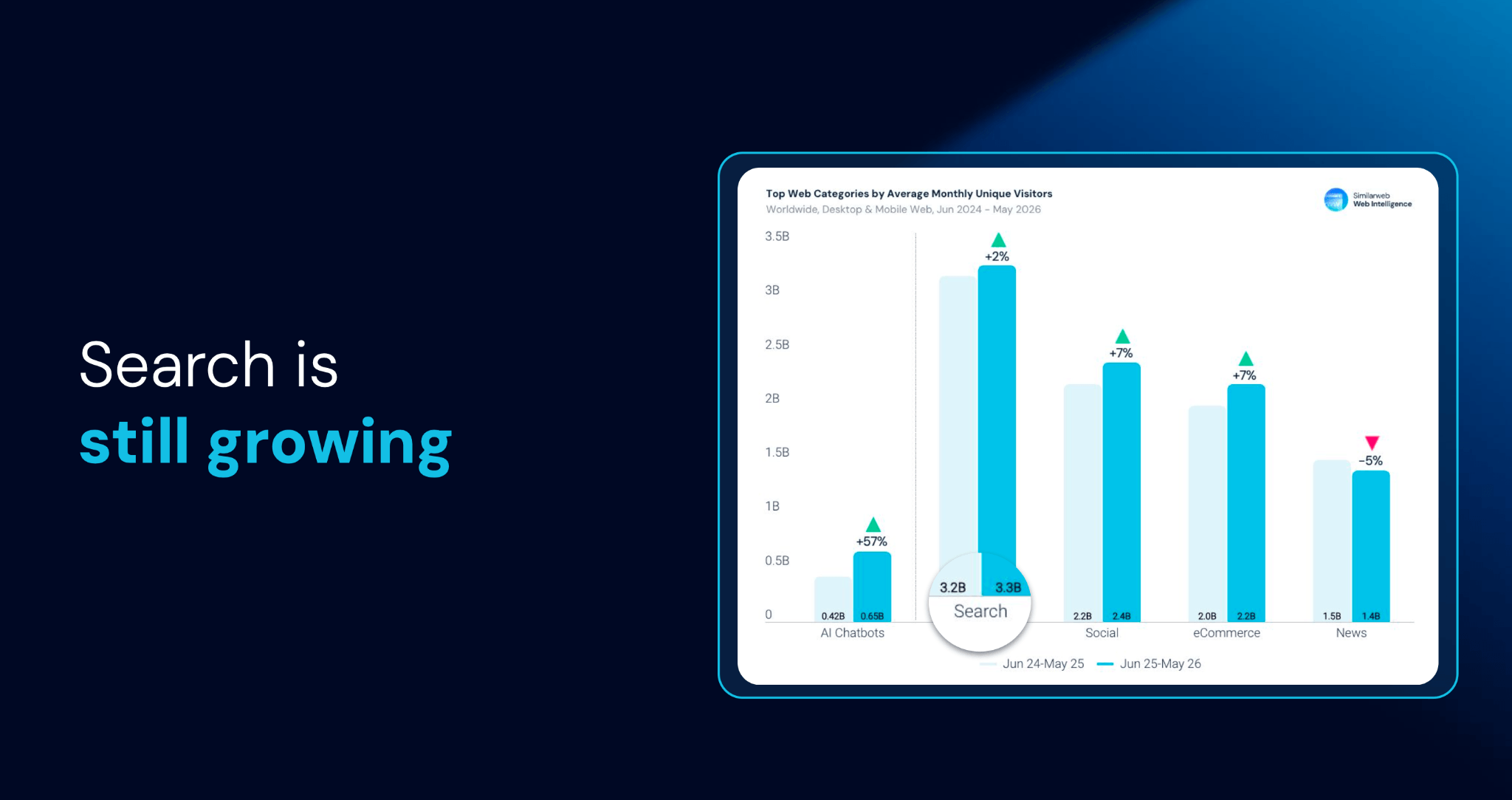
In other words, people are using AI search together with traditional Google search.
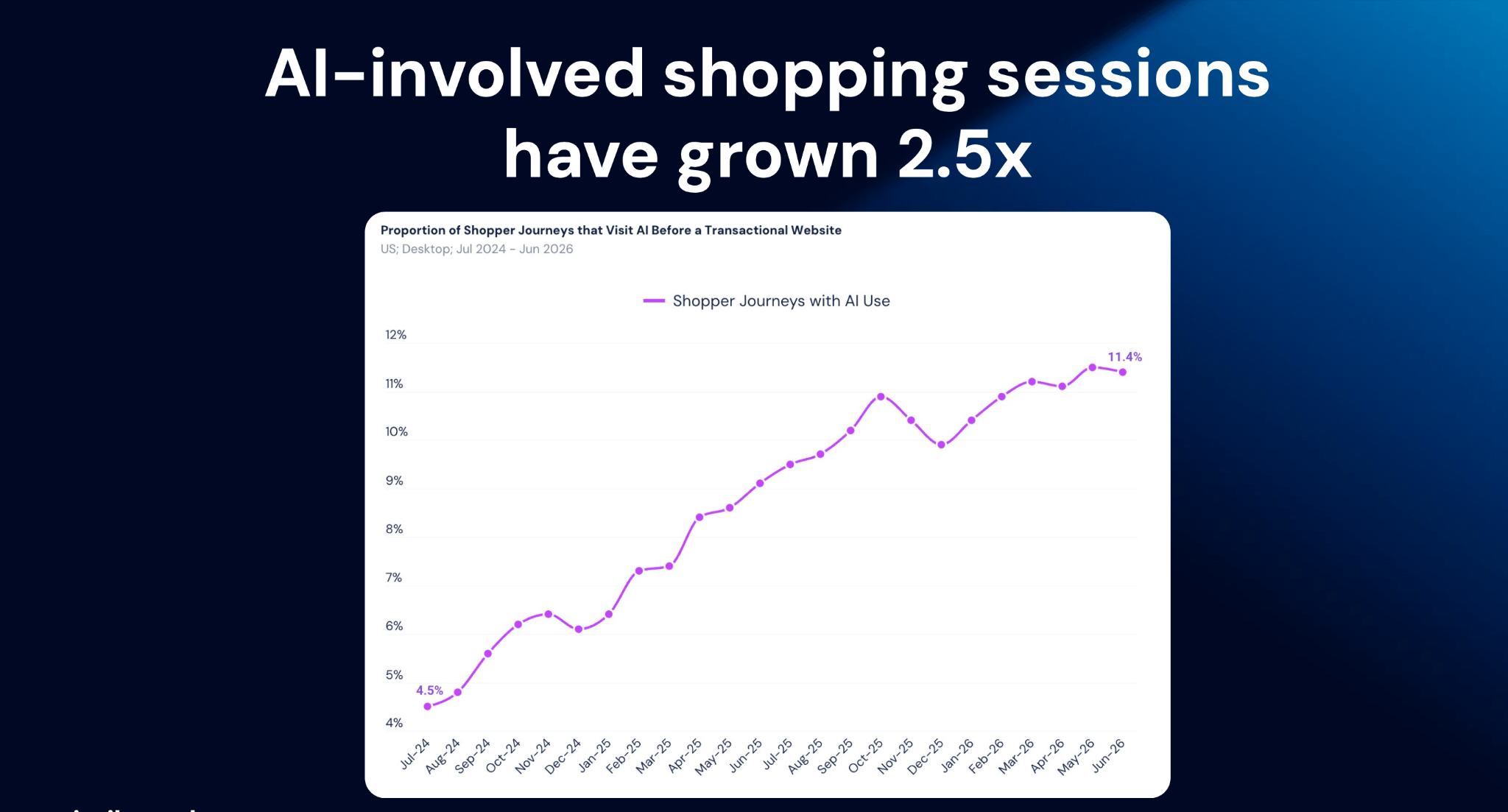
And that means AI is becoming an integrated part of the user journey, including how people shop. In the US, the share of desktop shopper journeys that include AI before a transactional site grew from 4.5% to 11.4% between July 2024 and June 2026. Of those journeys, 89% also use traditional search.
Understanding this brings up an important question.
Which part of the user journey happens in AI?
Our data demonstrates that AI rarely opens the session or closes it. In 76.1% of sessions that include AI, it shows up in the middle, during research and comparison.
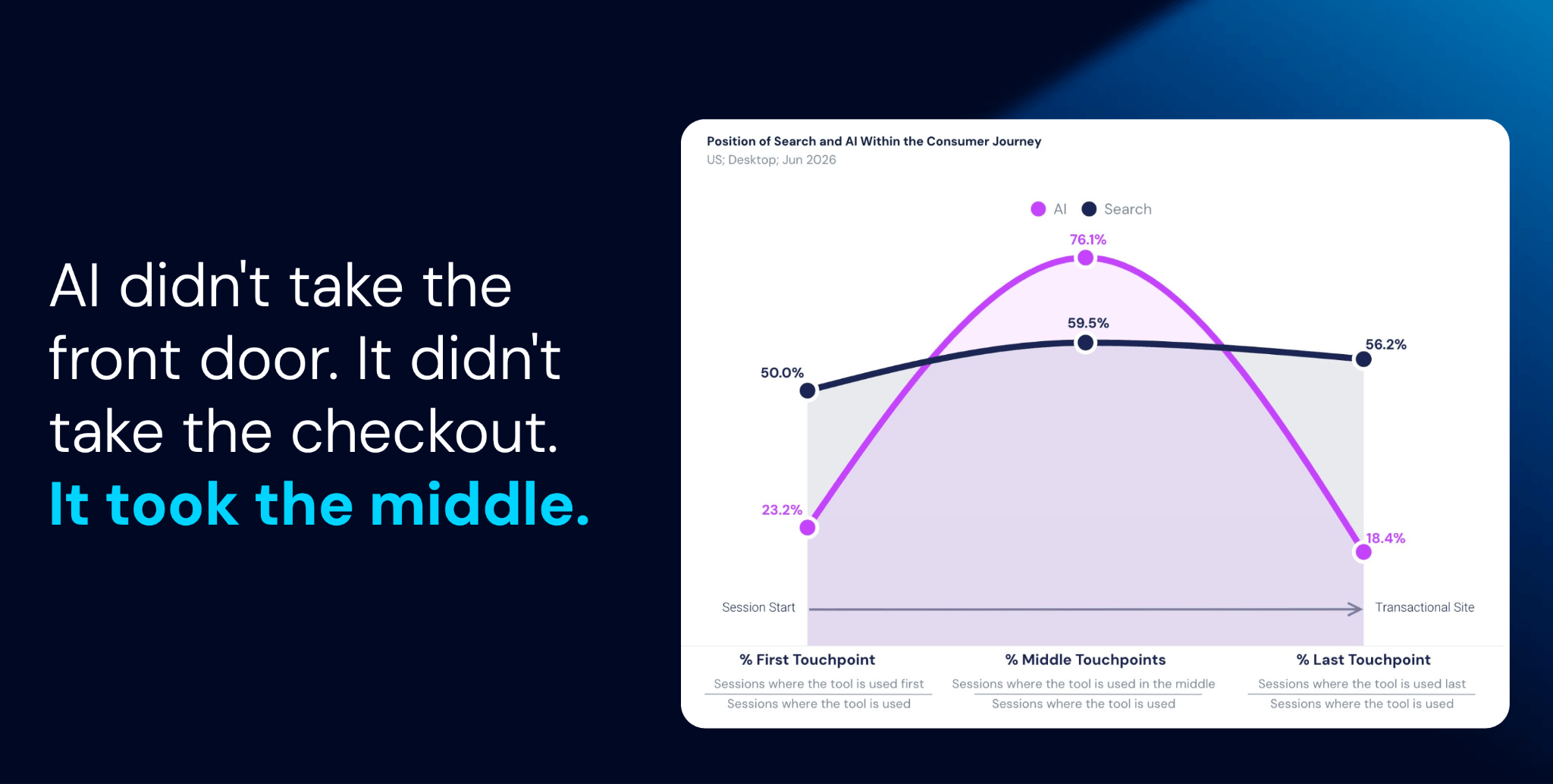
That’s the stage where people form opinions. It’s also historically been the hardest stage to measure.
This is the attribution problem.
A user asks an AI for a recommendation, reads the answer, and leaves. No click is recorded. Days later, they visit the brand through another channel. Analytics credit that visit to branded search or direct, and AI referral reports show almost nothing.
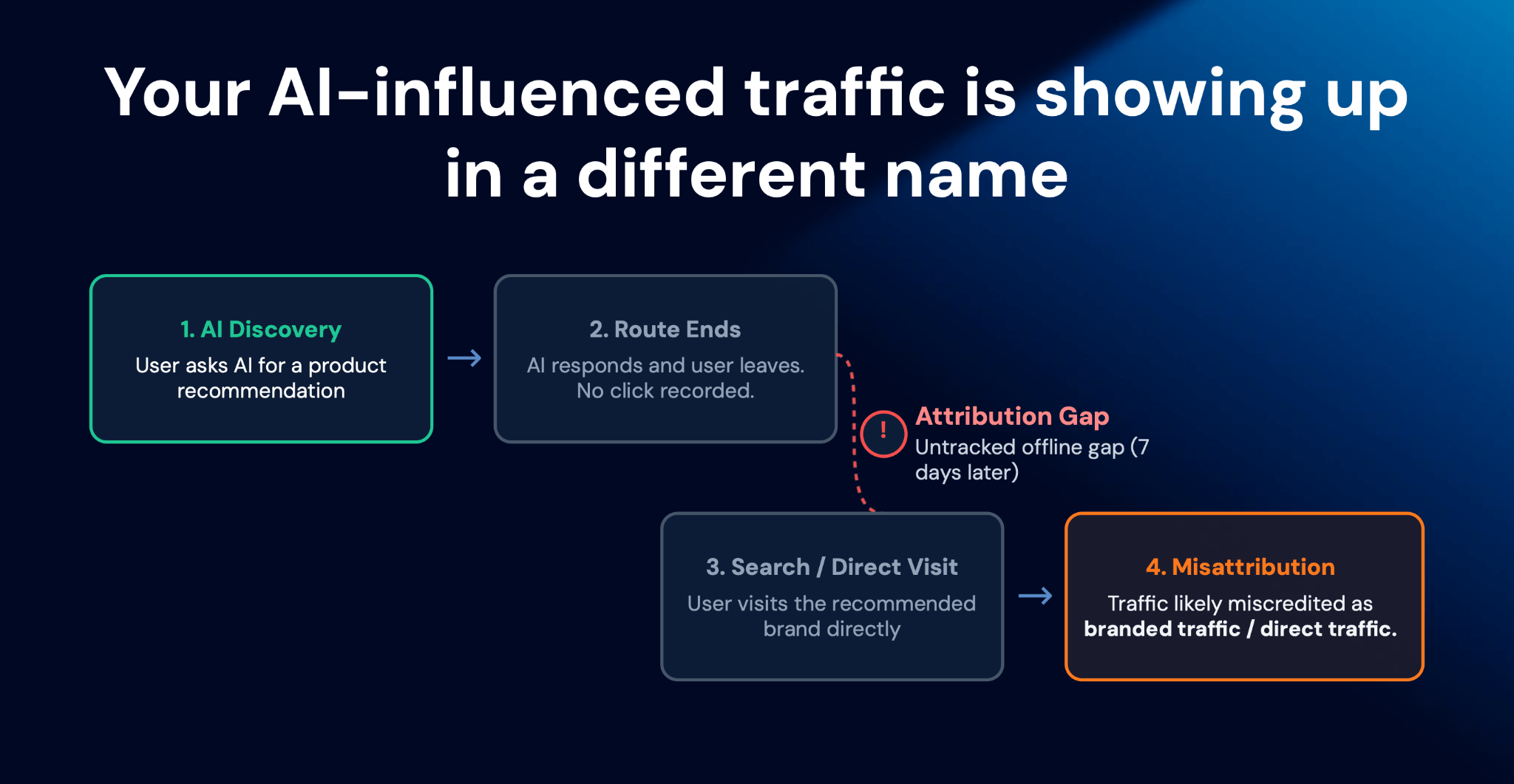
This attribution problem is forcing the industry to reinvent itself.
Ask search marketers what is hardest about AI visibility right now, and the same answer keeps coming back: proving it works. In a Growth Memo survey of 599 marketers, more than 40% named the lack of reliable measurement and attribution as their biggest challenge with answer engine optimization. Several of the most-followed voices in search have been explaining why.
The old model is fraying.
Rand Fishkin, co-founder of SparkToro, has said that ‘We’re moving away from precise digital attribution back to lift-based measurement.’ In place of tracking every click, he points marketers to broader signals, such as rising branded search.
Referral clicks undercount the effect.
Kevin Indig says that most teams measure AI search by pipeline from referral clicks, which is “like valuing a Super Bowl ad by QR-code scans.“
Leadership wants an answer.
Wil Reynolds, CEO of Seer Interactive, has argued that on its own, AI visibility is a vanity metric. He told Search Engine Journal it “needs to be tied to an outcome.” Mike King of iPullRank recommends tracking branded search lift and assisted conversions alongside organic traffic.
With an industry this volatile, this data is answering the most important question in search marketing moving forward.
Our insights team tracked what real users did after ChatGPT recommended a specific brand. The study used Similarweb’s opted-in panel (US, desktop, July–December 2025) across three verticals, with brand pairs chosen for competitive overlap.
They included only users who hadn’t named the brand in their prompt and hadn’t visited its site in the previous four weeks. They then tracked them for seven days to see whether they visited the recommended brand or its competitor.
| AI recommends | Visits the recommended brand | Visits the competitor |
| American Express | 7.2% | 3.1% (Capital One) |
| Capital One | 14.2% | 3.8% (American Express) |
| Skyscanner | 9.5% | 7.6% (Kayak) |
| Kayak | 12.0% | 3.4% (Skyscanner) |
| Sephora | 7.9% | 3.3% (Ulta) |
| Ulta | 7.6% | 4.6% (Sephora) |
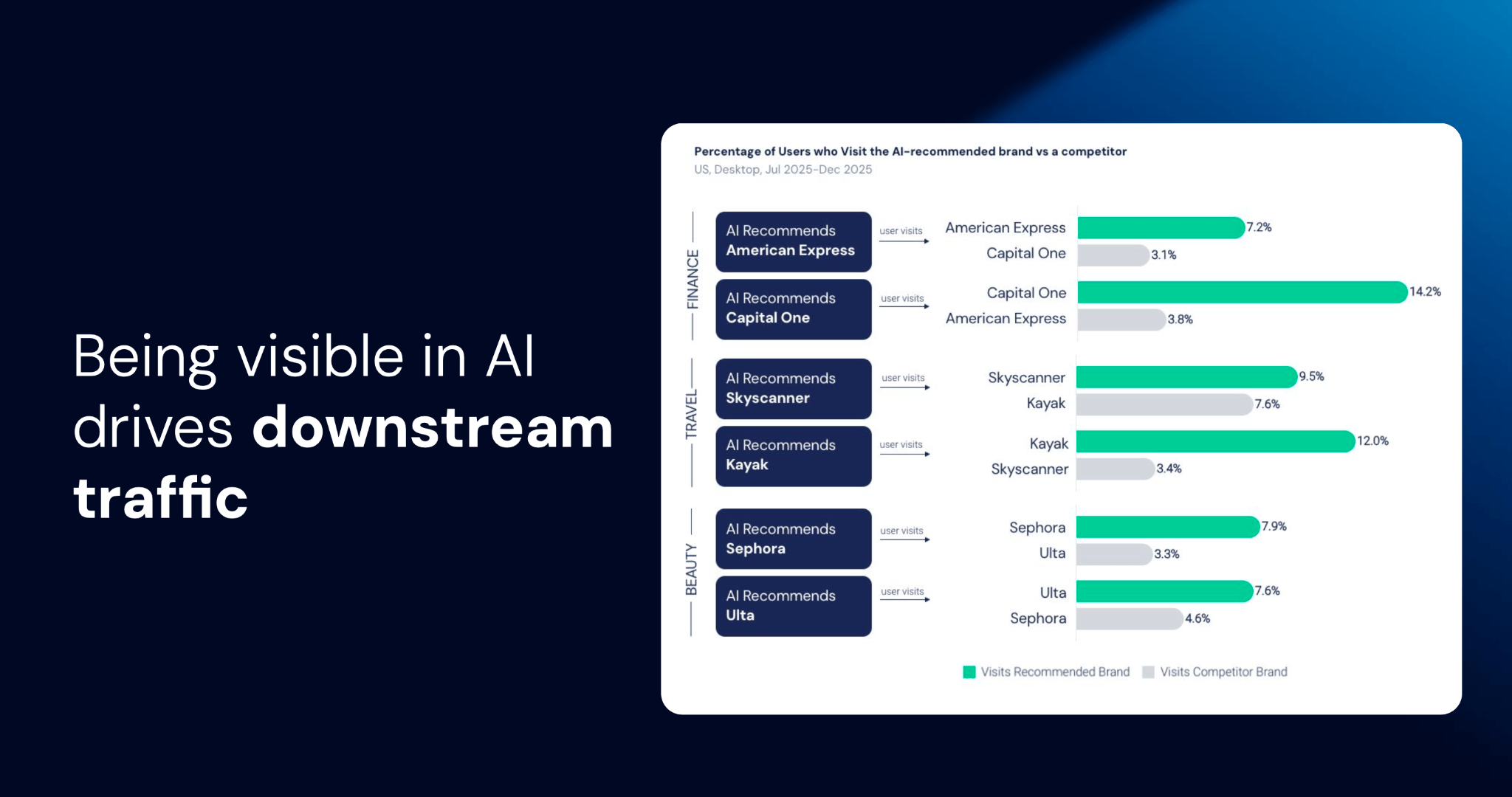
In all six cases, the recommended brand won the visit, even though users received no direct link. The size of the effect varies, from a modest gap for Skyscanner to more than 3x for Capital One and Kayak.
The direction doesn’t.
When the competitor was recommended instead, more traffic went to them.
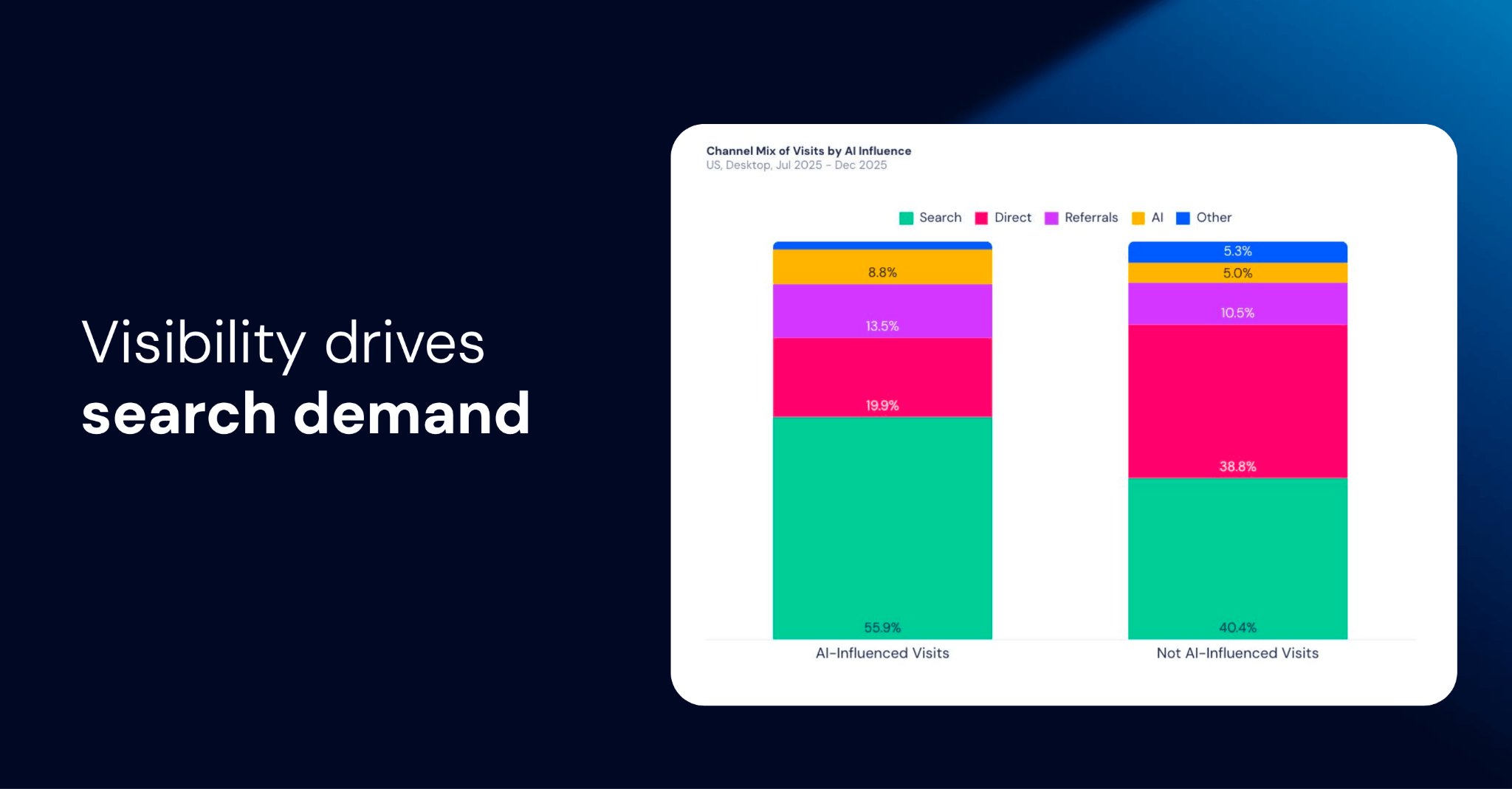
The visits that followed a recommendation also looked different from other visits to the same sites:
A related finding on conversion rates points the same way. In US desktop shopper journeys in June 2026, sessions that combine both AI and traditional search converted at 23.0%. Traditional search-only sessions converted at 17.3%, and AI-only sessions at 12.5%. This measures sessions that used AI, not users who were recommended a brand, but it supports the same idea.
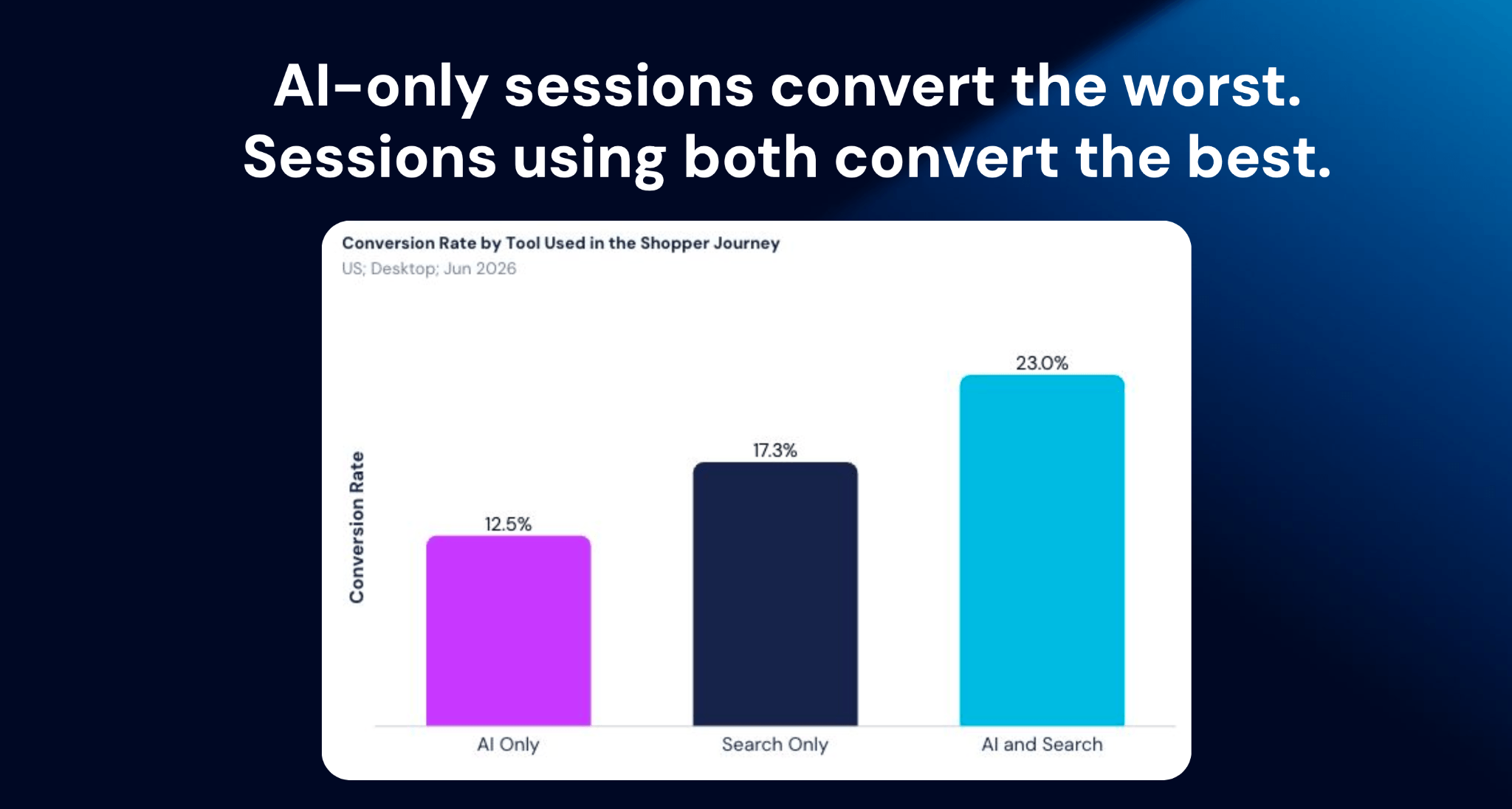
AI’s value shows up when it feeds a larger search journey.
Although we can’t yet put a dollar value on a single recommendation, the evidence points in a consistent direction:
For a business deciding whether AI visibility is worth investing in, the data makes a clear case.
Rather than a soft brand metric, AI recommendations shape who gets the visit later. Users who were recommended a brand were more likely to visit it than its competitor, and they arrived with more intent and engaged more deeply once they got there.
If there’s one thing to take away, it’s this…
AI visibility and search aren’t separate stories.
They’re two chapters of the same customer journey, and the value of a recommendation only shows up when you see both. Unified reporting, with AI mentions, branded search lift, and converting visits in one view, is how you finally prove what your AI visibility is worth.
What happens after an AI recommendation?
Most users don’t click. In Similarweb’s study of US desktop users (July-December 2025), people who saw ChatGPT recommend a brand were more likely to visit that brand within seven days than its competitor, in all six brand pairs tested. The visit usually comes later through another channel, often search, so analytics credit it to branded search or direct traffic.
Are users more likely to visit the brand an AI recommends?
Yes. In all six brand pairs, the recommended brand won the visit within seven days. When ChatGPT recommended Capital One, 14.2% of users visited it versus 3.8% who visited American Express. Skyscanner showed the smallest gap, at 9.5% versus 7.6% for Kayak. The study counted only users who hadn’t named the brand in their prompt or visited its site in the previous four weeks.
How do visits after an AI recommendation differ from other visits?
They are deeper and more intentional. Visits following a recommendation averaged 12.0 pageviews and 11.8 minutes on site, versus 6.5 pageviews and 5.6 minutes for other visits to the same sites. Also, 55.9% arrived via search versus 40.4% of other visits, which suggests users remembered the brand and searched for it by name.
Why don’t AI recommendations show up as clicks?
Most recommendations don’t produce a click. A user reads the answer, leaves, and returns days later through another channel, such as branded search. Analytics credit that visit to the later channel, so AI referral reports capture only the visible part of AI’s influence. Measuring where the visit lands, rather than only clicks from AI platforms, shows the fuller picture.
Where in the customer journey does an AI recommendation happen?
In the middle. In 76.1% of sessions that include AI, it appears during research and comparison rather than at the start or end. In US desktop shopper journeys, the share including AI before a transactional site grew from 4.5% to 11.4% between July 2024 and June 2026, and 89% of those journeys also used traditional search.
What should brands track after an AI recommendation?
Track branded search volume, direct traffic, and retailer visits alongside how often AI recommends you, and look for movement within days of changes. Report AI and search as one journey rather than separate channels. Also track where competitors are recommended and which brand gets the follow-up visit, since the competitor captured more visits whenever it was the one recommended.
Darrell creates SEO content for Similarweb, drawing on his deep understanding of SEO and Google patents.
Dark Funnel Metrics: What to Measure When Buyers Decide Before They Click
ChatGPT Ads CTR by Country: Brazil, Mexico and Japan Out-Click the US by More Than 2x
What is RAG (Retrieval-Augmented Generation)? A Marketer's Guide
Give it a try or talk to our insights team — don’t worry, it’s free!