


Dark Funnel Metrics: What to Measure When Buyers Decide Before They Click
by Limor Barenholtz21 Min.
Oct 14, 2026

Is AI killing website traffic or quietly becoming one of its most valuable sources? A single update on May 7th, 2026, is making marketers rethink everything.
On May 7th, 2026, ChatGPT began surfacing more prominent links to brands directly within its answers. Rather than burying source links in footnotes or follow-up suggestions, brand names became clickable, visible callouts placed front and center in responses.
For many marketers, the result was immediate. A noticeable spike in referral traffic appeared in their analytics dashboards. But was it real, sustained, and meaningful? We dug into the data to find out.
Using Similarweb clickstream data across a panel of tracked websites, we measured how ChatGPT referral traffic changed before and after the update and went beyond volume to look at engagement quality too.
For years, the dominant narrative around AI and search has been the “no-click future”, a world where AI answers queries so completely that users never need to visit a website, making the idea of getting traffic from AI seem almost impossible. This framing has caused significant anxiety in the marketing and SEO community.
But ChatGPT’s May 7th update suggests a more nuanced picture is emerging. Rather than eliminating clicks, AI may simply be redirecting them toward brand homepages, discovered through conversational queries rather than keyword searches.
If ChatGPT is becoming a brand discovery channel, the implications are significant:
The daily trend data tells a clear story. Before May 7th, ChatGPT referral traffic was relatively flat and modest. From May 7th onwards, traffic jumped immediately and held at a structurally higher level. This was not a one-day spike but a sustained new baseline.
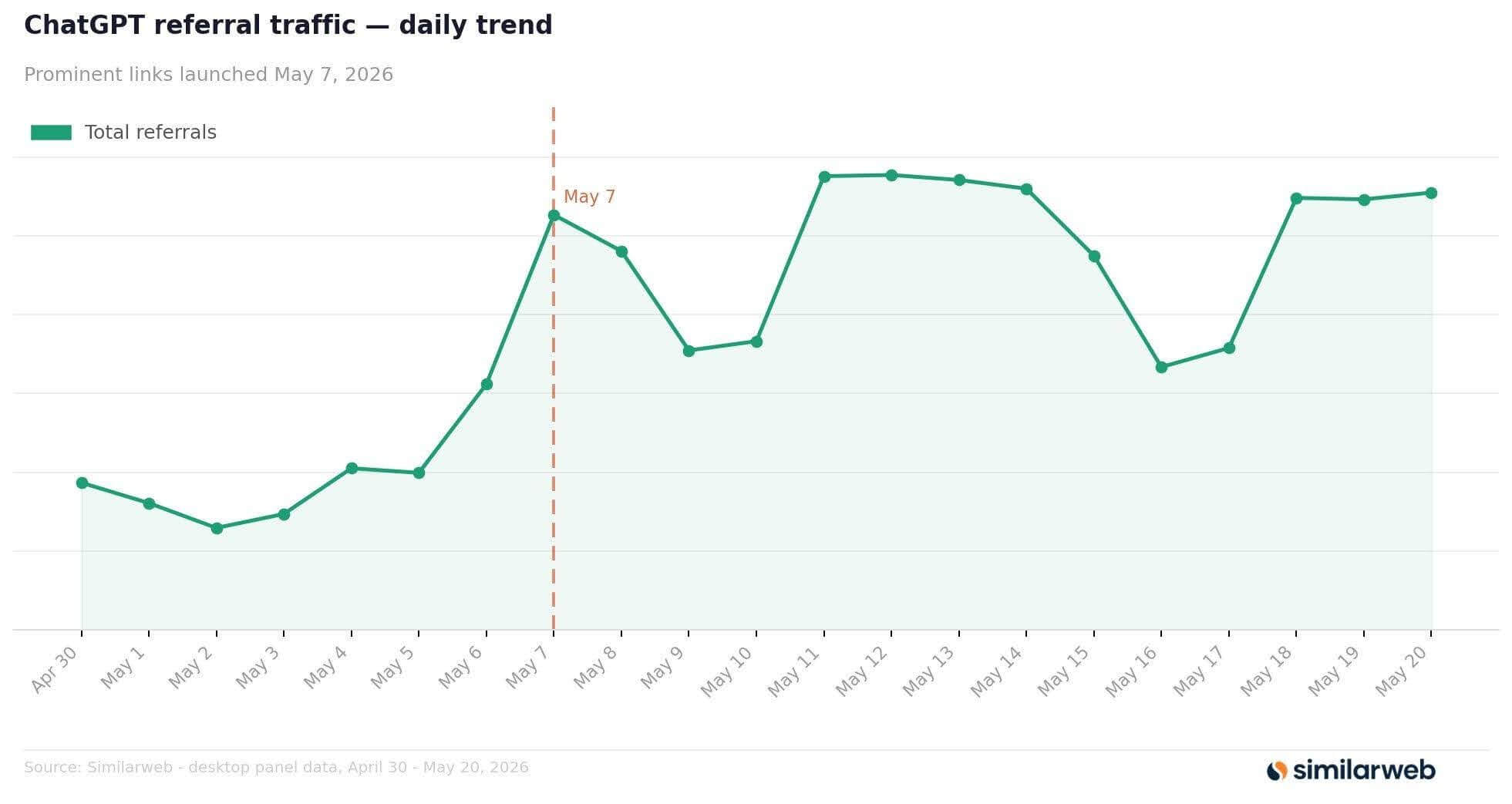
Daily ChatGPT referral traffic, Apr 30th–May 20th, 2026. Y-axis hidden to protect underlying data.
Week-on-week, total ChatGPT referrals increased by 157.7%. Homepage referrals, traffic landing directly on brand root domains, increased by 354.7%. The scale of the homepage effect is the more important number.
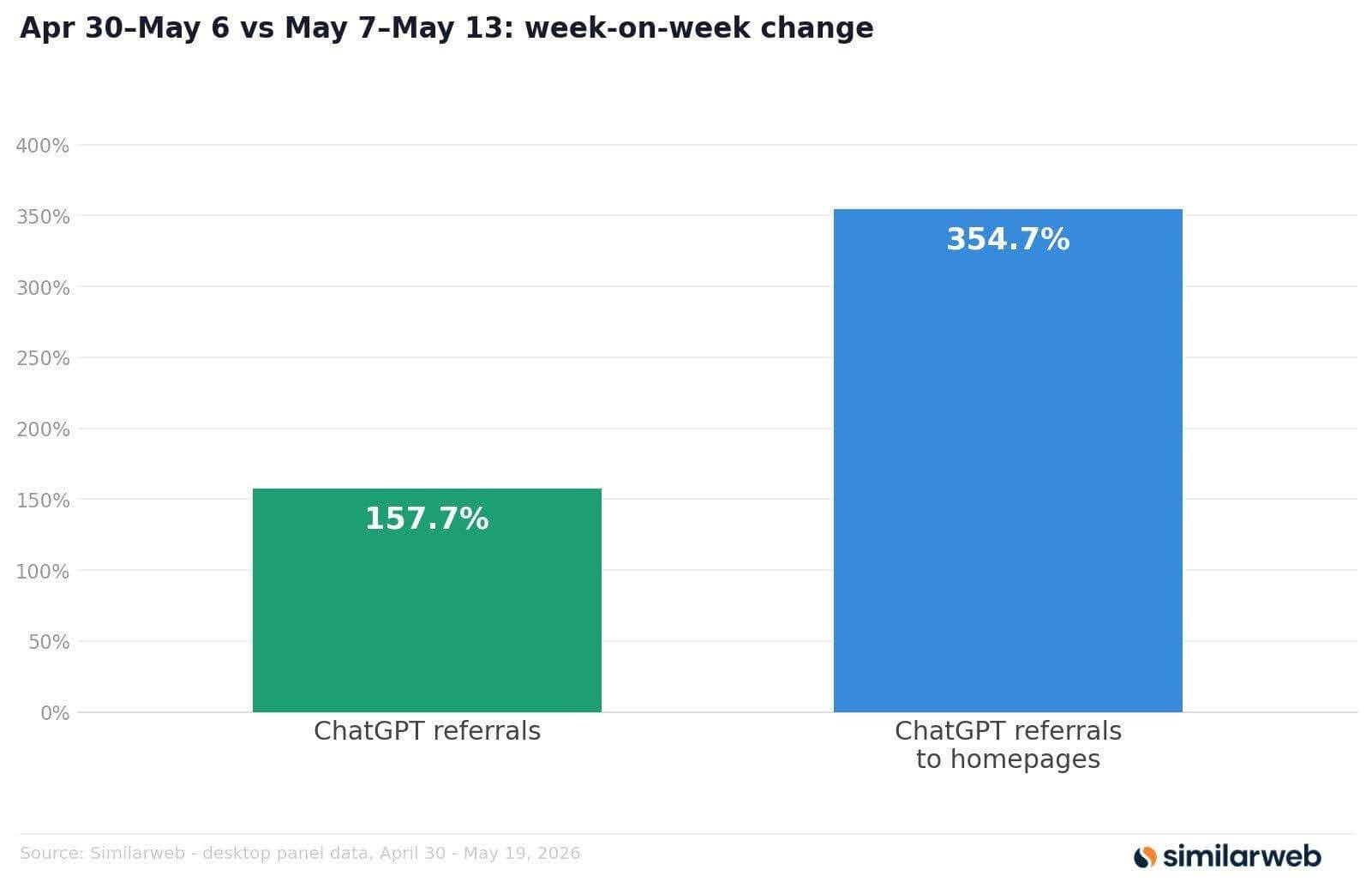
Week-on-week % change in referrals: Apr 30th–May 6th vs May 7th–13th.
One of the most striking findings is where this traffic lands. Before May 7th, roughly 26–32% of ChatGPT referrals arrived at a brand’s homepage. After May 7th, that figure jumped immediately to around 60% and has stayed there consistently.
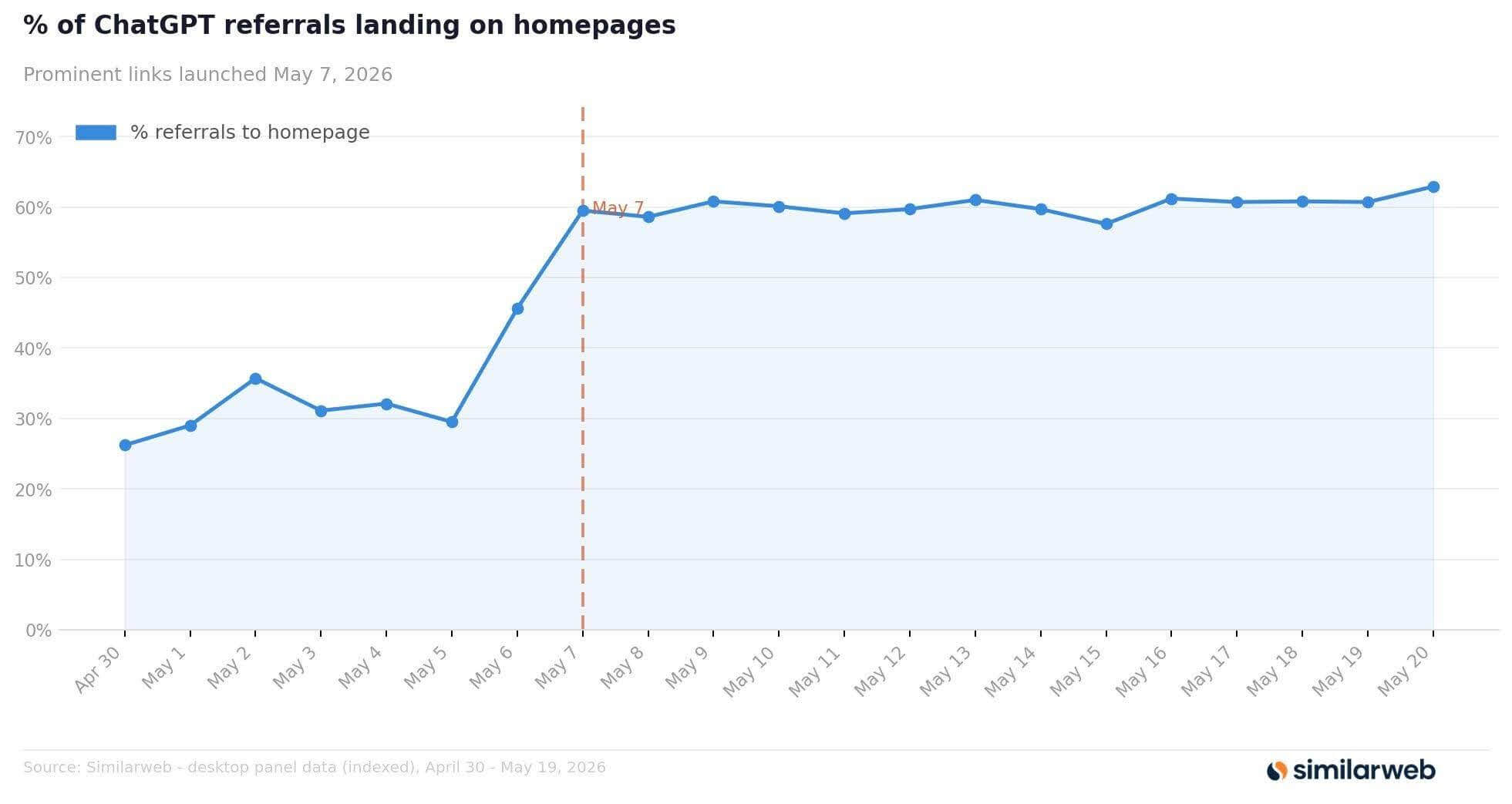
% of ChatGPT referrals landing on homepages, Apr 30th–May 20th, 2026.
ChatGPT appears to be driving users to discover and visit brands at the top level, more analogous to brand advertising than traditional search. Users are arriving at the front door, not a specific room.
When we index both total referrals and homepage referrals from April 30th (= 100), the divergence between the two lines makes the homepage effect even more visible. Homepage referrals grew nearly 7x relative to the starting point, while total referrals roughly tripled.
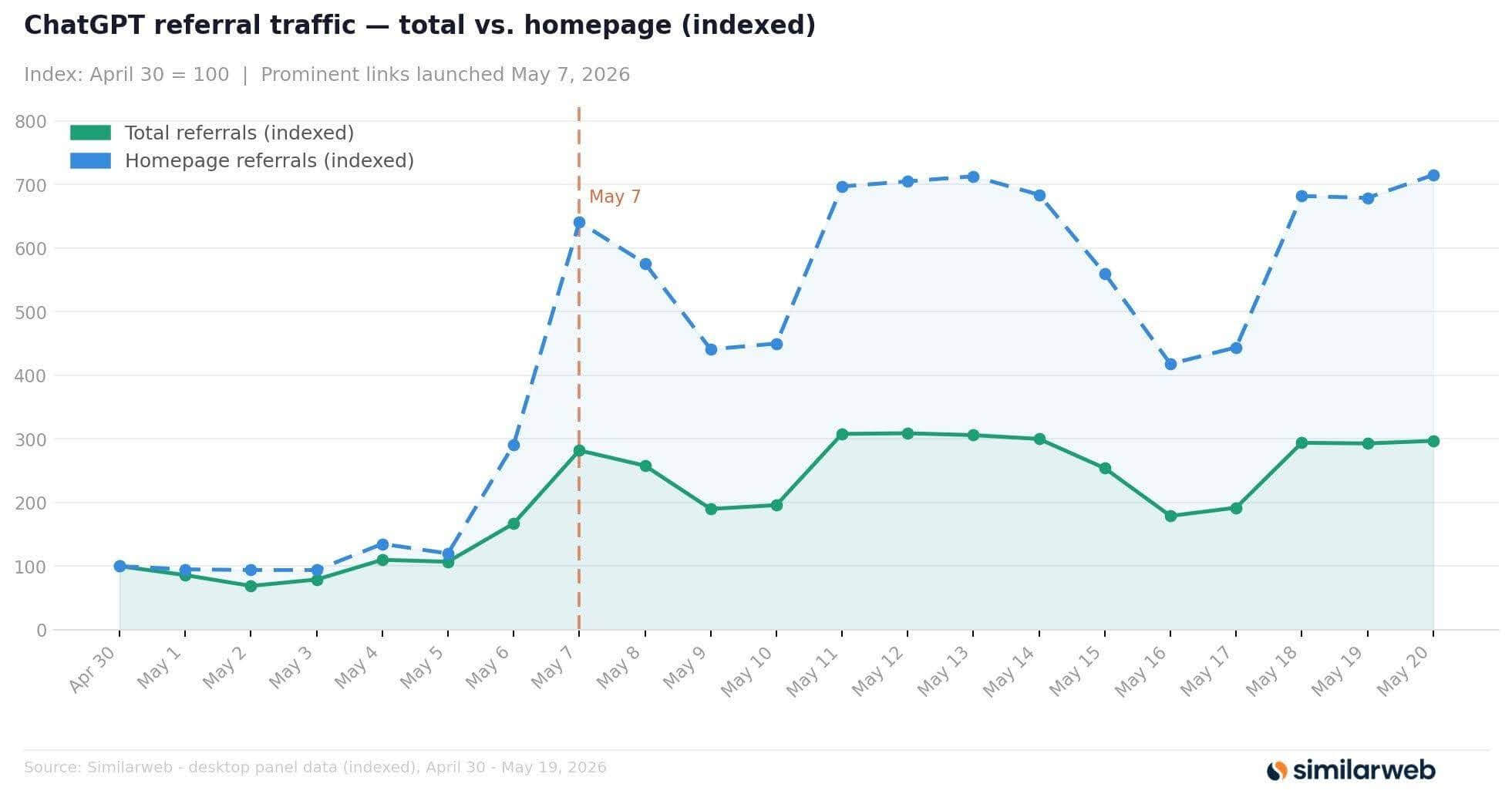
Total vs. homepage ChatGPT referrals, indexed (Apr 30th = 100).
Volume is one thing. Quality is another. We compared engagement metrics, including average page views per visit and average time on site, for ChatGPT referrals in the week before and after the update.
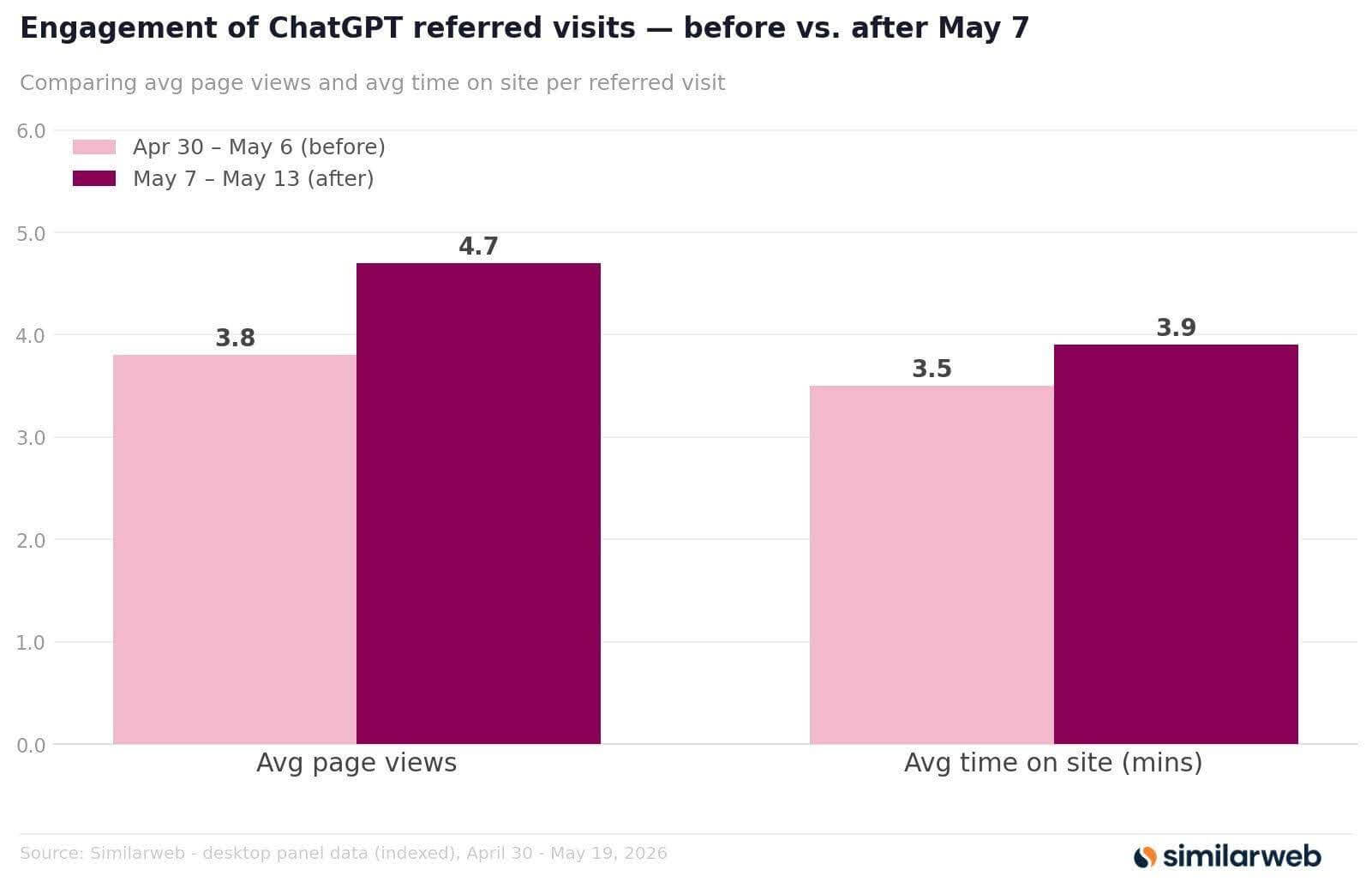
Avg page views and time on site: ChatGPT referrals before vs. after May 7th.
The results are encouraging:
Yes, page views and time on site are imperfect proxies for engagement quality. Sometimes, less friction is a better experience. But directionally, as ChatGPT connects more users to brands, the quality of those connections appears to be improving.
The data suggests we should retire the “no-click future” narrative at least as an absolute. ChatGPT’s May 7th update demonstrates that AI can be a meaningful traffic driver when it chooses to be. The question for marketers is not whether AI will send traffic, but how to show up in AI answers in the first place.
A few things stand out from this analysis:
The future of search may not be “no clicks.” It may just be different clicks. Earlier in the funnel, brand-level, and driven by conversational discovery rather than keyword intent.
This analysis was conducted using Similarweb’s clickstream panel data, which tracks real user behavior across a broad panel of websites. The AI Traffic module within Similarweb allows marketers to see any site’s traffic from AI sources, including ChatGPT, and understand which pages that traffic lands on.
Similarweb also provides data on paid ads in AI, and tracks traffic across every marketing channel, giving marketers the full picture of how users discover and engage with brands across the evolving digital landscape.
Data covers desktop panel, April 30th – May 20th, 2026. Traffic figures are indexed to protect underlying data.
by Adelle Kehoe
Director of Product Marketing
Adelle is the Director of Product Marketing at Similarweb. She works closely with the SEO and Marketing industry to bring meaningful data, stories, and products to life.
Dark Funnel Metrics: What to Measure When Buyers Decide Before They Click
What Happens After AI Recommends Your Brand?
ChatGPT Ads CTR by Country: Brazil, Mexico and Japan Out-Click the US by More Than 2x
Give it a try or talk to our insights team — don’t worry, it’s free!