What is RAG (Retrieval-Augmented Generation)? A Marketer's Guide
by Shai Belinsky9 Min.
Oct 01, 2026

The purchase funnel now starts in an AI chat window rather than a search bar.
According to Similarweb’s AI Brand Visibility Report, AI platform visits grew 28.6% between January 2025 and January 2026 in the US alone, and ChatGPT, Gemini, and Perplexity are retaining that attention rather than routing it to external sites.
If your brand isn’t being mentioned in AI-generated answers, it doesn’t exist to a growing share of buyers making decisions right now.
That’s the business case for Answer Engine Optimization. But your AEO strategy can only be effective if you have the right tools. The wrong platform gives you visibility scores with no connection to business outcomes. The right one tells you which AI prompts are driving your category, where you’re being mentioned, and whether any of that activity is actually resulting in brand visibility or traffic.
This guide focuses on seven platforms that represent the current tier structure of the AEO market, from entry-level monitoring to enterprise-grade measurement. Coverage reflects depth over breadth.
The platforms below represent the current landscape across enterprise and mid-market tiers:
They differ significantly in data methodology, measurement depth, and integration with traditional SEO workflows. Each serves a different stage of AEO maturity.
Let’s review them one by one.
Similarweb is the only platform in this category built on normalized real-user query data rather than synthetic prompt simulations, a distinction that matters when you’re making content and investment decisions based on what actual users are asking AI engines about your category.
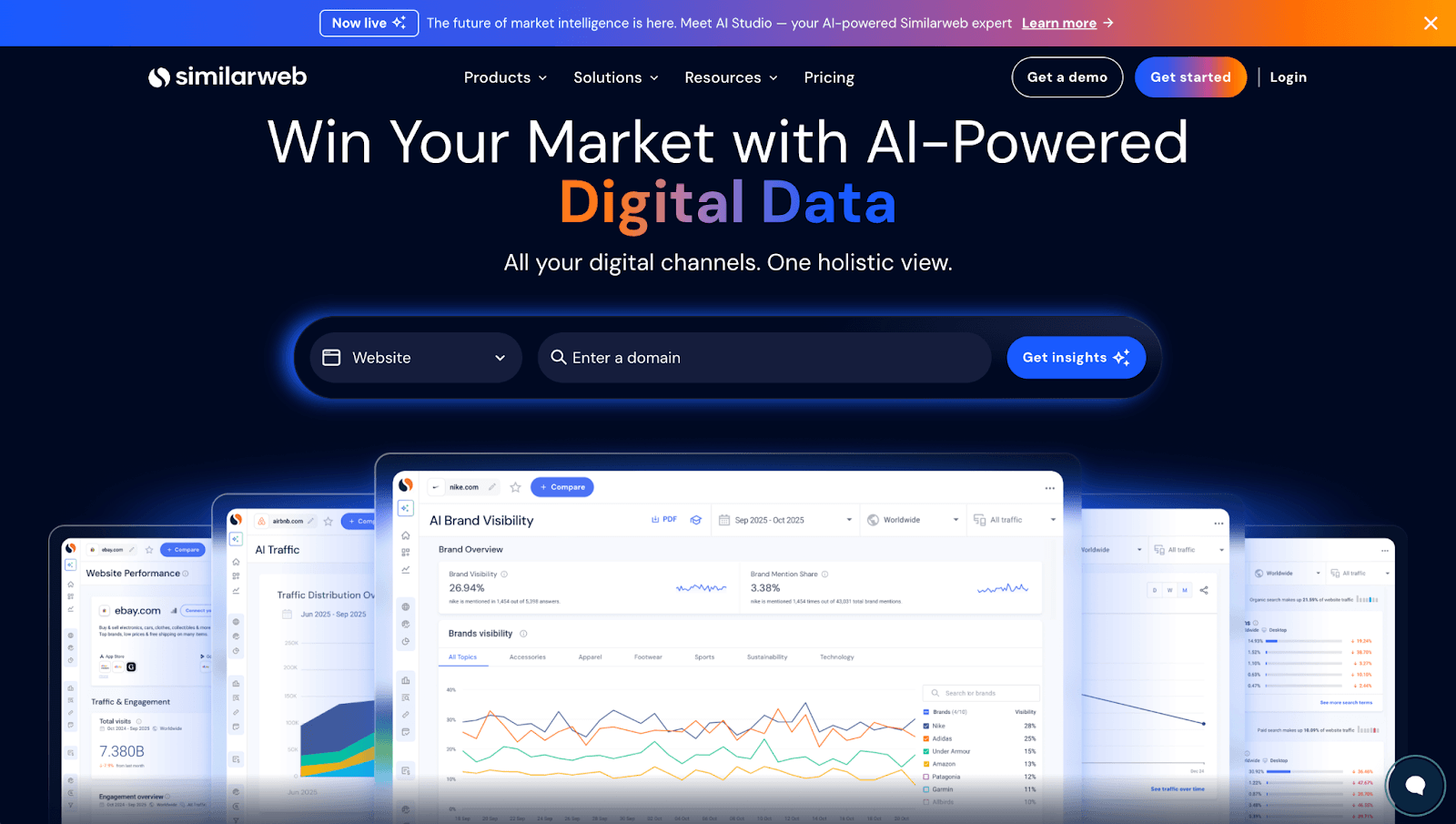
Similarweb’s AI Search Intelligence module, expanded significantly in late 2025, connects AI visibility directly to downstream brand visibility and traffic.
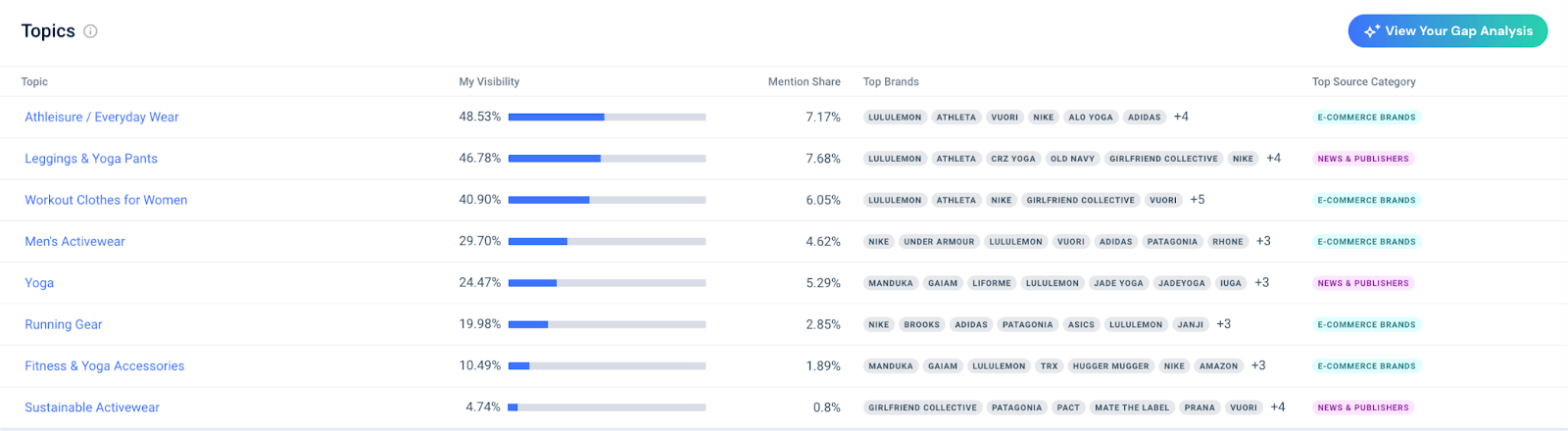
Most AEO platforms stop at citation counts. Similarweb shows you:
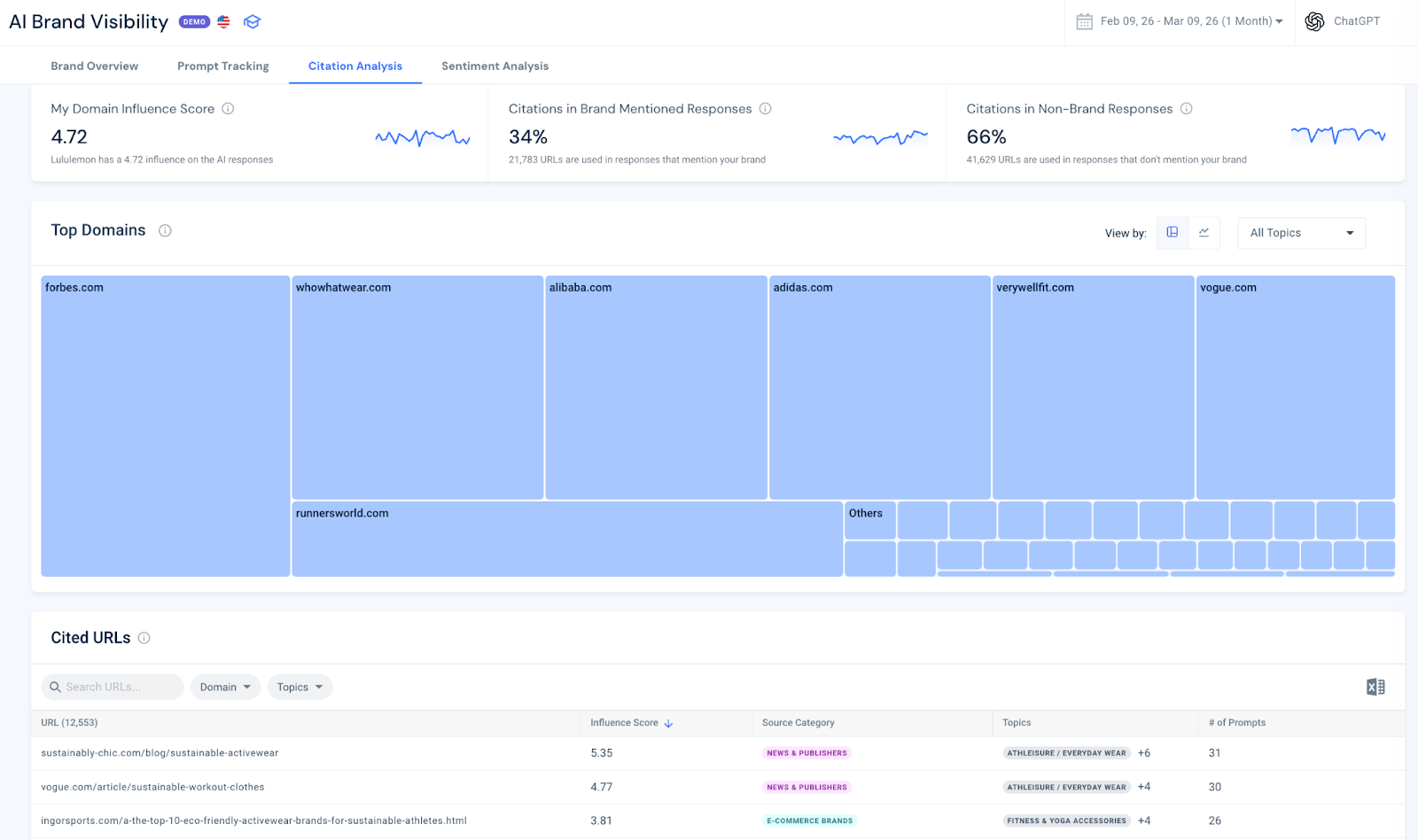
Citation analysis
The AI Citation Analysis tool shows which content AI sources when generating answers to questions on any topic, helping you understand how to get featured in those answers.
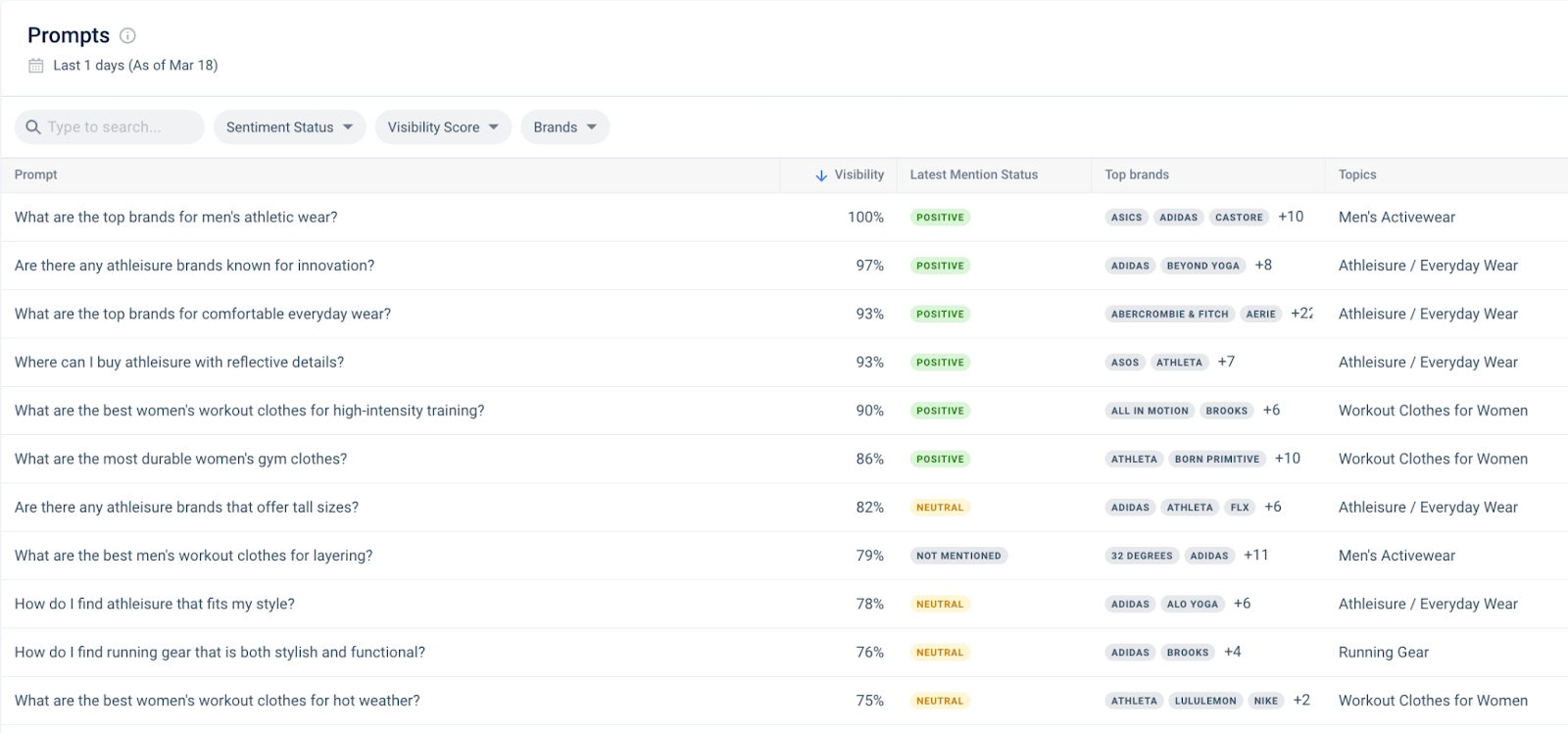
Prompt tracking
The AI Prompt Analysis tool shows what users are asking about the topics you care about, helping you build a targeted content plan and position your brand as the answer to those questions.
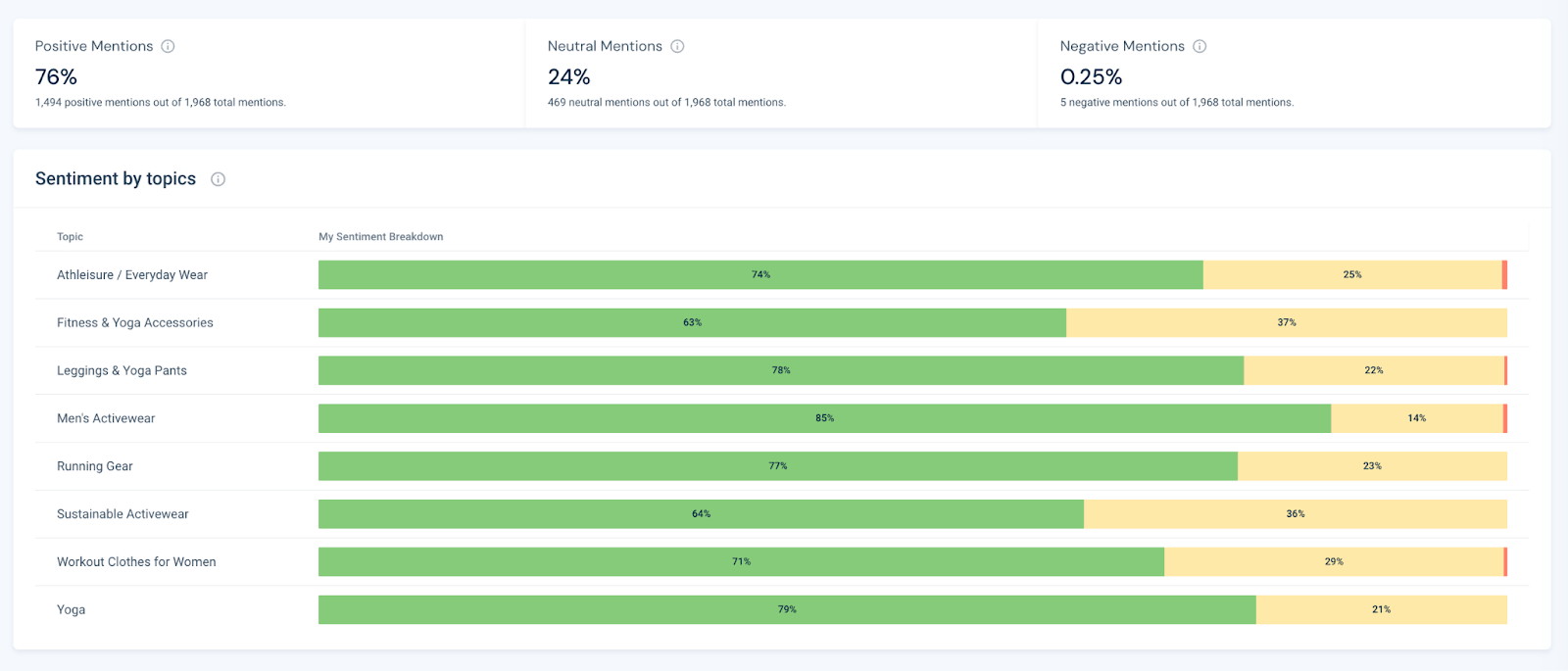
Sentiment analysis
The AI Sentiment Analysis tool shows how AI platforms portray your brand, positive, neutral, or negative, so you can optimize your presence and ensure you appear in the best possible light.
The platform’s strength is unified measurement, including Web Intelligence, SEO tools, and AEO in a single dashboard. For organizations that need to report AI visibility alongside organic traffic and revenue outcomes, this integration removes the gap between ‘we’re mentioned in ChatGPT’ and ‘that visibility moved a business metric.’
Similarweb also offers enterprise-grade data governance and reliability. For organizations operating in regulated industries or with strict compliance requirements, data provenance matters as much as data volume.
Although Similarweb measures and analyzes AEO performance, it does not generate optimized content for you. Some advanced AI-agent tracking capabilities, particularly around emerging LLM surfaces, are still evolving as the market itself evolves.
Free trial available. Custom enterprise pricing available.
Packages breakdown: A standalone AI Search Intelligence tier starts at $99/month and includes AI traffic, AI brand visibility, and website rankings, with a full competitive intelligence and AEO suite at $399/month. See full AI Search Intelligence pricing breakdown.
Upper mid-market and enterprise organizations that need to connect AI visibility to measurable traffic impact and revenue outcomes, not just surface-level tracking.
Indexly bills itself as an AI Search Visibility platform, but it’s more than a dashboard: prompt tracking sits alongside “Content Agents” that draft structured articles and auto-publish them to WordPress, Ghost, and Webflow, plus Reddit and LinkedIn “authority” workflows aimed at the sources AI engines cite most often.
Indexly tracks brand mentions and sentiment across AI engines and layers in citation gap analysis on top of that. Its actual differentiator is AI content writing: Content Agents generate AEO-formatted drafts and push them live through native CMS integrations, with schema, meta, and featured images handled automatically. It also runs structured workflows to surface high-intent Reddit threads and draft LinkedIn posts, on the premise that Reddit and LinkedIn are among the most-cited sources in ChatGPT and AI Overviews.
Its prompt-research methodology is more rigorous than the “brainstorm twenty queries” approach most tools default to: a cold-start mode builds a starter prompt set from just a domain, while a deep-research mode pulls from Reddit, Google’s People Also Ask, Quora, and web-grounded LLM fan-outs, then classifies each prompt by funnel stage and intent. For teams tired of guessing what their buyers are actually typing into ChatGPT, that’s a real feature, not a marketing line.
Worth flagging plainly: No enterprise security certifications (e.g., SOC 2, HIPAA) are publicly disclosed, so procurement-heavy organizations will need to ask directly rather than assume. There’s also no visible AI traffic-to-revenue attribution layer comparable to those offered by Similarweb or Profound.
Usage-based, scaling with tracked prompts and models monitored. Public reporting is inconsistent (entry points cited anywhere from $49/month to $99/month depending on the source), which suggests pricing is more fluid than fixed-tier (confirm current rates directly before budgeting). Custom plans exist for agencies with multi-brand and white-label needs.
Smaller teams that want AI visibility monitoring and content production/publishing bundled into one tool, rather than stitching together a tracker and a separate CMS workflow.
Peec AI is an entry-level AEO monitoring tool designed for teams new to AI visibility tracking. It covers prompt monitoring across major LLM platforms, offers real-time regional reporting, and supports multi-user collaboration with unlimited seats on most plans.
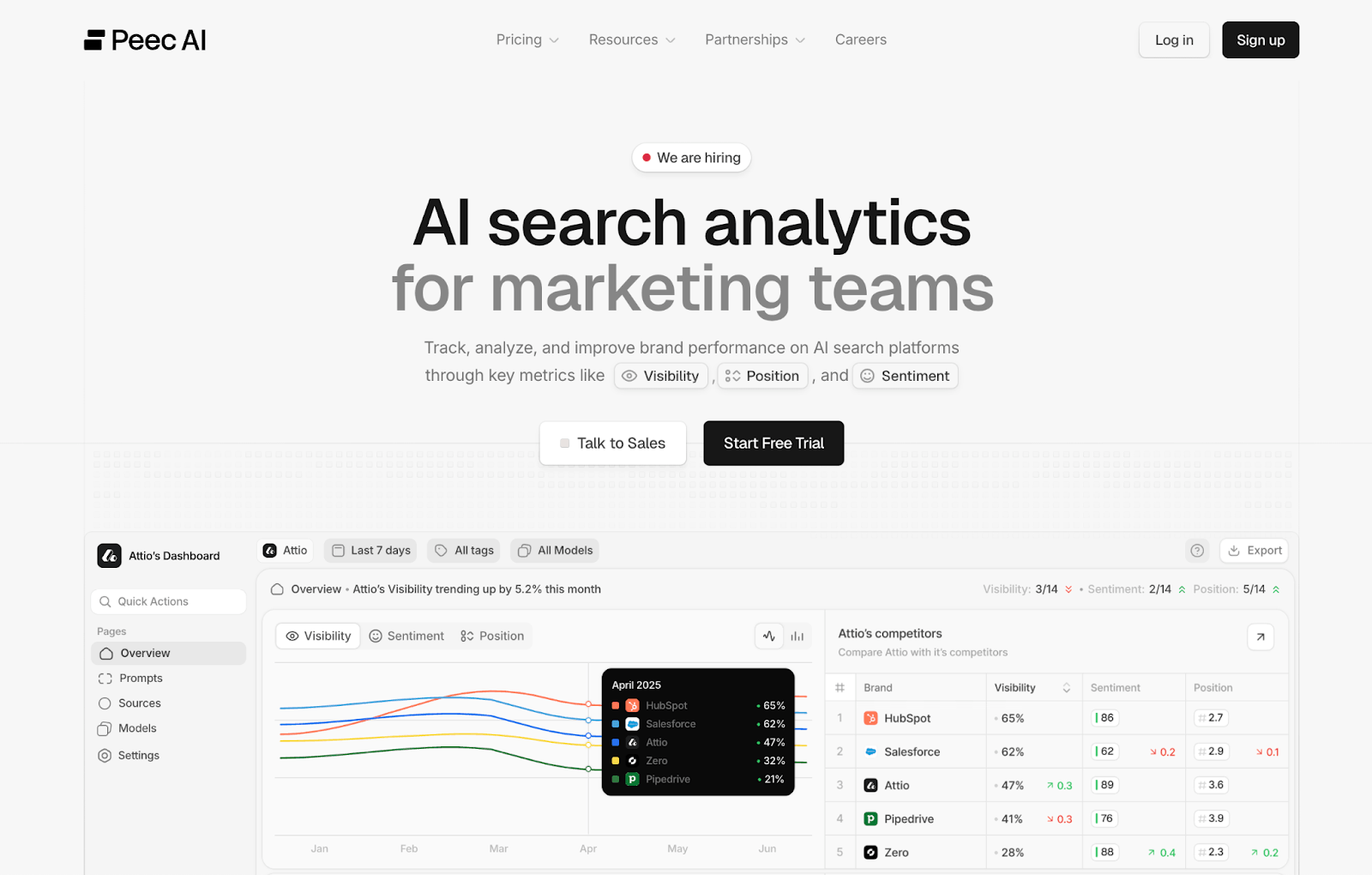
Peec AI’s interface is clean, and its onboarding is fast. For a small marketing team or agency that needs to begin tracking brand mentions across ChatGPT, Gemini, and Perplexity without a lengthy implementation, it removes friction. Competitive tracking at the brand mention level is available, and its unlimited seats model makes it practical for distributed teams.
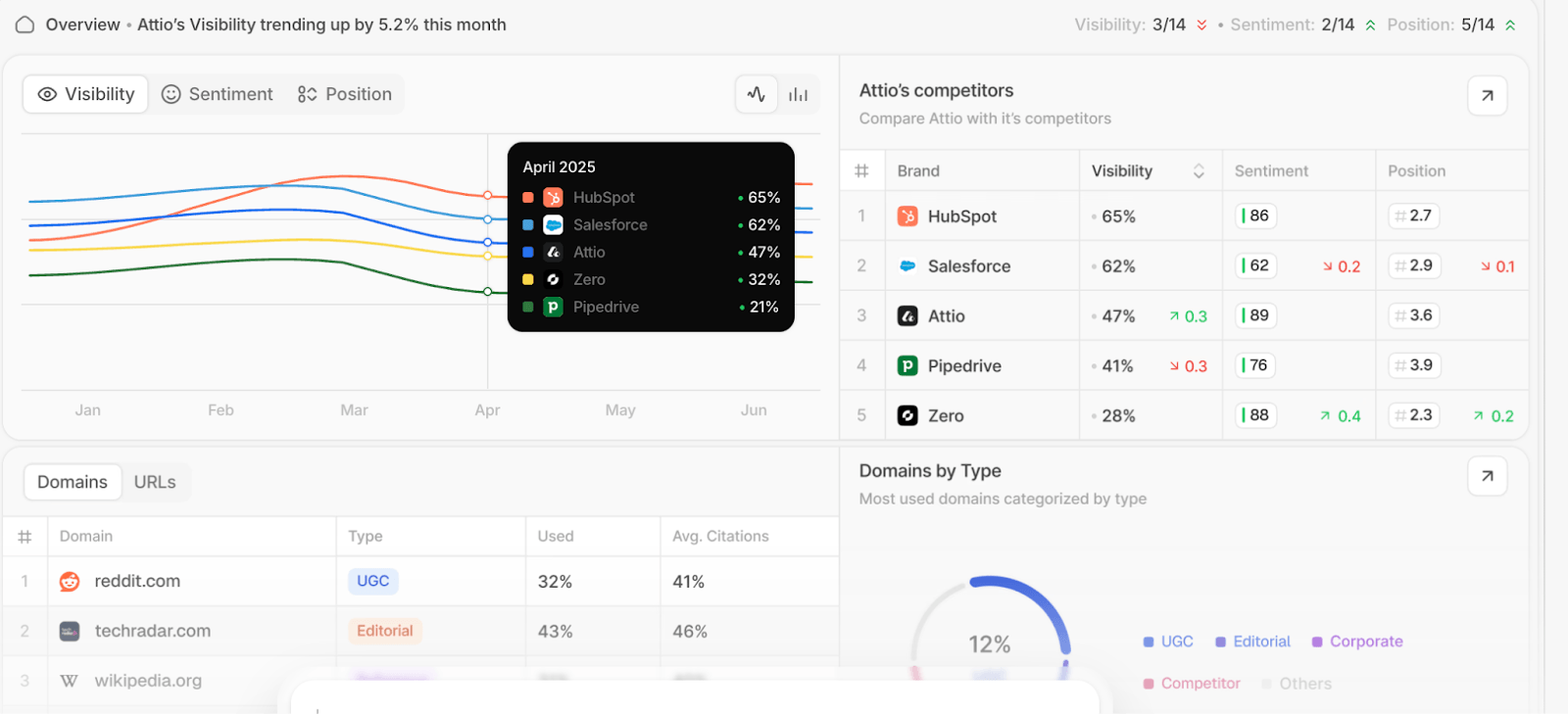
Peec AI is a GEO monitoring tool, not an SEO-native platform. It does not own its underlying data sources, which limits both the depth and auditability of its results. There is no meaningful AI traffic attribution. You can see if your brand is being mentioned, but not whether those mentions are driving site visits or conversions. Enterprise requirements like SSO, compliance controls, and API access are largely absent.
SMB-friendly subscription tiers.
Small teams or agencies experimenting with AEO who need a lightweight, accessible entry point without committing to enterprise infrastructure.
Ahrefs built its reputation on deep SEO data: backlink analysis, keyword research, content gap identification, and rank tracking. In 2025 it began layering AI visibility features on top of that foundation through its Brand Radar product, which monitors brand mentions across AI platforms alongside its existing web presence coverage.
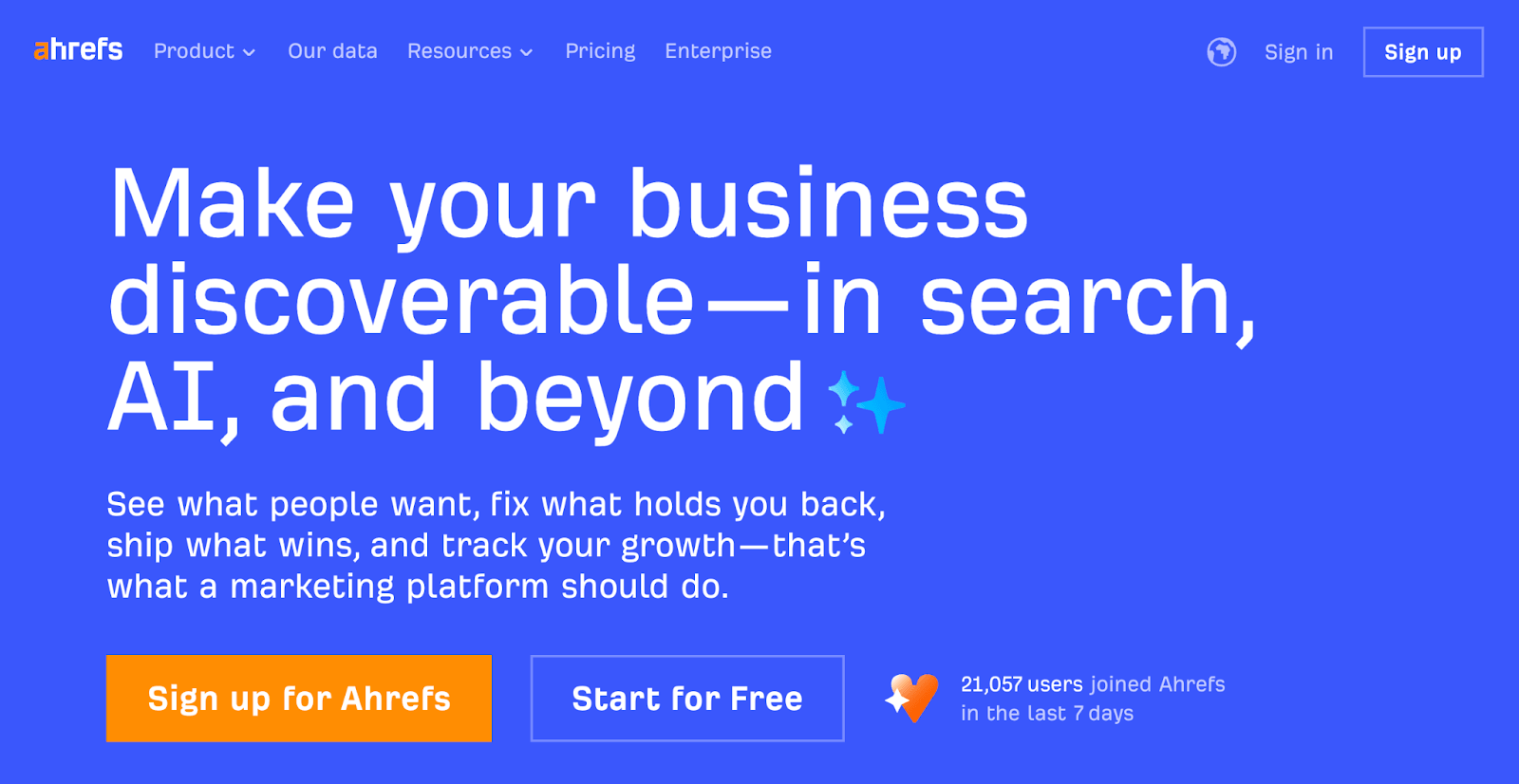
For SEO professionals who already use Ahrefs as their primary research environment, the AI visibility layer offers a natural extension. Its keyword intelligence is among the deepest available, and its broad coverage of web presence signals remains strong. Teams that primarily think in SEO terms and want to begin connecting that work to AI answer surfaces will find the workflow familiar.
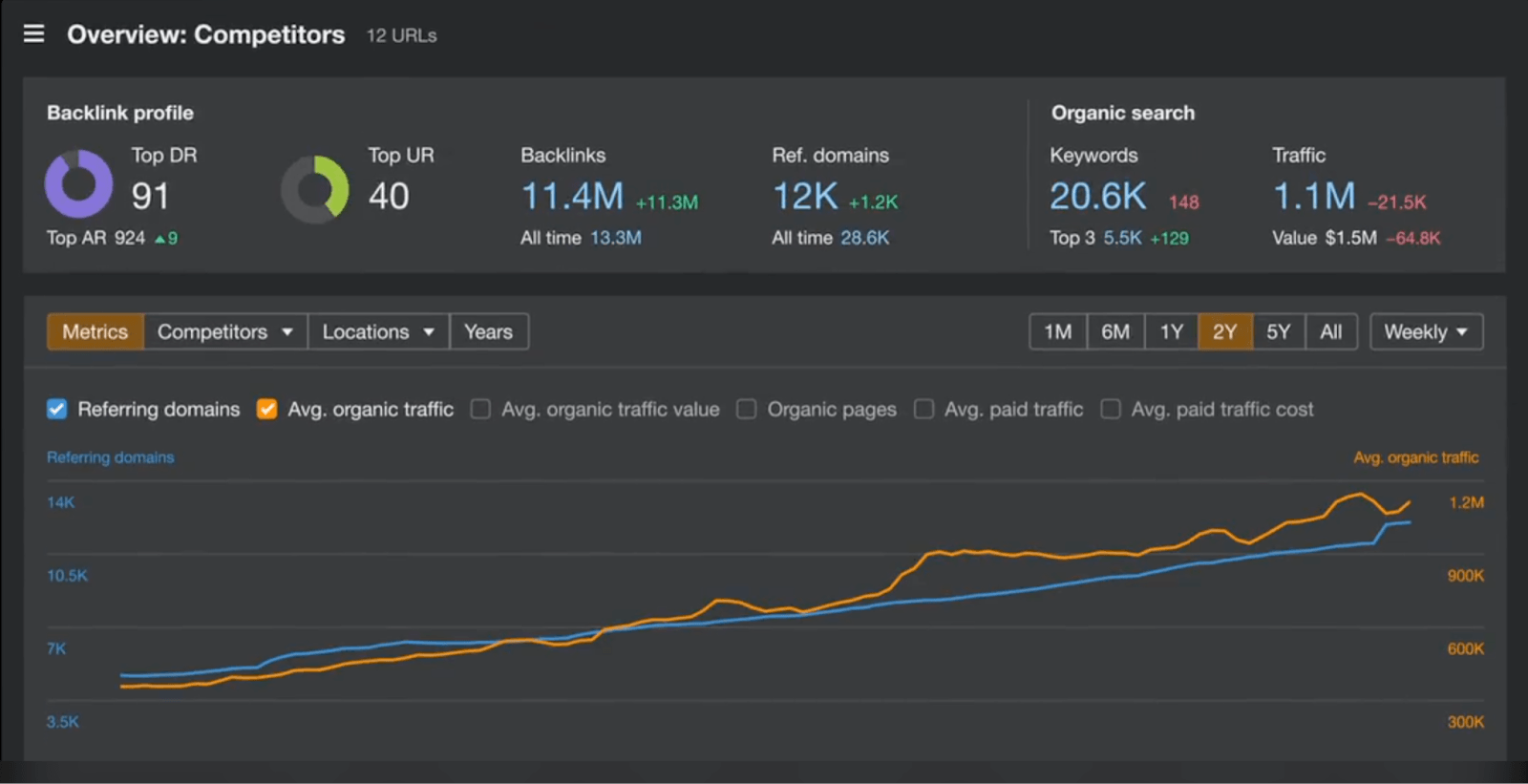
Ahrefs is fundamentally a research tool, not a purpose-built AEO platform. Its AI visibility data relies on keyword modeling rather than real-user prompt intelligence, which means it reflects approximations of what users might ask rather than what they are actually querying. The connection between AI visibility data and downstream traffic impact is limited. AI reporting depth continues to develop, but at launch, it represents an addition to an SEO platform rather than a dedicated AEO measurement system.
Mid-to-high tier subscription pricing.
SEO professionals looking to extend traditional search research into AI visibility monitoring, without requiring advanced AI traffic attribution.
BrightEdge is an established enterprise SEO platform that has integrated AI monitoring into its broader search visibility suite. Its customers are typically large organizations with existing SEO programs who want to extend that infrastructure to cover AI-generated results.
BrightEdge offers integrated SEO and AI monitoring within one ecosystem, which reduces the number of platforms enterprise teams have to maintain. It has prompt-level AI research capabilities and a long track record with large-scale website management. For organizations already running BrightEdge’s SEO workflows, adding AI visibility reporting within the same contract and interface is operationally straightforward.
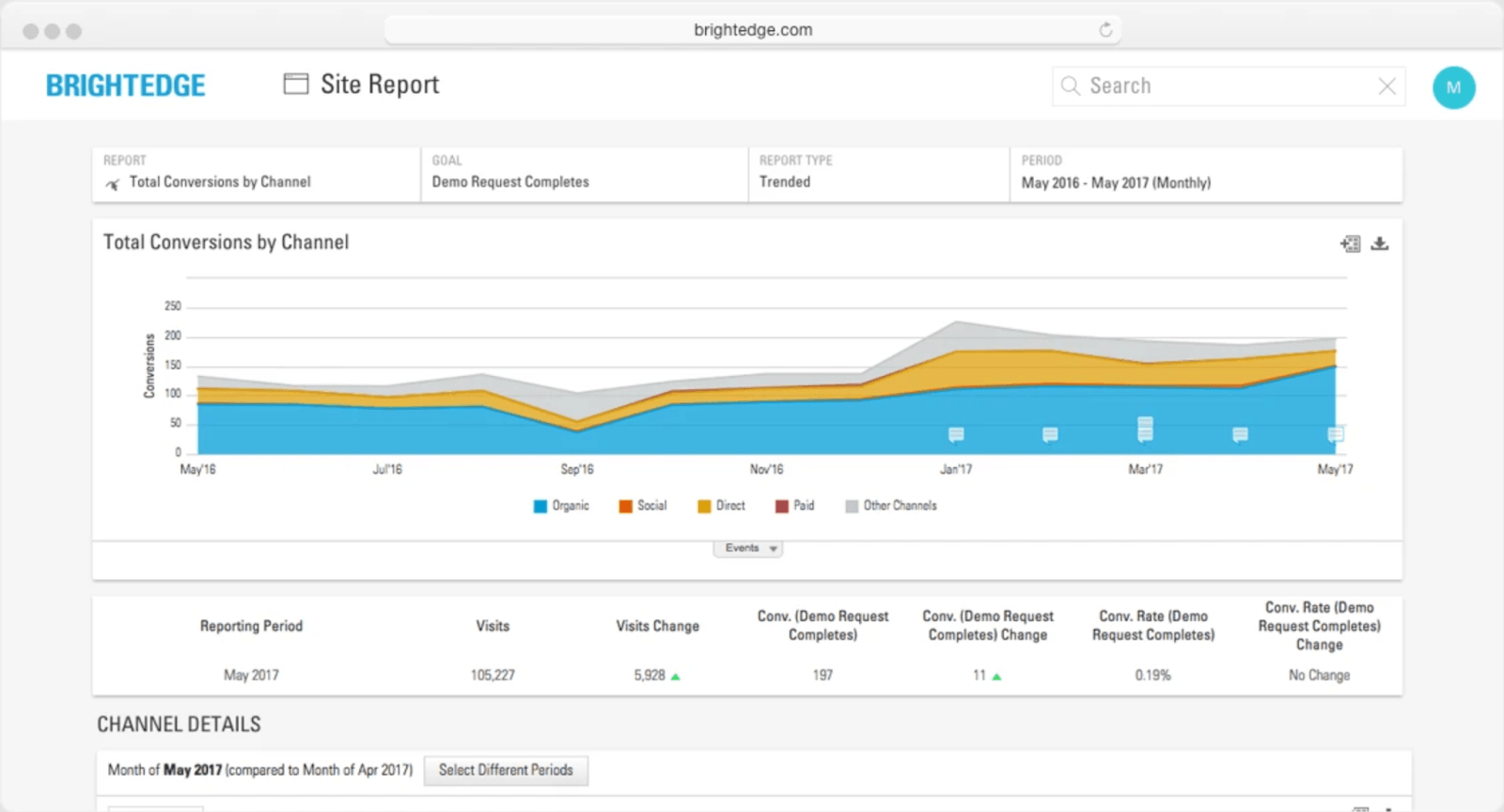
BrightEdge’s AI capabilities are layered onto an existing SEO suite rather than purpose-built for the AEO use case. Its AI data methodology lacks the transparency of platforms designed specifically for this problem. Traffic attribution from AI platforms, the link between brand mention activity and measurable downstream impact, is underdeveloped relative to the enterprise price point.
Custom enterprise pricing.
Existing BrightEdge customers seeking to add AI visibility monitoring to their current SEO workflows without switching platforms.
Semrush One is a broad digital marketing platform that has introduced AI visibility tracking as part of its expanded suite. It is widely used among SEO teams and small-to-mid-market marketing organizations, and its familiarity lowers the adoption barrier for teams already in its ecosystem.
Semrush has strong competitive research tools and content planning features that have served SEO teams for years. Its entry-level pricing makes it accessible to SMBs. For teams that want a single platform covering both traditional SEO and basic AI visibility monitoring, Semrush provides both under one subscription.
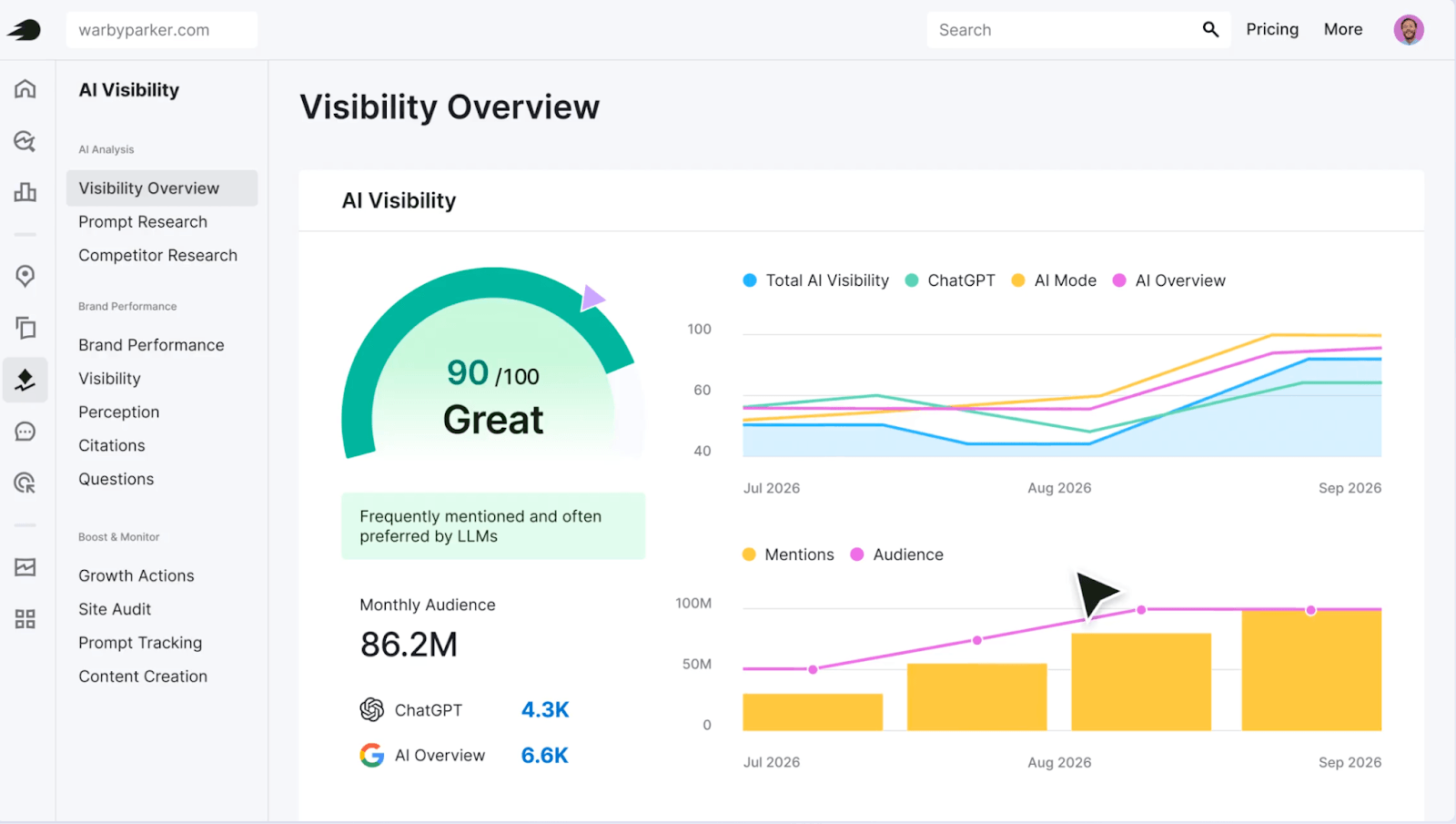
Semrush One is typically configured to monitor a small number of domains, which constrains competitive intelligence work at scale. Its data refresh cadence, monthly for most AI visibility features, limits usefulness in fast-moving markets where AI responses shift week to week. AI visibility tracking depth is still developing: it surfaces brand mention data but does not provide the traffic attribution or business-impact measurement that more mature AEO programs require.
Tiered subscription model with entry-level plans available.
SMBs and SEO teams looking to explore AI visibility within a familiar digital marketing platform, without requiring real-time data or large-scale competitive tracking.
Profound is a specialist AEO platform focused on deep prompt-level analytics across chatbot environments. It offers granular reporting on how brands are mentioned, framed, and mentioned within LLM responses, and its self-serve workflows are designed for technical marketing teams that want to interrogate that data themselves.
Profound’s analytics depth at the prompt level is a genuine strength for teams that need to understand not just whether they are mentioned, but precisely how AI systems are characterizing their brand. Its competitive reporting within LLM environments is detailed, and its interface is built around exploration rather than dashboard-level summaries.
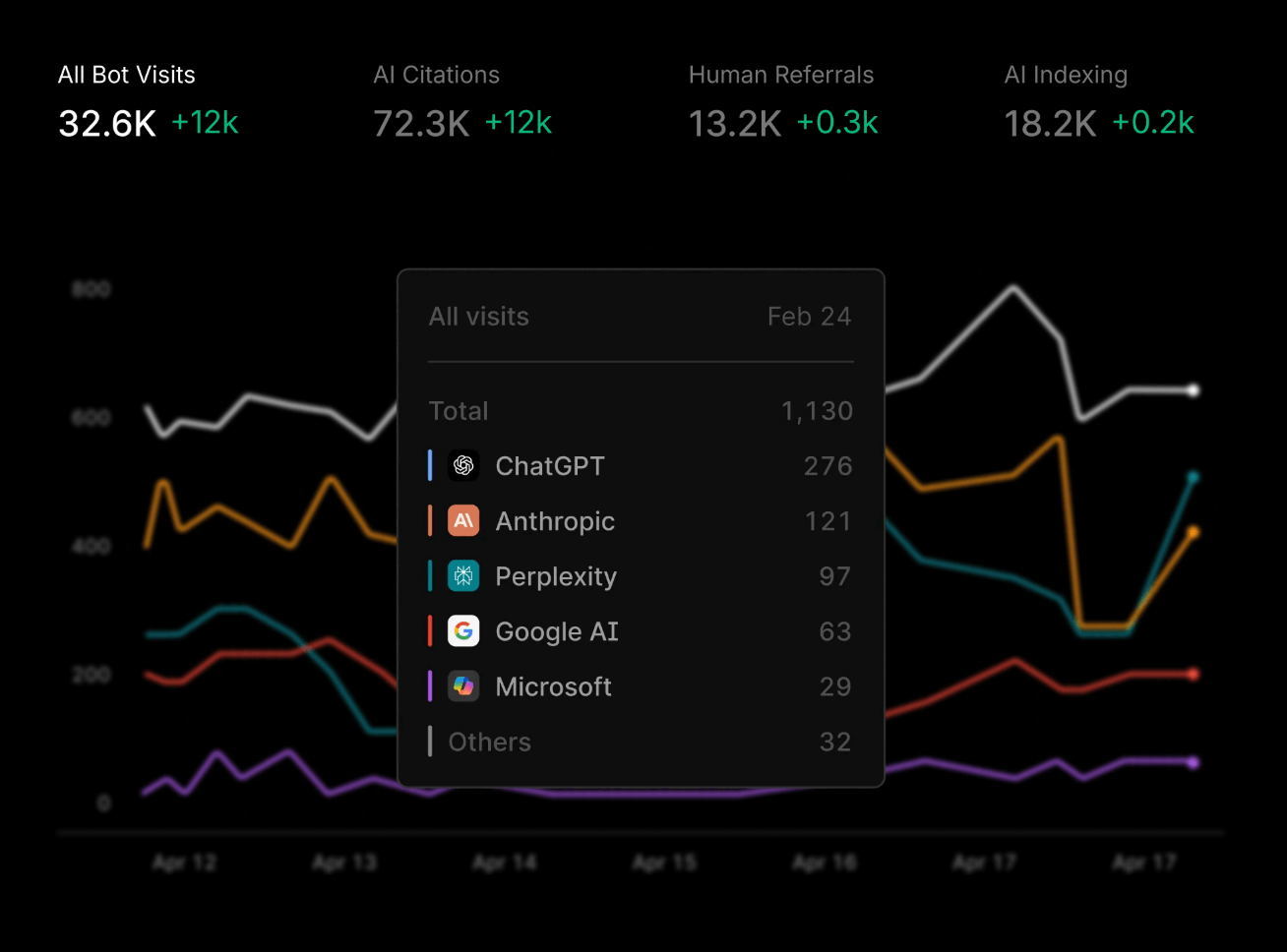
Profound is a GEO specialist without broader SEO integration. Teams using it need a separate platform for traditional search intelligence. Like several other platforms in this category, it does not own the underlying prompt data it uses, which introduces methodology questions when comparing results over time. It provides no visibility into downstream AI traffic impact. Its technical complexity can be a barrier for non-specialist marketing teams.
SaaS subscription pricing.
Tech-savvy teams seeking detailed AI visibility analytics within chatbot environments, without requiring broader web or SEO performance tracking.
Choosing an AEO platform comes down to three variables:
Match these variables to the table below.
| Decision factor | What to ask | Implication |
|---|---|---|
| Budget | Is this an exploratory investment or a core analytics spend? | Entry-level tools suit exploration, enterprise platforms suit scaled programs |
| Organisation size | Are you an SMB team or a multi-domain enterprise? | Scale requirements, compliance needs, and competitive intelligence depth all differ |
| Primary focus | Content optimization, or measurement and attribution? | No tool in this list doubles as a content creation platform |
| SEO integration | Do you need AEO within your existing SEO workflow? | Ahrefs and BrightEdge extend existing SEO programs; Similarweb, Profound, and Peec AI are more standalone |
| Traffic attribution | Do you need to connect AI visibility to business outcomes? | Only platforms built on real-user data and traffic intelligence close this loop effectively |
| Competitive intelligence scope | Do you track one domain or an entire competitive landscape? | Single-domain tools will constrain enterprise competitive programs |
If you are at an enterprise or upper mid-market organization with a digitally mature analytics infrastructure, and your leadership needs to connect AI visibility to traffic and revenue, Similarweb’s unified platform is the defensible choice.
It is the only option here that links prompt-level brand mention data to actual downstream traffic impact within a single system.
A pattern runs through most tools in this category. They measure mentions, but not what those mentions produce. Mention counts tell you whether AI systems are referencing your brand. They do not tell you whether that turns into conversions, which pages are benefiting, or how your AI visibility compares against competitors on the metrics that drive revenue.
That divergence is the central measurement challenge of 2026. More people are using AI more often, but fewer are clicking through. Knowing you are mentioned is necessary. Knowing which mentions drive visits, and what those visitors do when they arrive, is what connects AEO to business outcomes.
AEO in 2026 is not a single discipline. It is a spectrum of measurement maturity. At one end, teams are asking whether their brand appears in AI answers at all. At the other end, enterprise organizations are modeling how AI brand mention activity connects to visibility, pipeline, and revenue outcomes.
Each platform in this guide serves a different point on that spectrum, but not every point on that spectrum carries the same business value. Knowing your brand is being mentioned is the starting line. Knowing how often you are mentioned, how you are characterized, and how that compares against your competitors is where strategy lives.
Similarweb is the only platform here built to operate at that level. Real-user prompt data, granular AI brand mention tracking, and competitive benchmarking in a unified system built for organizations that need to understand their AI visibility in full, not just confirm it exists.
The goal of AEO is to own the answer, not just rank the page. The platform you choose determines whether you can measure and prove the difference.
Track how your brand is mentioned across ChatGPT, Gemini, Perplexity, and Copilot, with competitive benchmarking and prompt-level intelligence, with Similarweb’s AI Search Intelligence platform.
Answer Engine Optimization (AEO) is the practice of structuring and positioning digital content so that AI-powered platforms mention your brand in their generated responses. Where SEO targets rankings in a results page, AEO targets placement in the AI-synthesized answer itself. The optimization focus shifts from keyword density to content structure, entity clarity, and brand mention-worthy authority signals.
Traditional SEO optimizes for clicks, getting a user to select your link from a results page. AEO optimizes for brand mentions, getting an AI system to include your brand, content, or expertise in an answer it generates. SEO success is measured in rankings and click-through rate. AEO success is measured in mention frequency, brand mention share, and downstream traffic from AI platforms. The two disciplines share foundational principles (structured content, authoritative signals, accurate entity data) but diverge on what constitutes a win.
The most important features are: real-user prompt data (not synthetic simulations), traffic attribution from AI platforms to your site, competitive monitoring across multiple domains, brand mention analysis showing which content earns AI mentions, and integration with your existing SEO and analytics workflows. A tool that shows brand mention counts without traffic attribution measures awareness but not impact.
AEO platforms send structured queries to AI engines (ChatGPT, Gemini, Perplexity, Copilot) and record whether your brand is mentioned, how it is described, and whether it is cited as a source. More advanced platforms aggregate real-user query patterns to determine which prompts to monitor, modeling actual search behavior rather than predefined lists. The methodology differences between platforms are significant: results are directional and comparative, not absolute measures of visibility.
Some can. AI referral traffic measurement requires a platform that combines AI visibility data with web traffic intelligence. Tools that focus exclusively on brand mention monitoring will show whether your brand appears in AI answers, but cannot trace whether those appearances are driving site visits. Similarweb’s Gen AI Intelligence module combines both data layers, AI brand mention tracking alongside AI chatbot traffic data sourced from LLM referrals, enabling teams to connect visibility to actual downstream behavior.
It depends on your SEO platform’s AI capabilities. SEO tools with native AEO extensions offer convenience if you are in an exploratory phase. However, these tools were built on SEO architectures and typically lack the real-user prompt data, traffic attribution, and competitive intelligence depth that a dedicated AEO program requires at scale. Organizations with serious AEO ambitions typically need a platform built for the measurement challenge, not one where AEO is a feature layer on an SEO core.
Real-user prompt data is derived from anonymized, normalized patterns of what actual users are querying across AI platforms. Synthetic prompt data consists of pre-built, researcher-constructed queries designed to simulate how users might behave. The practical difference: real-user data reflects the actual distribution of how your category is being discussed in AI environments. Synthetic prompts reflect how analysts expect it to be discussed. For content strategy and competitive positioning decisions, the two produce meaningfully different signals.
Enterprise AEO programs require data governance, compliance controls, multi-domain competitive tracking, traffic attribution, and integration with existing analytics infrastructure. Similarweb is specifically designed for this requirement set, real-user data, enterprise-grade reliability, and measurement that connects AI visibility to business outcomes.
ROI measurement in AEO requires connecting three data layers: AI citation frequency (are you being mentioned?), AI-referred traffic (are those mentions driving visits?), and conversion behavior from AI-sourced visitors (are those visits producing revenue?). Most AEO tools provide the first layer. Platforms with integrated web traffic intelligence provide the second. The third requires connection to your own conversion analytics. Organizations that measure all three layers and compare AI-sourced visitor behavior against organic search baselines have the data to make defensible budget decisions about AEO investment.
Darrell creates SEO content for Similarweb, drawing on his deep understanding of SEO and Google patents.
Give it a try or talk to our insights team — don’t worry, it’s free!