The Lock-and-Refresh Method: How To Track AI Prompts by Funnel Stage
by Limor Barenholtz16 Min.
Nov 11, 2026
Quick test. Think of your last big campaign. Can you say where a customer first heard about you, where they clicked, and where they bought?
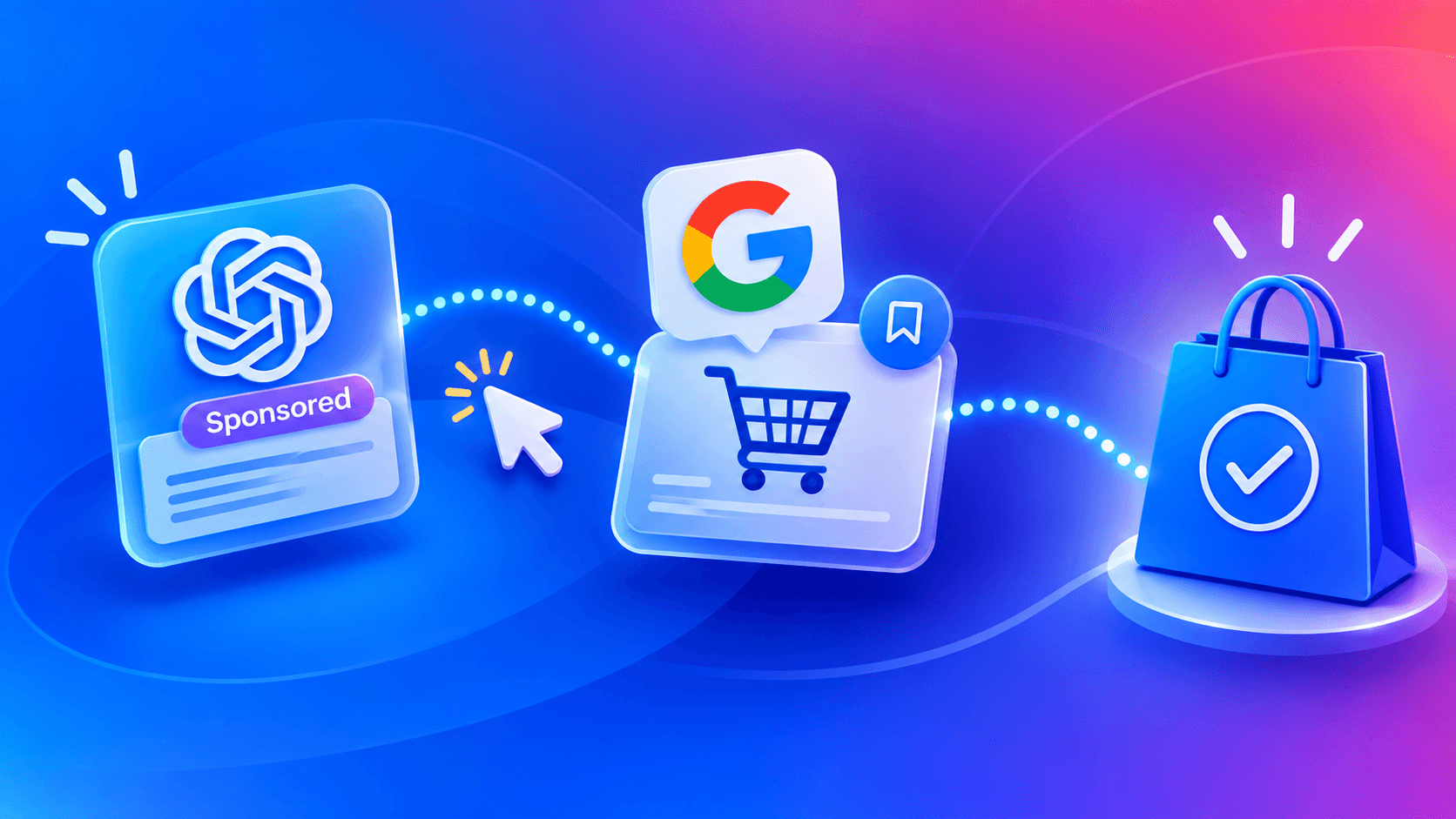
If the answer was already “sort of,” brace yourself. ChatGPT ads now sit at the front of an AI conversation, and Google’s Universal Cart sits at the back. Discovery, click and purchase can happen in one flow.
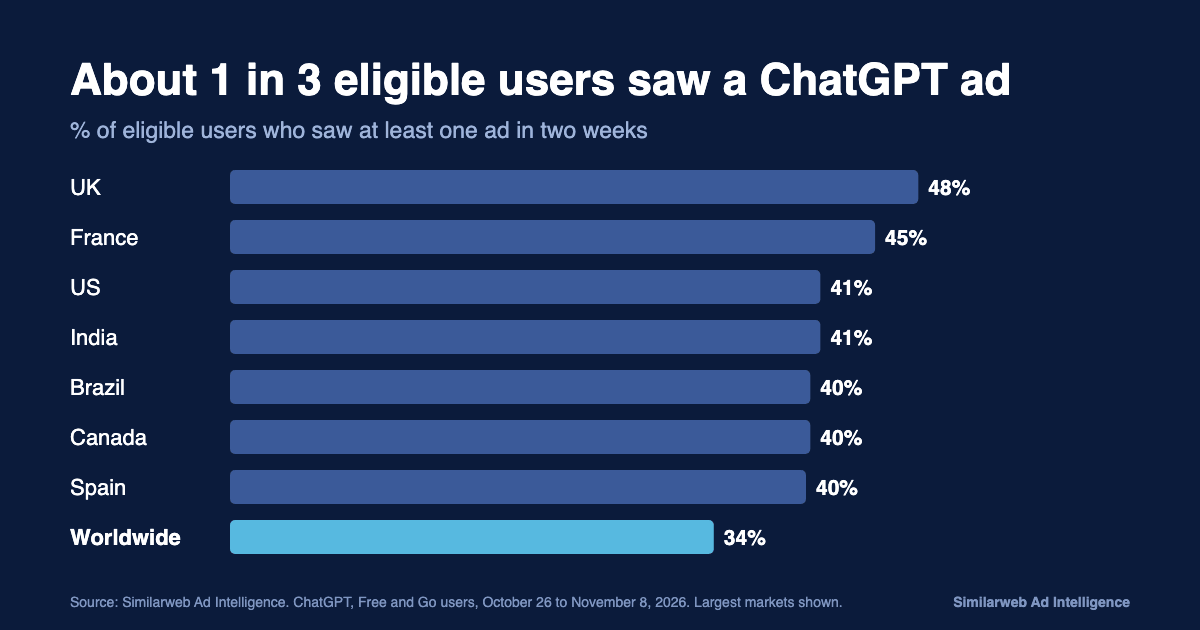
ChatGPT ads put your brand inside the answer. OpenAI began testing ads in the US on February 9, 2026, for logged-in Free and Go users, and has expanded market by market since. In Similarweb Ad Intelligence data (ChatGPT, worldwide, Free and Go users, October 26 to November 8), about 1 in 3 eligible users saw at least one ad over the two weeks. In the biggest markets it was higher: about 48% in the UK, 45% in France, 41% in the US and India, and 40% in Brazil, Canada and Spain.
Universal Cart sits where the shopper decides. Google previewed it at I/O in May and launched it in the US on October 15, across AI Mode and the Gemini app. Shoppers save products from several retailers in one cart, track price drops, and check out with Google Pay or on the merchant’s site.
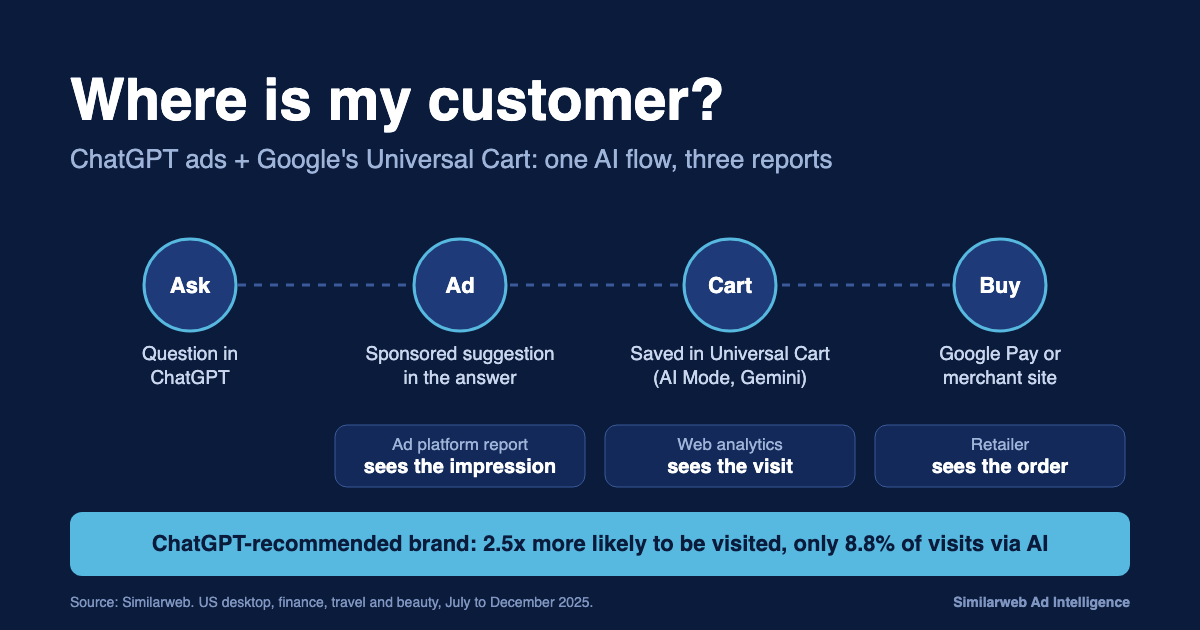
Ask, see a sponsored suggestion, save, buy. One flow, two platforms. No single report follows that full path yet.
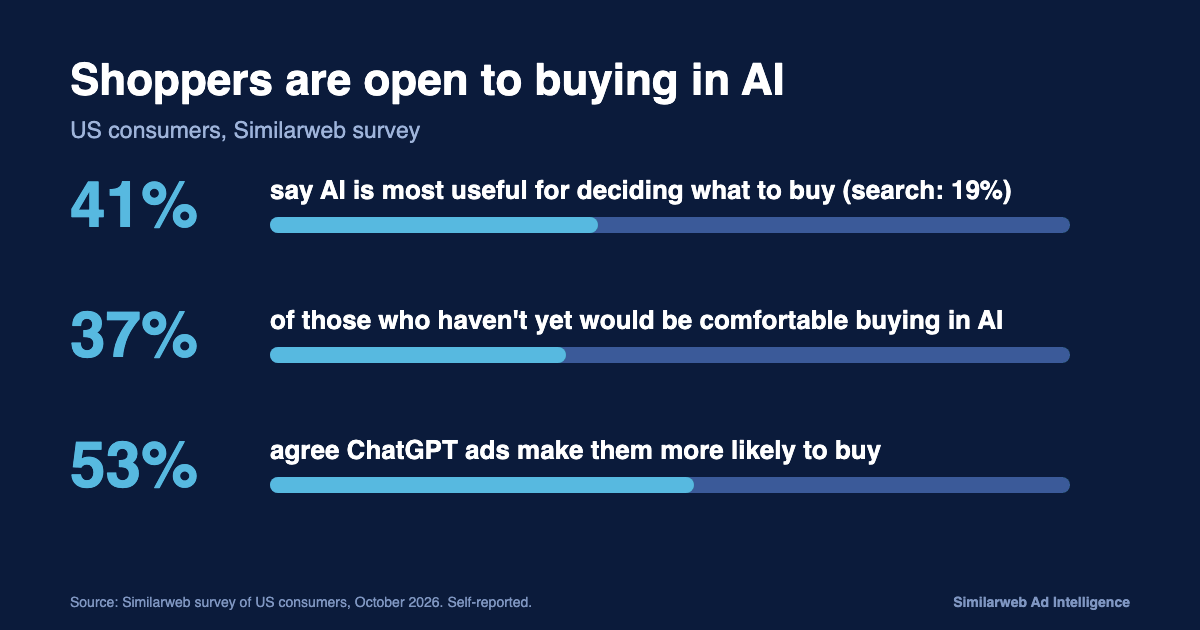
Shoppers are already open to it. In a Similarweb survey of US consumers in October 2026, among those who haven’t yet bought directly within an AI tool, 37% say they would be comfortable doing so, while 48% would not. Among consumers who use AI to research products, 41% say it is most useful for narrowing choices and deciding what to buy, versus 19% for search engines. And among ChatGPT users who have seen ads in ChatGPT responses, 53% agree the ads make them more likely to buy the advertised products (all self-reported).
Because every report is built per platform. The ad platform sees the impression. Your analytics see the visit. The retailer sees the order. Put a cart in the middle and the three stories stop lining up. Which of your reports would show a shopper who was influenced by an AI answer an hour ago?
Similarweb data shows the gap. In Marketing Funnel Fragmentation, a study of US desktop journeys in finance, travel and beauty (July to December 2025), users who got a brand recommendation in a ChatGPT answer (organic, not an ad) were 2.5x more likely to visit that brand than a competitor within seven days. Only 8.8% of those visits arrived through an AI channel. Most showed up as search (55.9%) or direct (19.9%). The influence happened in one place and the visit got credited to another.
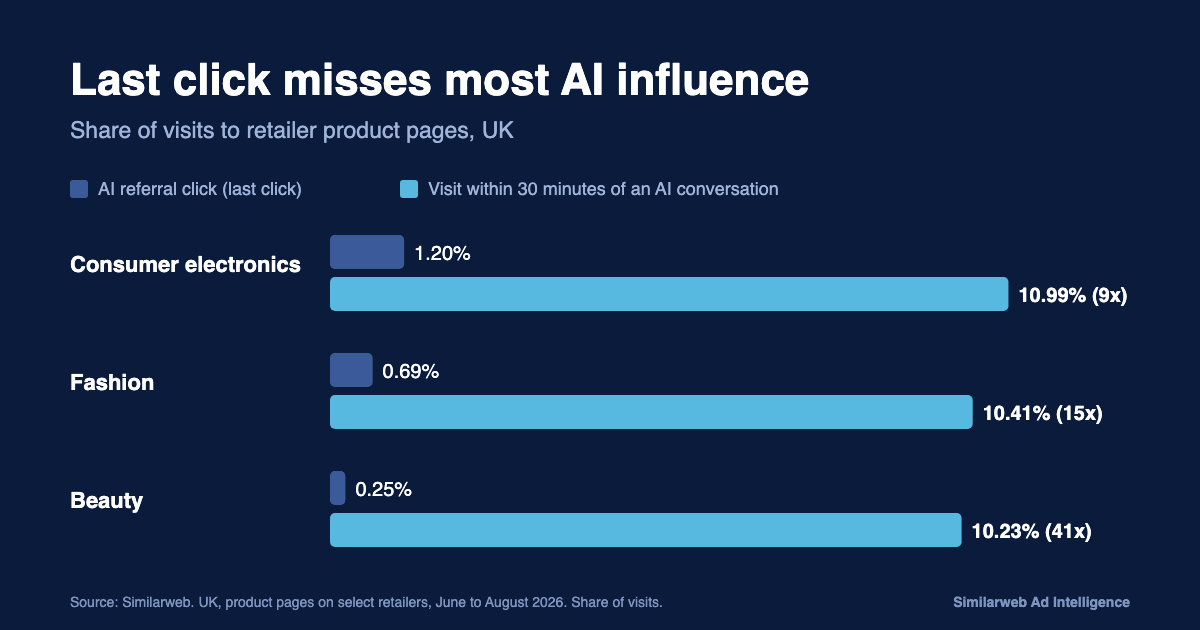
The gap widens when you look at the 30 minutes before a visit. On UK retail product pages (select retailers, June to August 2026), AI referral clicks accounted for 0.25% to 1.2% of visits, depending on the category. Counting visits that followed an AI conversation within 30 minutes (any AI conversation, not only ones with ads), the share was about 10% in all three categories: 11.0% in consumer electronics (9x the last-click share), 10.4% in fashion (15x) and 10.2% in beauty (41x). I shared this at Similarweb Pulse 26 in London. Over half of AI-influenced visits arrive through search, so search gets the credit.
Ads are not the only way AI surfaces a brand. Neither of those two studies is about ad exposure, and the same pattern holds for brands mentioned organically. It is harder to see, because there is no ad report at all: the visit simply shows up as search or direct.
My view: “which platform drove the sale?” is the wrong question. When one flow spans several platforms, the credit isn’t sitting in any one of them. The questions worth asking are the ones no single report can answer:
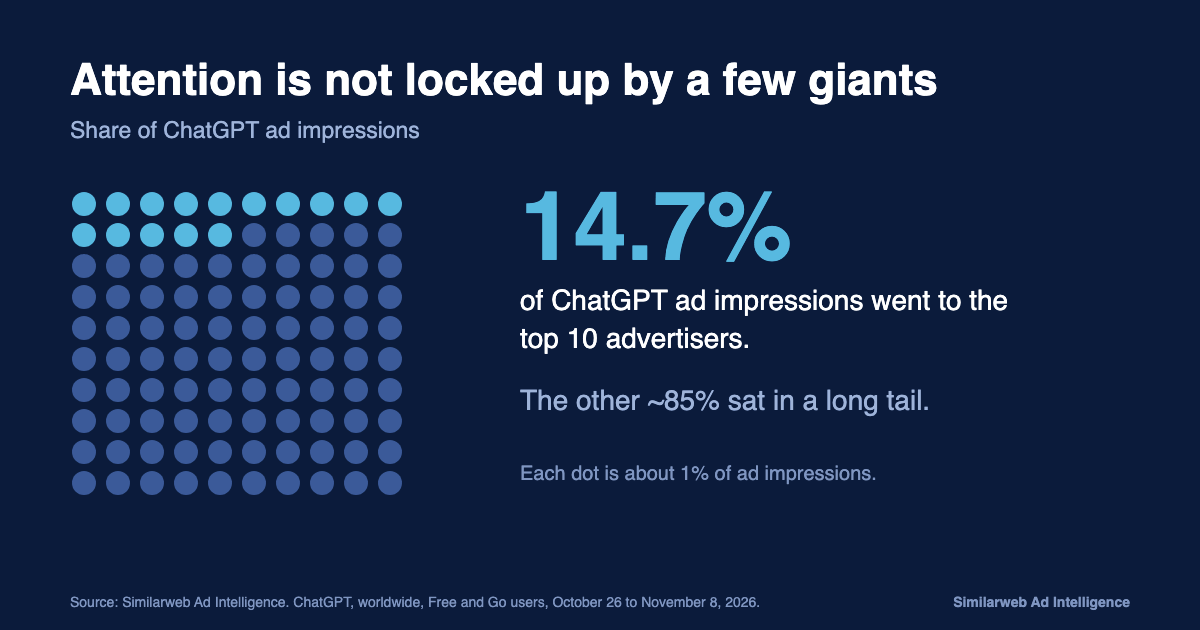
Market-level data sees every advertiser, not just yours. In the same two weeks (ChatGPT, worldwide, October 26 to November 8), the top 10 advertisers held about 14.7% of ad impressions. The other ~85% sat in a long tail.
So attention in ChatGPT ads is not locked up by a few giants. It’s fragmented, fast-moving, and includes advertisers you may not track as competitors. The top of the leaderboard leans B2B and software (TikTok for Business, Design.com, Resume.io, ManageEngine) more than retail. That fragmentation is why share of attention can’t be read from any single report.
Why so little retail? The retail tooling is new. OpenAI wound down Instant Checkout in March, reportedly after Walmart data showed in-chat purchases converting at a third of the rate of click-outs, and moved product feeds into Ads Manager instead. Retailers can now create campaigns from a product feed, and Shopify merchants have a dedicated app. That is recent, which fits the low retail presence in the data, and it is moving fast. Retailers such as Best Buy and Williams-Sonoma were reportedly among the first advertisers, so this is about scale, not absence. Amazon Ads announced a pilot on September 10 that lets a limited group of US brands run ads in ChatGPT through Amazon’s ad platform, and Criteo became OpenAI’s first ad tech partner earlier this year.
I believe we will soon see many more retailers in ChatGPT ads, and how that will work is yet to be defined.
Three questions for your next planning meeting:
If so, we undercount whatever happens in the cart, and action should be taken with a more holistic view across channels. Similarweb’s AI referral and journey data show visits that follow an AI conversation, including the ones that arrive through search or direct and get credited elsewhere.
Share of attention is relative, and our own report can’t show competitors. Similarweb’s AI visibility tracking shows which brands AI answers mention and cite, and Ad Intelligence shows which advertisers appear in ChatGPT, Google AI Overviews and Google AI Mode ads.
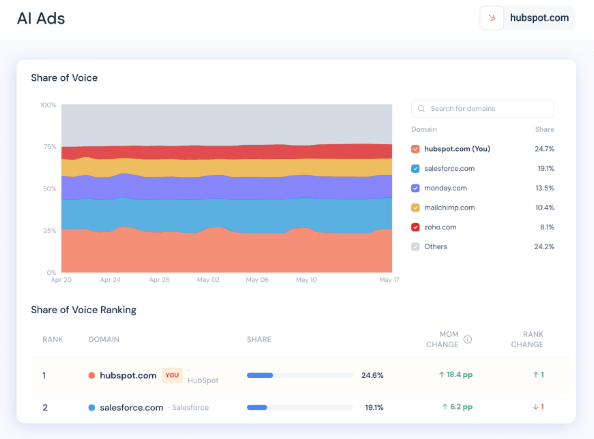
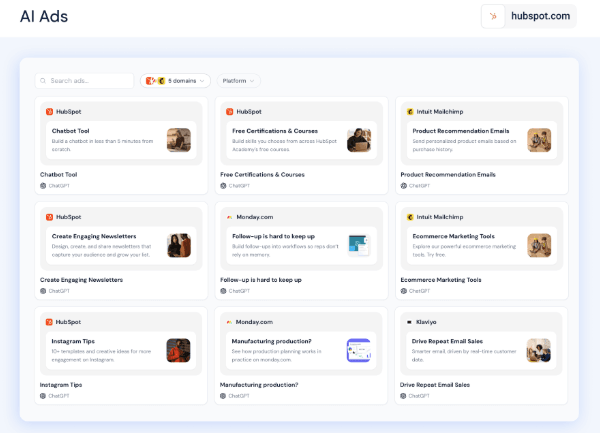
Ad Intelligence lists AI ads next to display, social and search ads, and each ad shows when it was first and last seen, how long it ran and its landing page. For the data itself, custom data feeds label every ChatGPT, AI Mode and AI Overviews ad with an industry and ad category, and let you cut by domain, market, platform and the intent of the prompts that triggered it, including how many advertisers and ads sit in each category, so you can see who competes where.
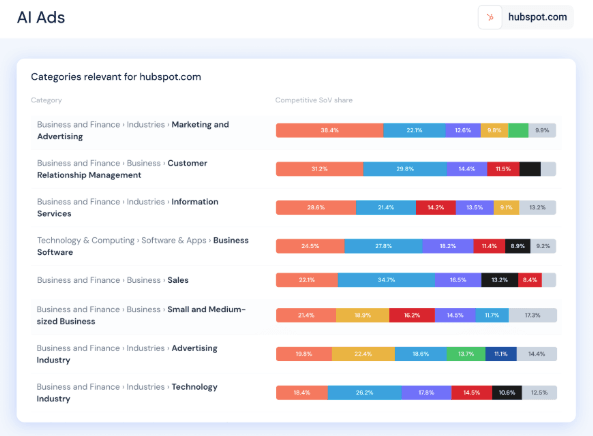
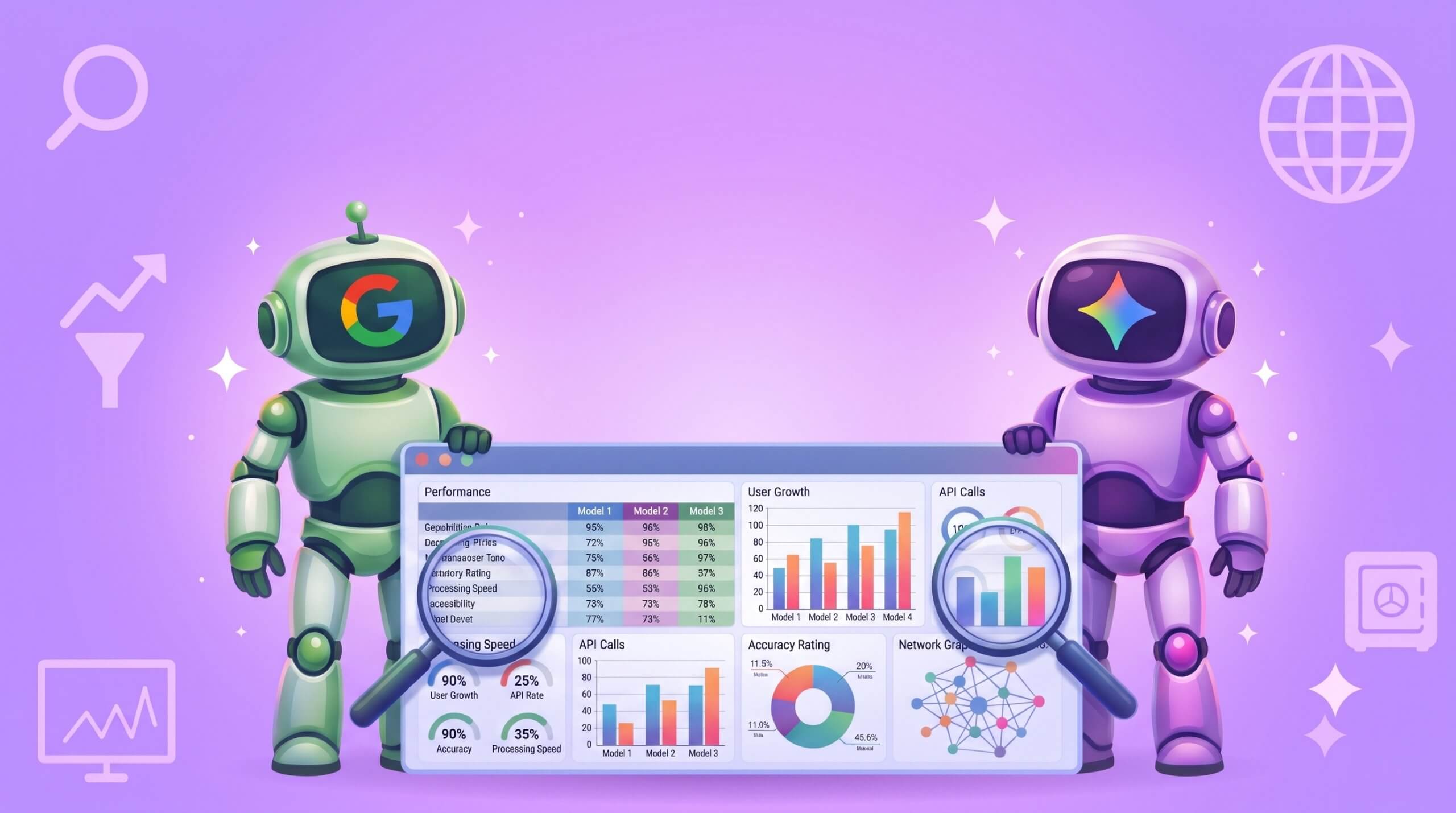
Illustrative views of ad activity across AI platforms.
When ChatGPT ads and Universal Cart share one flow, the sale doesn’t belong to one platform’s report. Neither does the competition. Each platform will keep reporting its own step accurately, but none of them can show who held the shopper’s attention before the cart, or which rivals appeared in the same answer.
That gap will matter more as retailers enter ChatGPT ads and shopping carts move closer to the AI answer. Tracking organic mentions, ad activity and visits across AI surfaces, not only inside one, can help you spot shifts in attention earlier. One flow for the shopper, split across platforms for the marketer. See the whole flow, or accept a partial answer.
A third-party data provider such as Similarweb can look across platforms in a way no single platform’s report can. Similarweb covers each layer, what AI says, what it shows and where visits go, so you can read them together.
Want to see who shows up in sponsored AI answers in your market?
Visit the Similarweb AI ads page, or watch our latest webinar to learn more about ChatGPT ads.
ChatGPT ads are sponsored placements shown inside ChatGPT. OpenAI began testing them in the US on February 9, 2026, for logged-in Free and Go users, and says they are labeled as sponsored, kept separate from the answer, and do not influence it.
Universal Cart is a shopping cart in AI Mode and the Gemini app. Shoppers save products from several retailers, track price drops, and check out with Google Pay or on the merchant’s site. Google launched it in the US on October 15, 2026.
Each platform sees only its own step: the ad platform sees the impression, your analytics see the visit, and the retailer sees the order. In Similarweb data, users who got an organic ChatGPT brand recommendation were 2.5x more likely to visit that brand within seven days, but only 8.8% of those visits arrived through an AI channel.
In Similarweb Ad Intelligence data (ChatGPT, worldwide, Free and Go users, October 26 to November 8, 2026), about 1 in 3 eligible users saw at least one ad. In the UK it was about 48%.
No. The top 10 advertisers held about 14.7% of ad impressions (ChatGPT, worldwide, October 26 to November 8, 2026), and the top of the leaderboard leans B2B and software. Shopping-format ads never passed about 2.5% of ChatGPT ad impressions from April through September 2026. Retail is starting to move: Amazon Ads began a pilot on September 10 that lets a limited group of US brands run ads in ChatGPT, and I expect many more retailers soon.

by Liat Sagiv
Senior Product Marketing Manager - Ad Intel
Liat Sagiv is a Senior Product Marketing Manager at Similarweb. She shapes the stories that help companies understand the value of Similarweb data for their business.
Give it a try or talk to our insights team — don’t worry, it’s free!