What is RAG (Retrieval-Augmented Generation)? A Marketer's Guide
by Shai Belinsky9 Min.
Oct 01, 2026

[EDITORIAL DISCLOSURE]
While I serve as the SEO Director at Similarweb, this review is objective. I have ranked these tools based on “Data Provenance”. Specifically, their ability to provide unique, verified data assets that others cannot replicate. I have stress-tested every tool on this list using the methodology below.
In 2026, the definition of “competitive analysis” has undergone a seismic shift. In a world where consumers increasingly interact with large language models (LLMs), the traditional “10 blue links” represent a shrinking slice of the pie. In fact, recent data suggests that only about 8% of AI‑related queries result in a click to a website.
This metric is terrifying if you are still relying on 2020-era SEO tactics. Marketers can no longer rely solely on who ranks first for a keyword in Google, and must now monitor answer share in generative search, app store dynamics, and brand visibility across AI‑powered agents.
Traditional competitive-intelligence tools that focus solely on keyword difficulty or paid‑search bidding are insufficient for this new reality. They measure a game that is slowly coming to an end.
As a seasoned SEO and AI‑search strategist, I’ve spent the past year benchmarking the leading platforms. From enterprise‑grade market intelligence to nimble point solutions, I tested how each product performs against three strategic pillars.
To ensure this ranking wasn’t just a feature list, I conducted a live “stress test” of every tool using a single, high-stakes industry vertical: Cryptocurrency Exchanges.
I analyzed the competitive landscape for Binance vs. Coinbase across all 10 platforms. Specifically, I looked for:
The result is a strategic stack that begins with truth and ends with execution. No single tool can cover every use case, so I group them by their role within your stack.
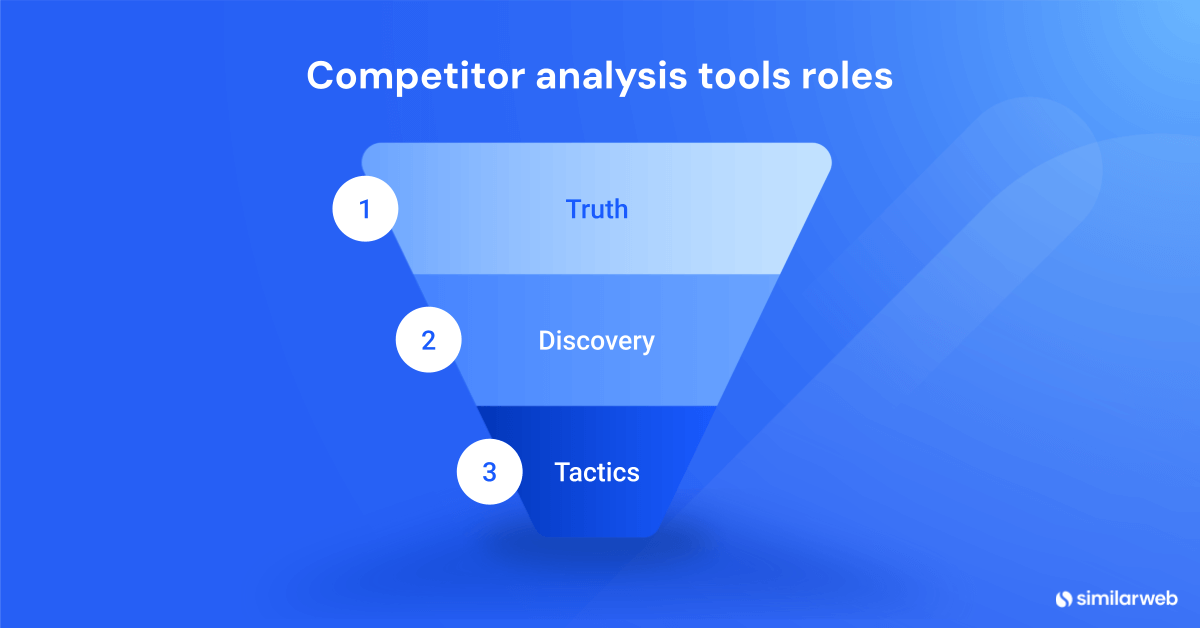
Data provenance refers to the origin of competitive data. Most low-cost tools rely on “clickstream data” purchased from third-party browser extensions. While cheap, this data is often heavily biased and inaccurate for smaller or niche websites.
When deciding on a competitor analysis stack, understanding a tool’s data provenance is more important than the number of features it advertises. This is why tools with proprietary panels rank higher: they offer a statistical truth that scraped data cannot match.
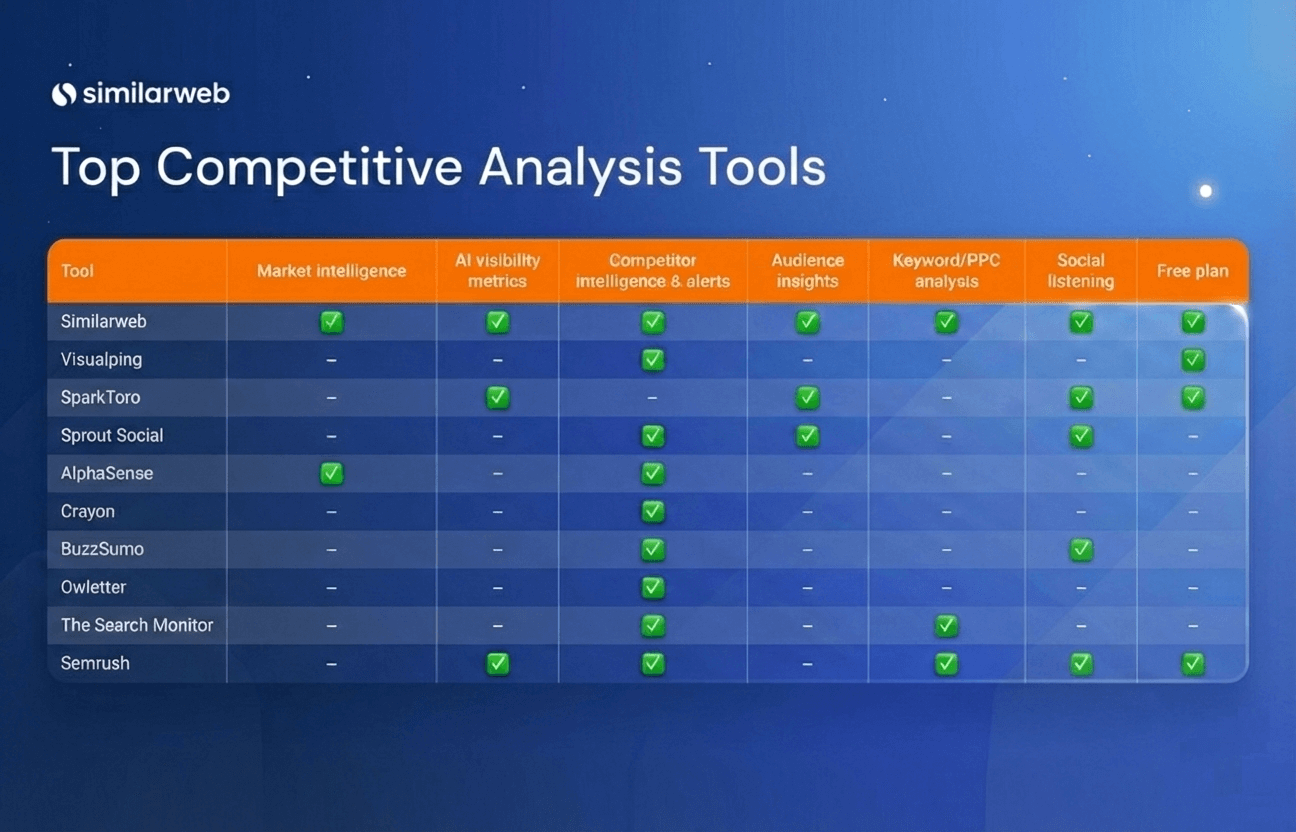
Before diving into the individual reviews, this matrix contrasts each platform across the core capabilities that matter for competitor analysis in 2026.
(Note: Data derived from current tool capabilities as of 2026.)
| Tool | Market intelligence | AI visibility metrics | Competitor intelligence & alerts | Audience insights | Keyword/PPC analysis | Social listening | Free plan |
| Similarweb | ✔️ | ✔️ | ✔️ | ✔️ | ✔️ | – | ✔️ |
| Visualping | – | – | ✔️ | – | – | – | ✔️ |
| SparkToro | – | ✔️ | – | ✔️ | – | – | ✔️ |
| Sprout Social | – | – | ✔️ | ✔️ | – | ✔️ | – |
| AlphaSense | ✔️ | – | ✔️ | – | – | – | – |
| Crayon | – | – | ✔️ | – | – | – | – |
| BuzzSumo | – | – | ✔️ | – | – | ✔️ | – |
| Owletter | – | – | ✔️ | – | – | – | – |
| The Search Monitor | – | – | ✔️ | – | ✔️ | – | – |
| Semrush | – | ✔️ | ✔️ | – | ✔️ | – | ✔️ |
A digital‑intelligence platform that provides accurate traffic, visibility, and audience data across web, app, and generative‑AI engines. It draws on a real‑user panel to show your share of voice, traffic sources, and brand visibility in AI engines.
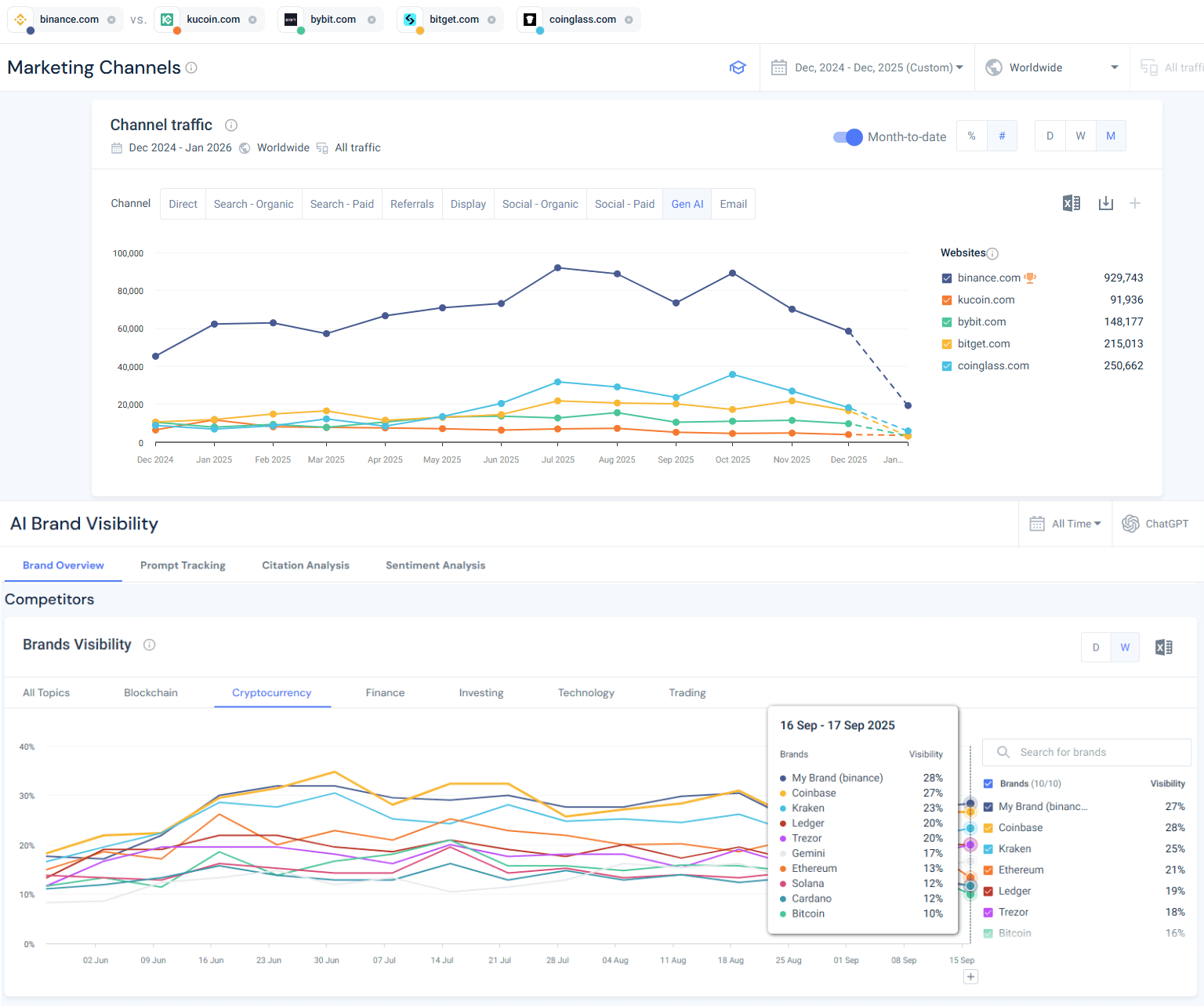
This platform is designed for CMOs, department directors, SEO teams, and growth strategists who need a panoramic view of market share and audience behavior across web and app ecosystems. It is the tool of choice for organizations that cannot afford to guess at their market position.
Similarweb has aggressively expanded into AI‑search intelligence, recognizing that “search” is no longer just Google. It now tracks brand visibility across generative AI platforms, measuring metrics such as brand mention share, topic coverage, citation share, and sentiment distribution.
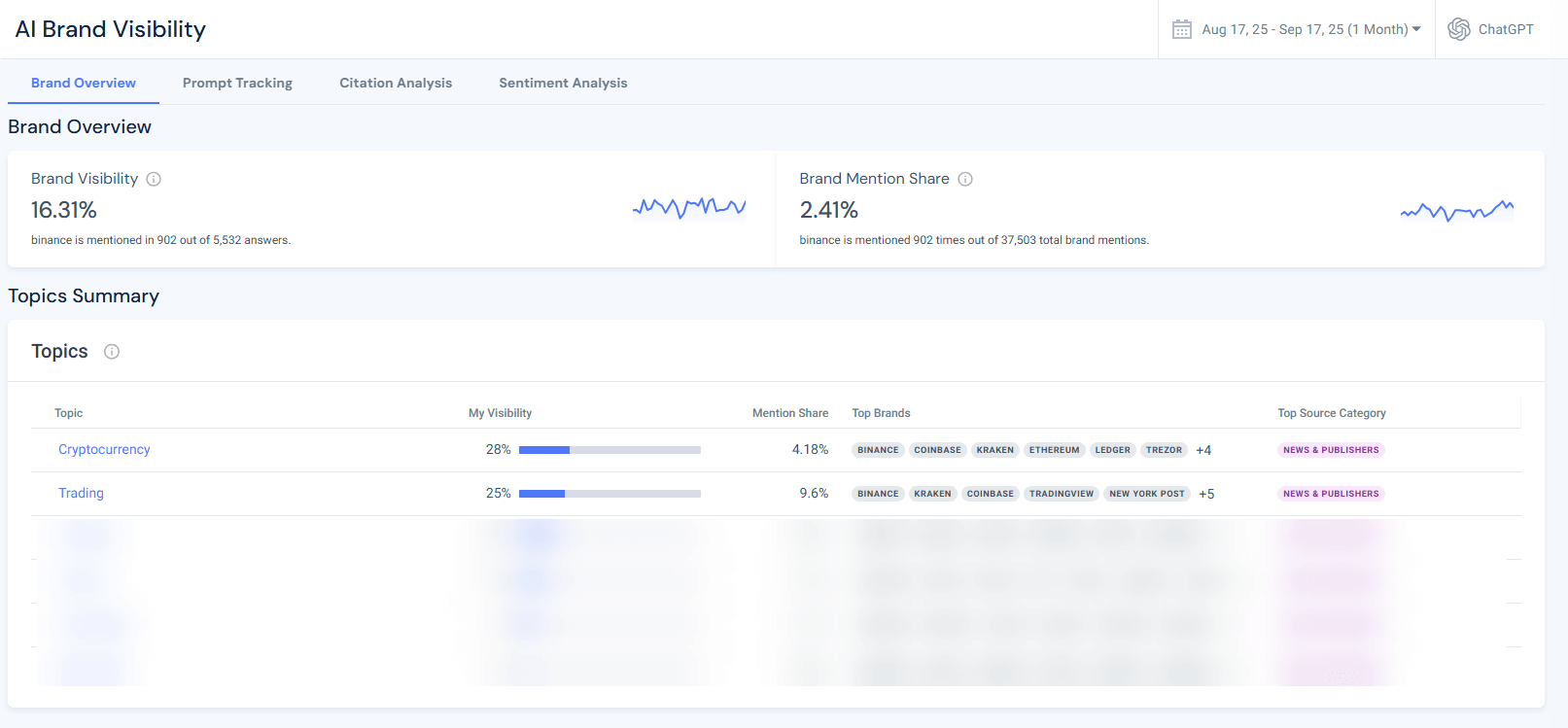
In my recent campaign analysis for Binance, Similarweb reported a brand visibility score of 16.31% and showed that Binance is frequently mentioned in topics like “Trading” and “Cryptocurrency.”
Crucially, it highlighted gaps where competitors were winning citations in prompts related to “crypto security”. This is a direct insight I couldn’t find in traditional keyword tools.
The Competitive Intelligence package costs about $125 per month, and the AI Search Intelligence package goes for $99 per month. Free trial is available, plus a complete set of free tools to check website traffic, App usage, website rankings, and more.
Similarweb is the only tool that provides “Total Market Visibility” across Web, App, and AI Search. If you need the truth about your market share across these channels, you start here. Many tools claim to show “traffic,” but they often just multiply keyword volume by click-through rates (a method prone to large errors). Similarweb measures actual user visits.
Over the past year, I’ve used it to quantify Binance’s AI search visibility and to compare app engagement against Coinbase and Kraken.
I particularly appreciate the AI visibility tools, the ability to build custom dashboards, and the ability to drill into demographic segments, which many other tools gloss over. If your job depends on reporting accurate market share to the board, this is the only safe bet.
Pro Tip: Use the Zero-Click analysis in the Keyword Generator. It shows how many searches for your competitor’s brand name result in no clicks (meaning the user got their answer directly from the SERP or the AI Overview). This is a great proxy for measuring “brand strength” vs. “traffic necessity.”
A change‑monitoring service that automatically detects and summarizes updates on any webpage (price changes, product announcements, etc.) and sends alerts via email, Slack, Teams, and other channels. Its AI summaries filter out noise and highlight what changed.
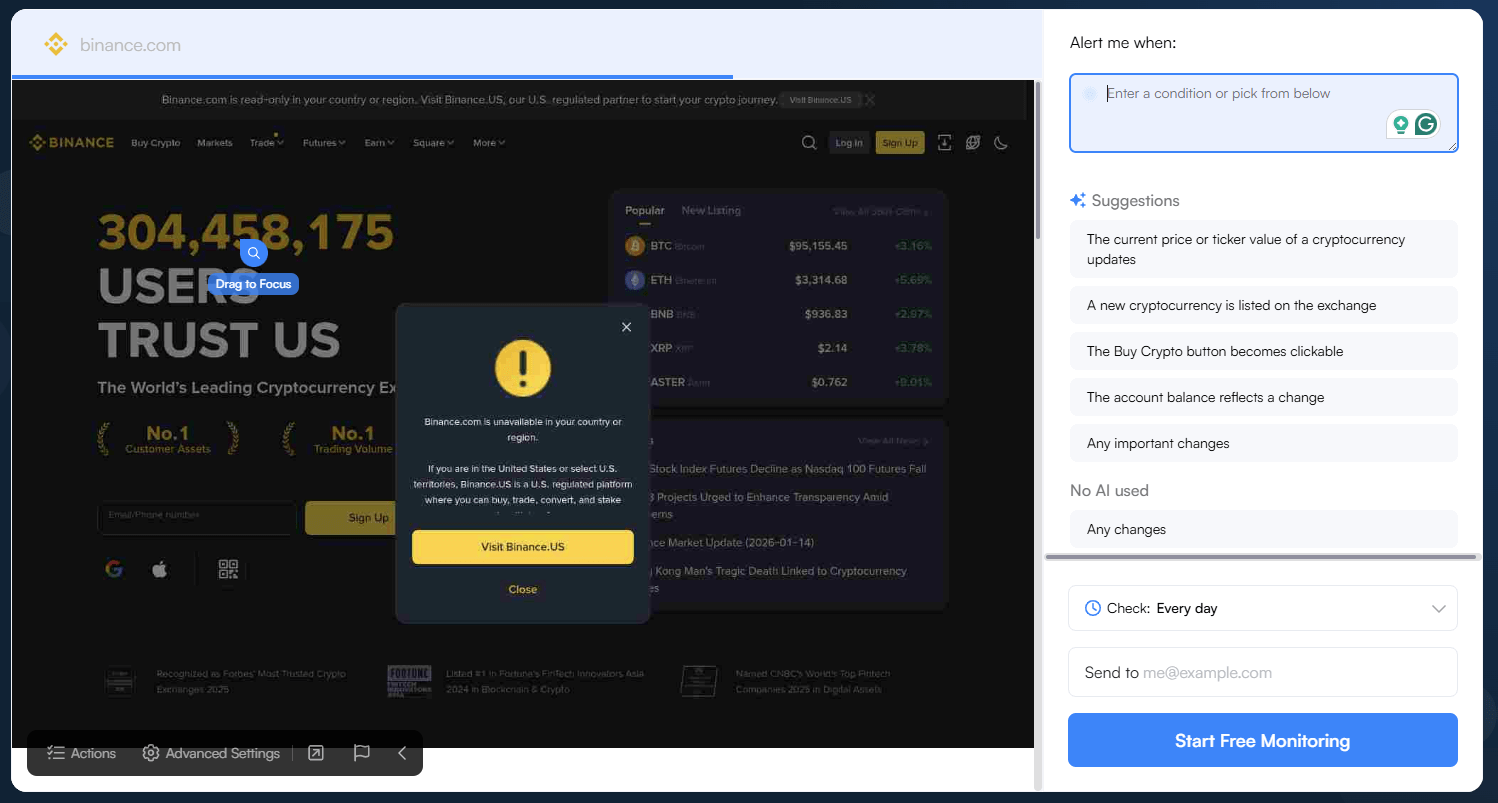
Growth marketers, product managers, pricing analysts, and investor relations teams turn to Visualping for immediate notifications of competitor page changes. It’s perfect for catching new promotions, A/B tests, and corporate communications before the market notices.
Visualping incorporates AI summarization to distinguish meaningful page changes from noise. When a competitor changes the price of a plan or updates messaging, Visualping’s AI summarizes the change so you don’t have to compare screenshots manually.
Personal plans start at $50/month for up to 10,000 checks. Business plans begin at $100/month for 20,000 checks. A free plan offers 150 checks.
Visualping is the best tool for tactical change detection. While Similarweb helps me identify strategic gaps, Visualping helps me catch the micro-changes, like a competitor quietly removing a “money-back guarantee” or testing a new headline.
I love that I can set custom thresholds to trigger alerts only when something meaningful happens. The AI summaries are a huge timesaver when monitoring dozens of pages; I don’t have to squint at screenshots anymore.
Pro Tip: Monitor your competitors’ “Careers” page. A sudden influx of “Sales Engineer” listings tells you they are planning a push into a new market segment weeks before they announce it publicly.
An audience‑research tool that uncovers where your target audience spends time online. It identifies the podcasts, YouTube channels, newsletters, and social accounts they follow and surfaces the influencers who shape those opinions.
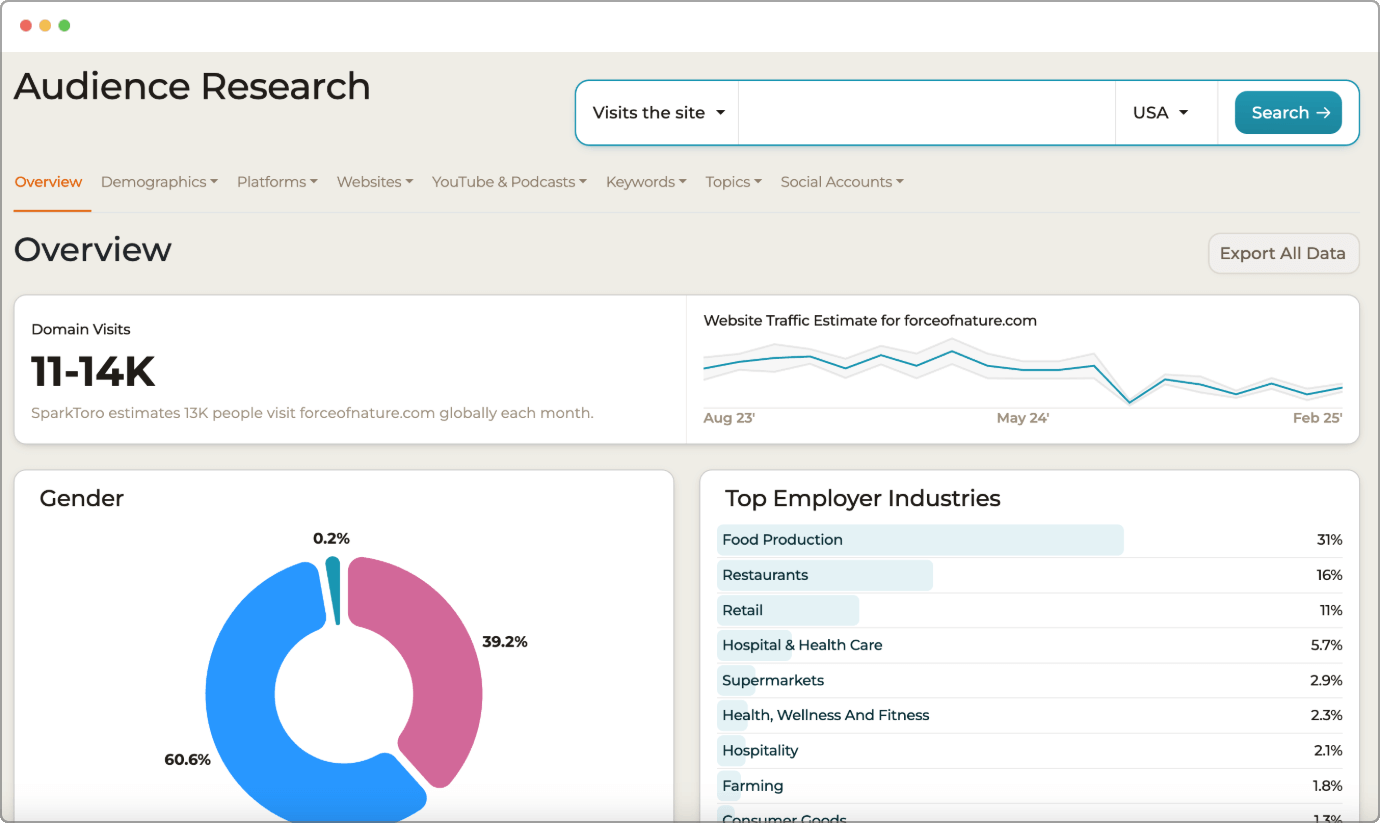
Audience researchers, content strategists, influencer marketers, and PR professionals use SparkToro to discover where their target audience spends time online before they search.
SparkToro is built for the post‑search era. As AI assistants answer queries with knowledge drawn from podcasts and articles rather than search indexes, it’s critical to embed your brand in those source materials. SparkToro helps you find the podcasts, publications, and influencers your audience already trusts.
Personal plan costs $50/month. Business plan is $150/month, and the Agency plan is $300/month.
SparkToro is essential for “Discovery” in the era of Generative AI. As generative AI surfaces content rather than links, being present in your audience’s favorite podcasts and newsletters is crucial. SparkToro is my discovery engine for those channels.
I’ve found niche Telegram groups for Binance that I never knew existed simply by analyzing who the top crypto-influencers were following. The insight into “who influences whom” is worth the subscription alone, as it lets you seed your brand into the training data of future AI models.
Pro Tip: Use the “Hidden Gems” feature to find newsletters and podcasts that have high engagement but low follower counts. These are often cheaper to sponsor and deliver higher ROI than “celebrity” influencers.
A comprehensive social‑media management suite that unifies messages from multiple profiles and listens across platforms like Twitter/X, Reddit, and TikTok. AI Assist features condense thousands of mentions into sentiment trends and suggest optimal post times.
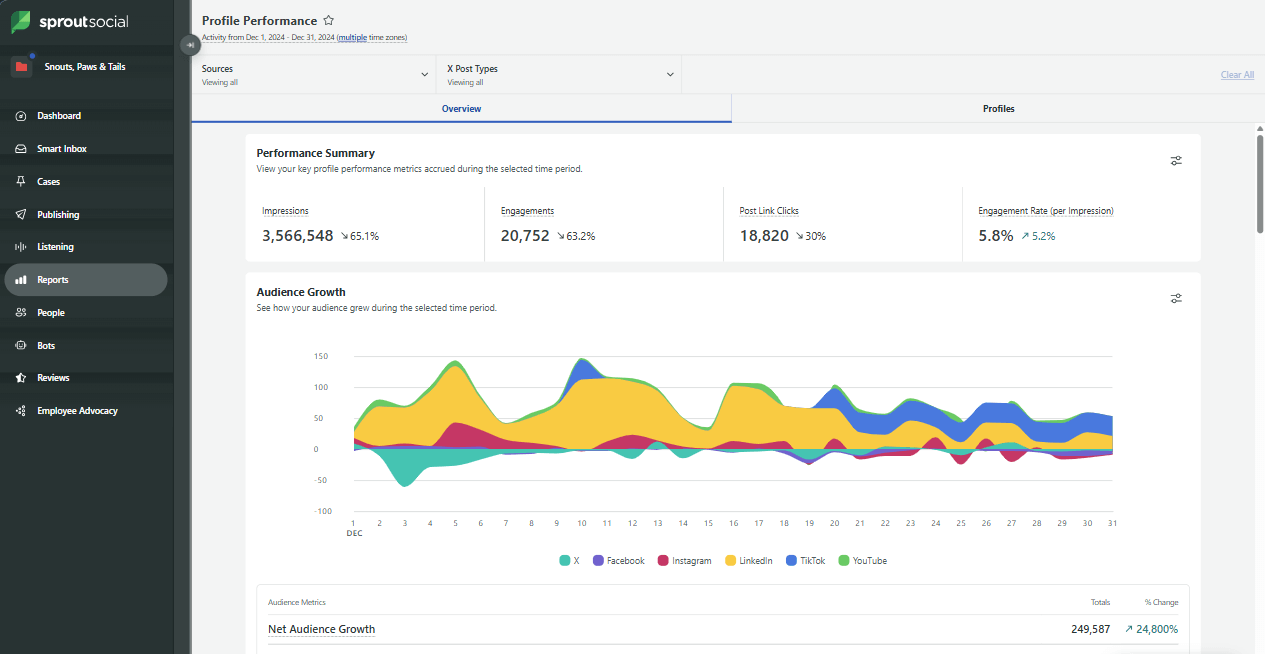
Social media managers, community managers, and brand marketers who need to monitor brand sentiment, manage multiple profiles, and benchmark engagement.
Sprout Social has embraced AI with its AI Assist features, which summarize thousands of customer messages and competitor mentions into actionable trends. It helps you understand how people feel about your competitor, not just that they are talking about them.
Plans start at $199 per seat/month (Standard). Professional plans are $299 per seat/month.
Sprout Social provides the best sentiment analysis for social listening. Listening is not optional in 2026. While some tools include basic social monitoring, none match Sprout Social’s depth. The sentiment analysis is particularly strong: it can tell the difference between a sarcastic “Thanks a lot, Binance” and a genuine one.
However, the per‑seat pricing is painful. I’ve had to limit team access to avoid surprise bills. It is a premium tool for teams that treat social as a primary revenue channel.
Pro Tip: Set up a competitor listening topic specifically for “complaint keywords” (e.g., “broken,” “support,” “refund”). When a competitor has a service outage, you can tactfully join the conversation with a solution.
An enterprise research engine using AI to search and summarize more than 10,000 sources, including earnings calls, SEC filings, and broker reports, for market and competitive insights. Its Smart Synonyms and generative‑AI tools produce concise synopses of complex financial documents.
Market researchers, investor relations teams, and corporate development groups in large enterprises who need deep financial insights and “expert” knowledge.
AlphaSense pioneered Smart Synonyms and generative AI summarization of financial documents. It automatically extracts themes and sentiment from earnings calls and generates AI‑generated synopses of 100-page reports.
Quote‑based. Generally aimed at large enterprises with contracts often exceeding $10,000/year.
AlphaSense is the gold standard for financial competitive research. I find AlphaSense’s semantic search incredibly powerful for due diligence: if a competitor mentions a new product line in a PDF footnote, AlphaSense finds it.
However, the high cost means it’s not for everyday marketing use. I use it for deep financial dives (quarterly reviews), but I stick to Similarweb for my daily market intel.
Pro Tip: Set alerts for executive departures. If a competitor’s CTO suddenly leaves, AlphaSense often catches the filing or press release before the tech blogs do, signaling potential product instability.
A competitive‑intelligence platform that monitors competitors’ websites, social feeds, job listings, and news, then highlights the most important updates. It automatically refreshes sales battlecards and delivers real‑time insights to your revenue teams through Slack, Teams, and Salesforce integrations.
Product marketers and sales enablement leads who need to keep their salesforce armed with timely “Battlecards”.
Crayon uses AI to summarize competitor updates and automatically refresh battlecards used by sales teams. It bridges the gap between “marketing knows this” and “sales uses this”.
Quote‑based. User forums suggest entry‑level contracts start around $34,000/year.
Crayon is the best tool for closing the loop between Marketing and Sales. It solves a specific organizational failure: Marketing knows the competitor launched a feature, but Sales is still using a 2024 pitch deck.
I’ve seen sales teams close deals specifically because they had a Crayon battlecard ready to counter a competitor’s claim. The interface is a bit clunky, but once configured, those real‑time alerts are gold for closing deals.
Pro Tip: Integrate Crayon with Slack channels dedicated to specific competitors. It turns competitive intelligence from a “report nobody reads” into a “live news feed” the whole company discusses.
A content intelligence platform that analyzes what content performs best for any topic or competitor. Unlike Crayon (which tracks website changes), BuzzSumo tracks social engagement, backlinks, and viral trends to help you understand what content the market actually cares about.
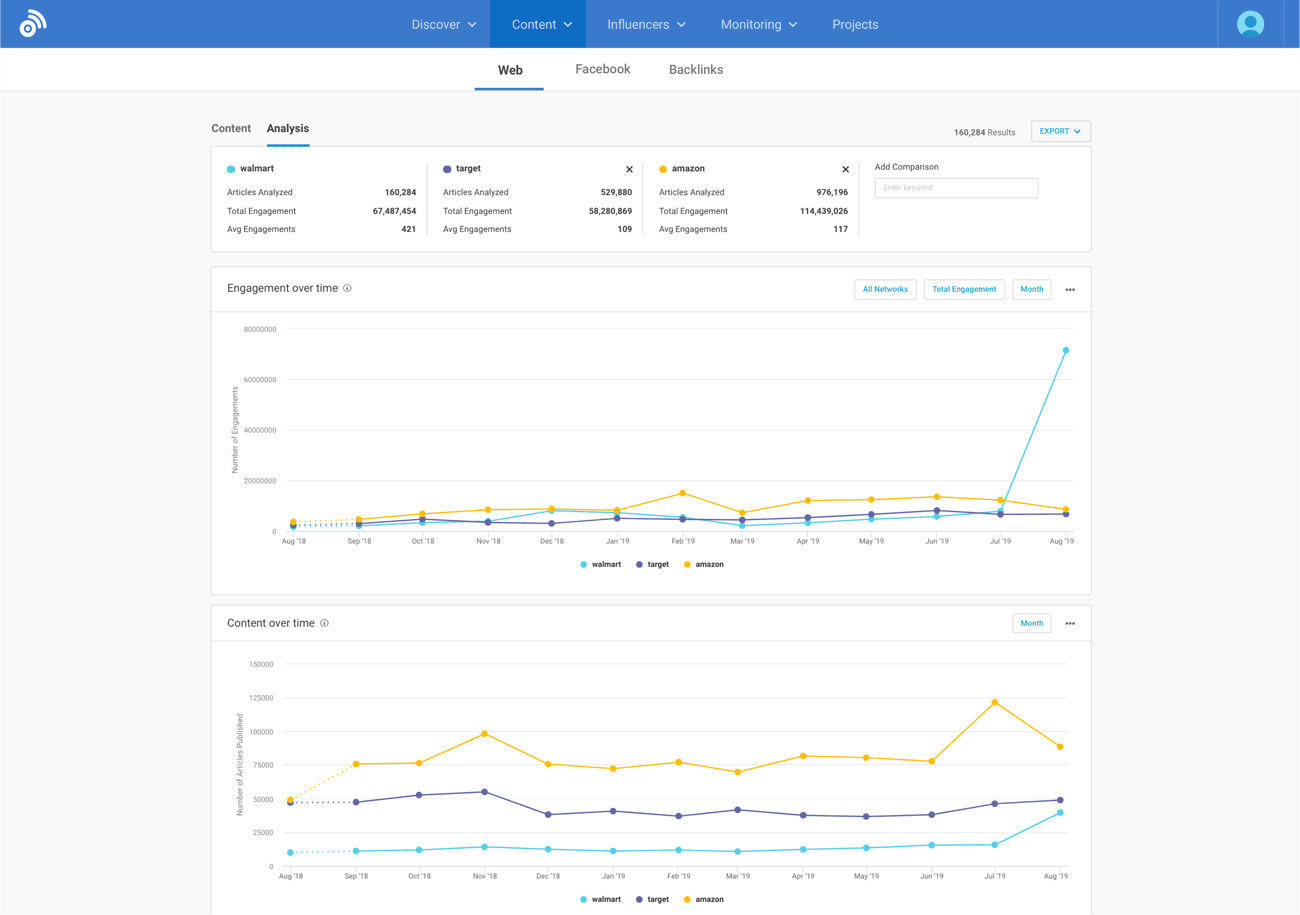
Content strategists, digital PR specialists, and SEO copywriters who need to discover what content resonates with their audience to earn links and shares.
BuzzSumo excels at finding the human content (articles, videos, podcasts) that generative models train on. By identifying high-engagement content, you can replicate topics that are proven to generate citations.
Basic ($95/month), Content Creation ($199/month), Suite ($319/month), and Enterprise ($999/month).
BuzzSumo is the industry standard for content ideation and influencer discovery. It makes discovering trending topics trivial. I often export top‑shared articles to cross‑reference with Similarweb’s traffic data. This helps me prioritize topics that resonate with both humans (social shares) and the AI systems trained on those human signals (citations).
Pro Tip: Use the “Question Analyzer” to find real questions people are asking on Reddit and Quora about your competitors’ products. Write content that answers those questions better than they do.
A content‑analysis tool that tracks the most‑shared articles, videos, and podcasts to reveal trending topics and influential authors. Alerts and analytics show which formats and domains generate engagement and help PR teams discover journalists and influencers.
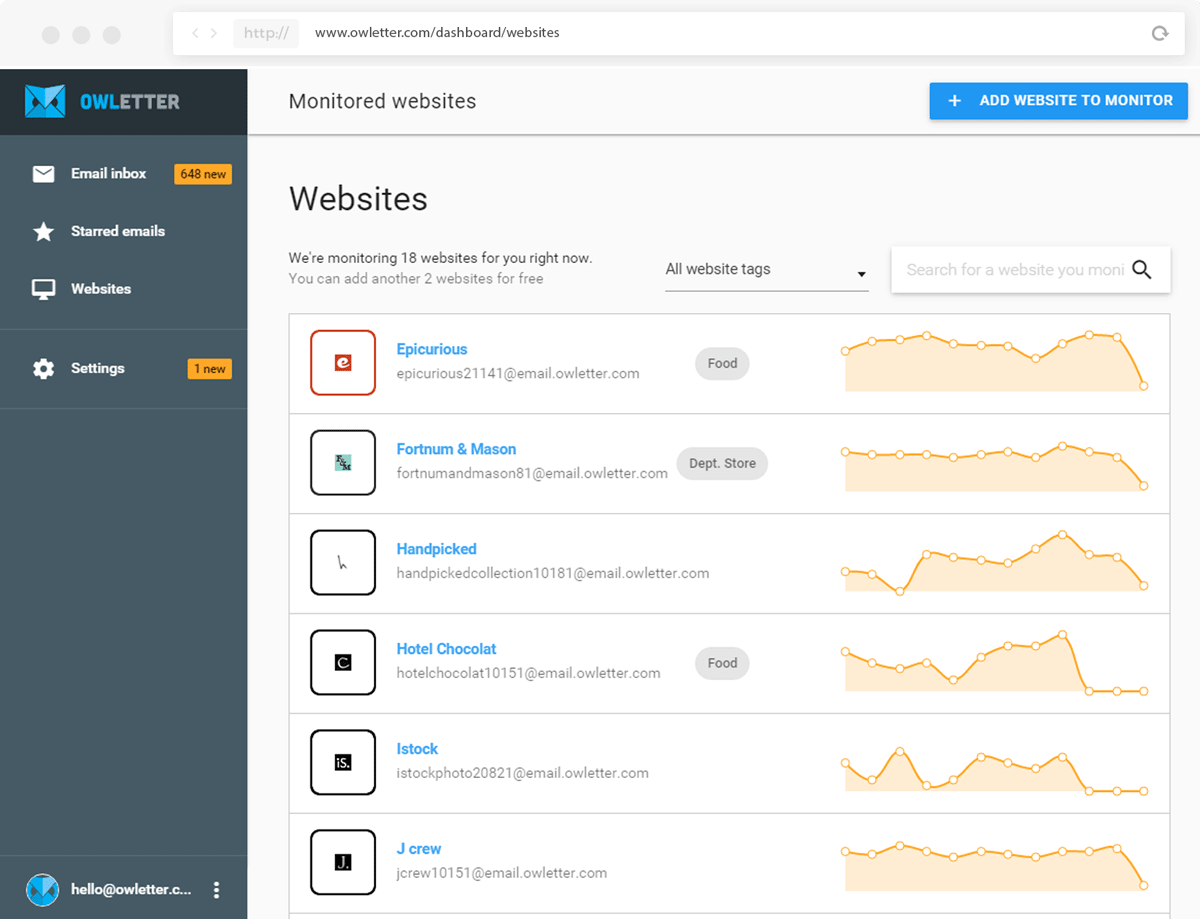
Ecommerce marketing managers and email marketers who need to monitor competitors’ email campaigns without cluttering their own inboxes.
Owletter is purely tactical. It also doesn’t track AI search visibility. However, knowing email strategy helps you intercept customer attention before they search or chat.
Starter ($29/month), Pro ($49/month), and Unlimited ($99/month).
Owletter is the most cost-effective tool for monitoring competitor email strategy. It is a hidden gem. Knowing a competitor’s Black Friday discounts two days before they blast them out can be worth 10x the subscription fee. The UI is basic, but the raw intel is invaluable. It’s a “set it and forget it” tool that pays for itself the moment you spot a competitor’s flash sale.
Pro Tip: Look for “We Miss You” or re-engagement emails in the archive. These often include the competitor’s most aggressive discount codes, which you can then counter with your own.
A marketing‑intelligence platform that monitors paid search, organic search, social media, mobile search, and shopping engines to protect your brand and benchmark competitors. It combines brand protection, SEM insights, affiliate compliance, and budget‑saving automation.
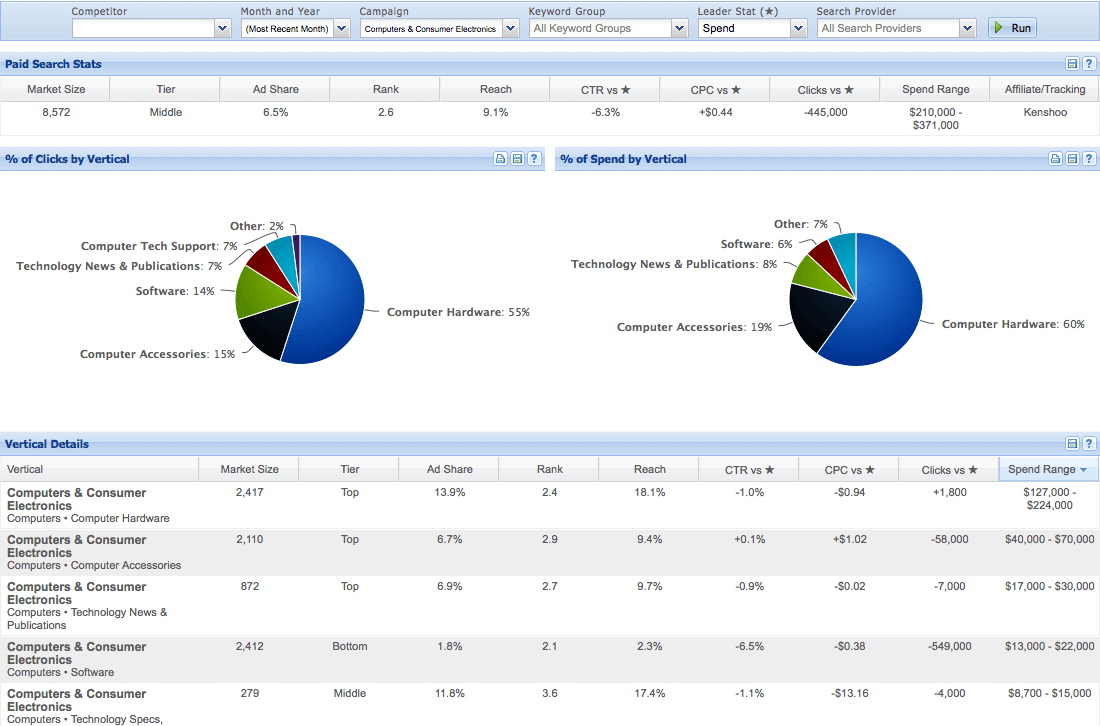
Enterprise marketing teams, affiliate program managers, and brand‑protection specialists who need to monitor competitor ads, prevent trademark abuse, and understand the global paid‑search landscape.
The Search Monitor’s focus is on real‑time brand and ad monitoring; it doesn’t yet provide generative‑AI visibility metrics or analysis.
Plans start at about $500 per month for Affiliate Compliance, $800 per month for SEM Insights and Brand Protection, and $1 200 per month for Ad Armor. Keyword‑crawling fees apply, and enterprise customers often negotiate custom packages.
The Search Monitor is the best tool for Brand Protection and Ad Compliance. Having implemented The Search Monitor for clients with large paid‑search budgets, I find its granular ad monitoring and trademark enforcement invaluable.
When unauthorized affiliates hijack your brand or competitors outbid your branded keywords, catching them in real time and automatically filing complaints more than pays for the subscription.
Pro Tip: Use the SEM Insights “Market View” to identify industries where competitors are increasing ad spend and copy their messaging patterns. Combine this with Brand Protection alerts to ensure your own name isn’t being bid on.
A multipurpose SEO platform combining keyword research, site audits, and competitor analysis. Optional AI‑powered add‑ons, such as the AI Visibility Toolkit, track brand mentions in generative‑search results, although its core data comes from clickstream estimates.
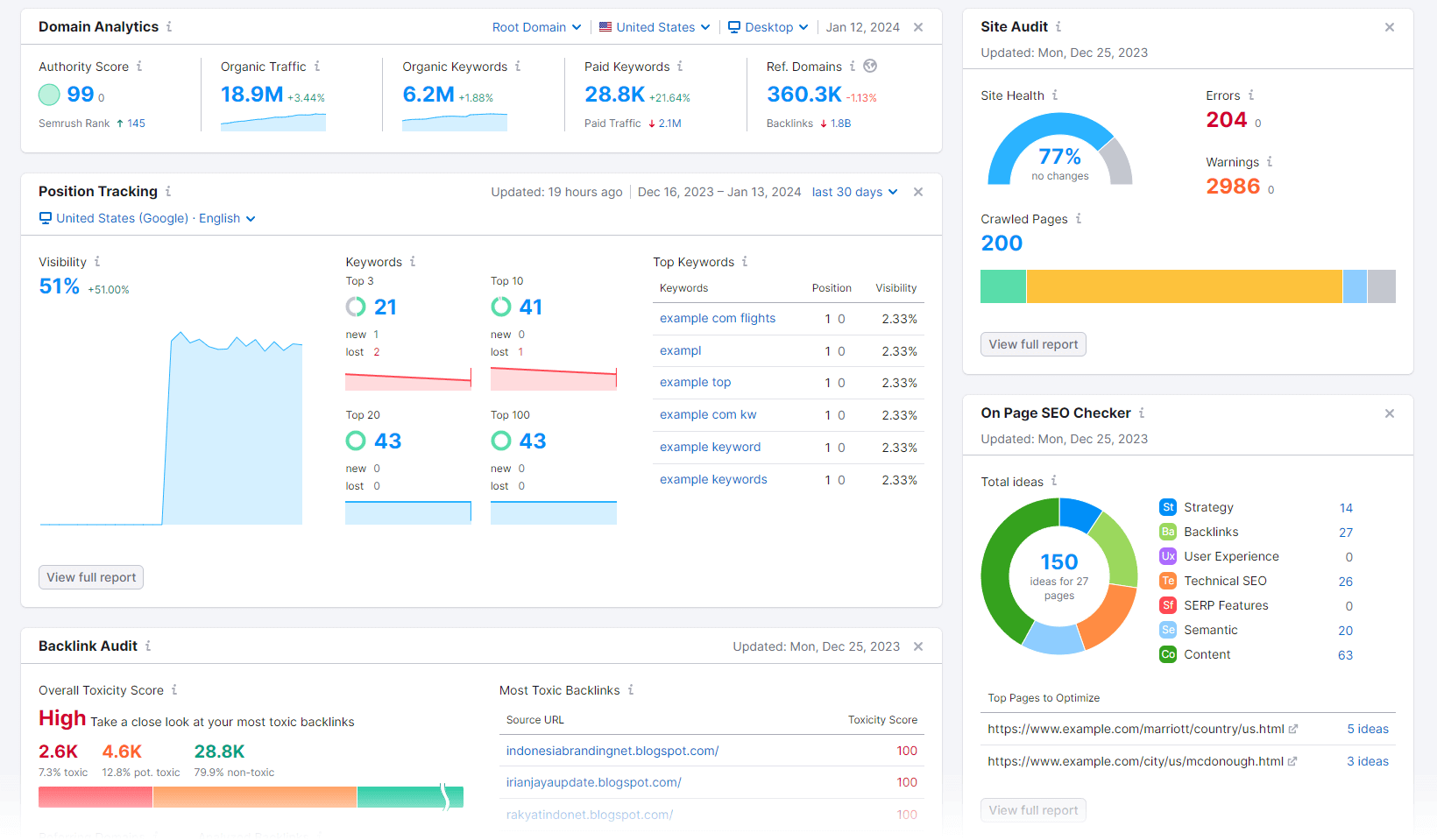
SEO specialists who need a versatile “utility belt” for day‑to‑day tasks like site audits, keyword tracking, and backlink management.
Semrush has introduced an AI Visibility Toolkit that benchmarks brand mentions in AI‑generated answers.
Pro ($139.95/month), Guru ($249.95/month), and Business ($499.95/month). The AI Visibility Toolkit is an extra $99/month per domain.
Semrush is the best utility for tactical SEO. I use it to find keyword variations. However, because its core traffic data relies on clickstream estimates, I don’t use it as a source of truth for volume, traffic, or market share (that’s what I use Similarweb for).
It’s a tactical option, not a strategic one, as it doesn’t help understanding market dynamics.
Pro Tip: The “Link Intersect” tool is useful for PR. Enter your competitors’ domains to find news sites that link to all of them but not you. This is your “low-hanging fruit” outreach list.
The days of relying on a single SEO tool are over. To thrive in 2026, marketing leaders must assemble an Intelligence Stack that combines strategic truth, audience discovery, and tactical execution.
Start at the top of this list and build downward:
Ready to uncover the data your competitors are hiding? Start your Similarweb free trial today and start optimizing for the future of search.
What is the best free competitor analysis tool?
When you want a broad view of how any site performs, Similarweb’s free tools and browser extension stand out. It shows you any website’s traffic and engagement over time, the channels driving visitors, keywords, and even the top countries sending traffic. This depth of insight makes Similarweb the best overall free competitor analysis tool.
Why is data provenance important for AI search?
Because AI models hallucinate less when fed high-quality data. If you use a tool that relies on low-quality “clickstream” scraping, you are optimizing based on bad inputs. Tools with proprietary user panels (like Similarweb) provide “verified” data, ensuring you are building your strategy on real human behavior, not bot activity.
Which tool is best for mobile app competitor analysis?
If your competitors have mobile apps, you need App Intelligence. Similarweb is the leader here, offering side-by-side comparisons of App Store and Google Play performance, including downloads, daily active users (DAU), and retention rates.
Can I just use ChatGPT to analyze my competitors?
No, ChatGPT cannot replace market intelligence tools. You can use ChatGPT for qualitative analysis (e.g., “Summarize this competitor’s pricing page”), but it cannot provide quantitative data (e.g., “How much traffic did they get last month?”). ChatGPT does not have access to real-time traffic logs or app store analytics. You need a dedicated tool for the numbers, and ChatGPT for the synthesis.
How do I know if my competitors are winning in AI Search?
You need a tool that measures Share of Voice (SoV) specifically in generative engines. Similarweb is currently unique in offering a dedicated AI Search Intelligence suite, which quantifies exactly how often your brand is cited in AI responses compared to your competitors.
What is the difference between SEO and AEO tools?
SEO tools help you rank in traditional search engines by analyzing keywords and backlinks. AEO (Answer Engine Optimization) tools (like Similarweb) help you appear in AI answers by analyzing brand mentions, citation authority, and sentiment. In 2026, you need both, but the shift is heavily in favor of AEO.
How do I spot a competitor’s “Zero-Click” keywords?
A “Zero-Click” keyword is one where the user gets the answer directly from Google or AI and never visits a website. Standard tools often hide this, making high-volume keywords look valuable when they actually drive zero traffic. Similarweb’s Zero-Click Analysis reveals which terms result in clicks vs. no clicks, saving you from optimizing for keywords that won’t bring you visitors
Director of SEO & AI Search at Similarweb
Limor brings 20 years of expertise in SEO and AI Search. She thrives on solving complex problems, creating scalable strategies, and building amazing dashboards.
Give it a try or talk to our insights team — don’t worry, it’s free!