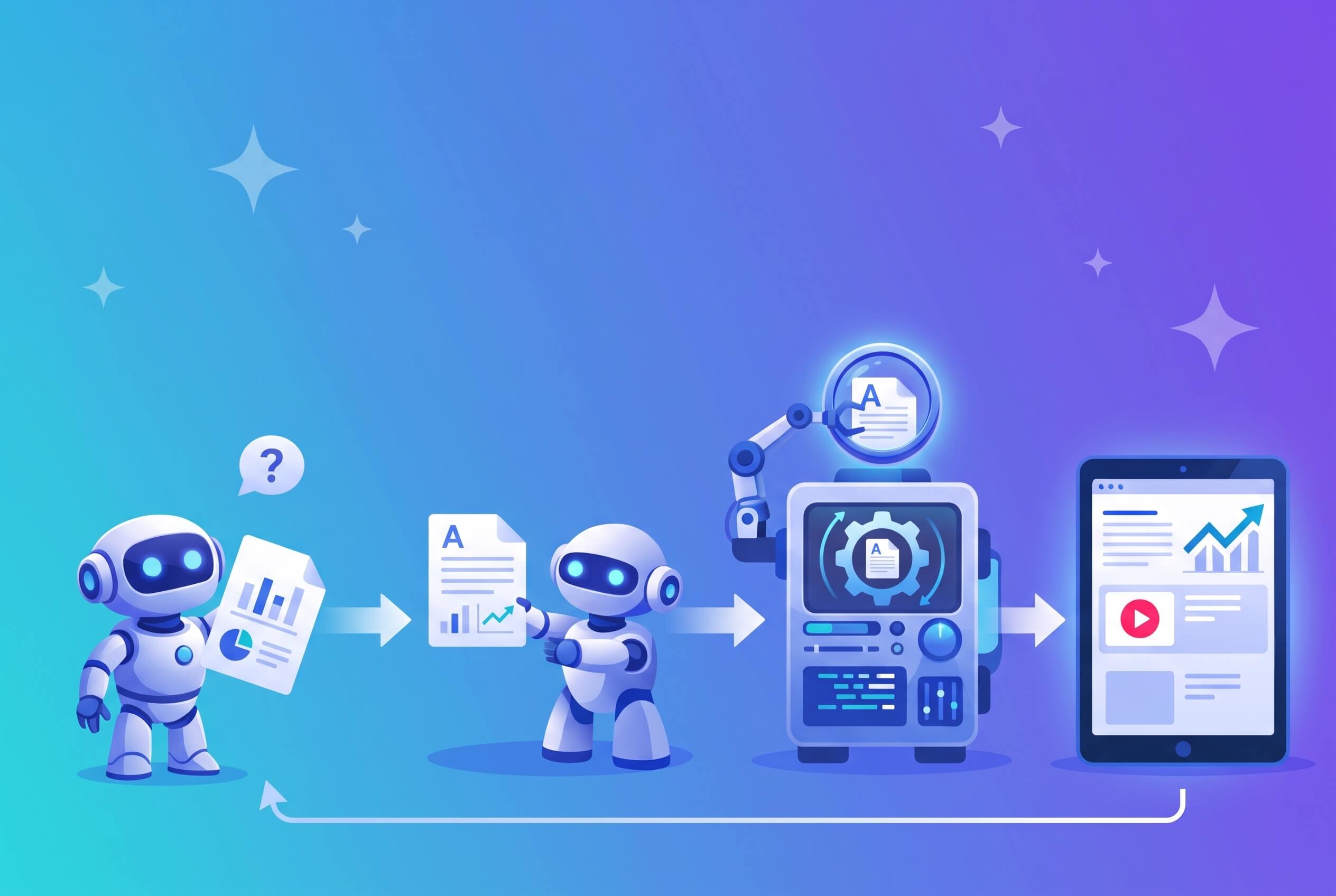
What is RAG (Retrieval-Augmented Generation)? A Marketer's Guide
by Shai Belinsky9 Min.
Oct 01, 2026
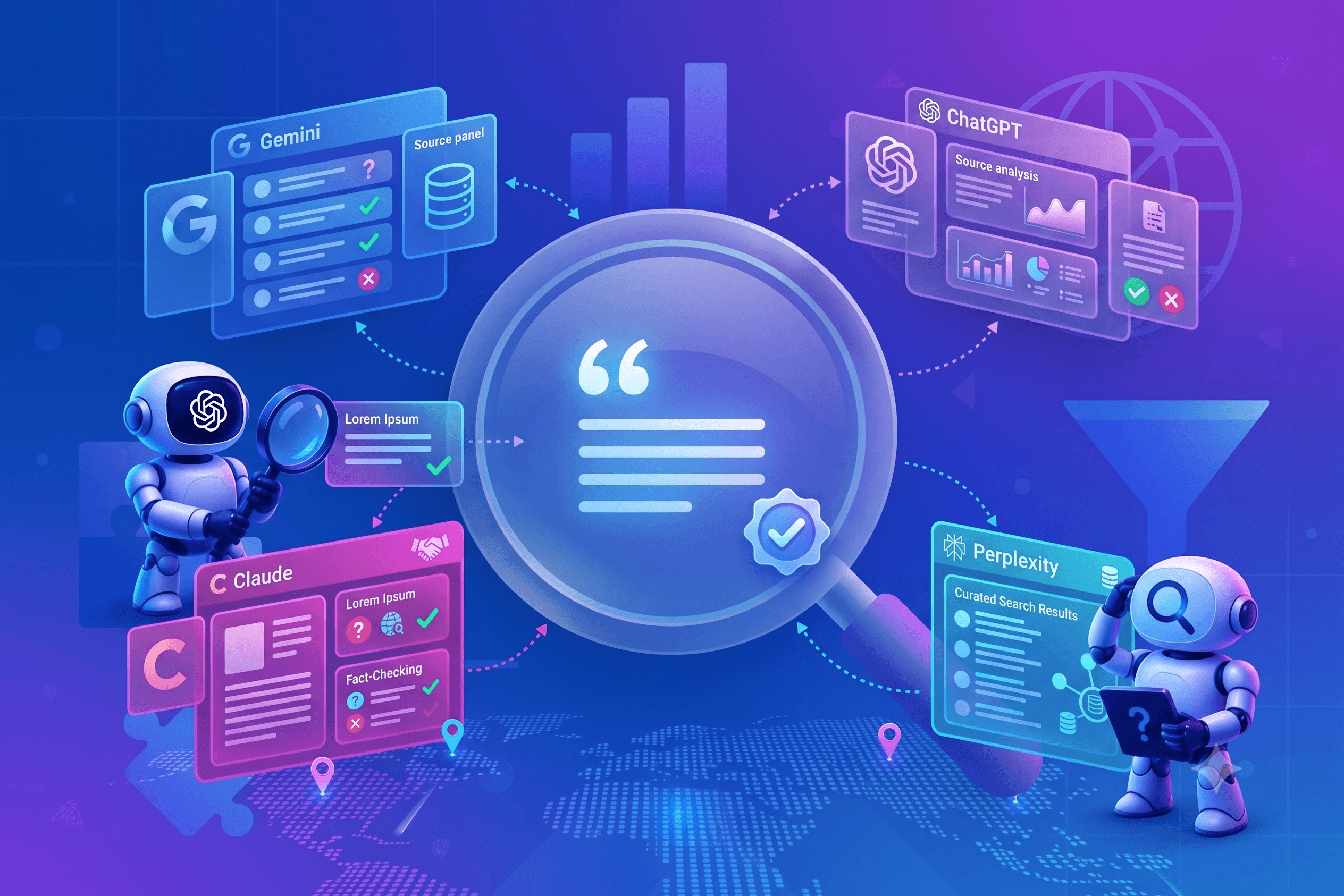
Ask ChatGPT a question and it might cite three sources. Ask it something similar an hour later and the sources can be completely different. That’s not a bug. It’s the process working as designed, and understanding that process is the difference between guessing at AI visibility and actually influencing it.
Most explanations of this stop at “AI uses RAG” and leave it there. RAG (retrieval-augmented generation) is the umbrella term, but it doesn’t tell you what actually happens between a user typing a question and a handful of sources getting named in the answer. That gap is where most content strategies go wrong: teams optimize for Google rankings and assume AI citations will follow, then can’t explain why a page ranking #1 never gets cited by ChatGPT, while a page they’ve never heard of does.
The mechanism is simpler than it looks once you break it into its actual steps: the AI gathers candidates, reads them, checks them, then answers and credits whoever survived. Google itself has described the retrieval side of this as a “query fan-out” technique that breaks one question into many searches running at once. What happens after that determines who gets named and who doesn’t.
This article covers the four-step process, how it plays out differently across ChatGPT, Perplexity, Google AI Mode, and Claude, why ranking #1 on Google doesn’t guarantee a citation, and how to check where your own content is winning or losing along the way.
An AI citation is when an AI engine names a specific page as the source behind part of its answer. That’s different from an AI mention, where your brand shows up in the text with no source attached and no credit given to a specific URL. An AI mention tells you the model has heard of you. A citation tells you the model trusted a specific page enough to point to it as the source.
It counts as a citation whether or not there’s a clickable link, some engines footnote a URL, others just name it in text, but it has to be the exact page, not just the brand or domain in general.
The selection process comes down to four steps, run in order, every time.
The AI breaks your question into smaller pieces and searches the web for pages that might answer each piece. A question like “best CRM for a 10-person sales team” doesn’t trigger one search, it triggers several: CRM comparisons, pricing for small teams, setup time, integration options. That query fan-out can expand a single question into several parallel searches. According to SSRN research on AI platform search behavior that tracked this behavior across ChatGPT, Gemini, and Perplexity classified over 1,300 fan-out queries generated from just 540 original questions, confirming the pattern shows up on every major platform, not just one.
The AI doesn’t read whole pages, it pulls out specific paragraphs. This is why a 3,000-word page can lose to a 400-word page: if your best paragraph on a topic is buried under five sections of throat-clearing, the model may never reach it. Pages with a clear, self-contained answer near the top of each section are easier to lift cleanly. Pages that require reading three paragraphs of context before the point lands are easy to skip.
Before a fact makes it into the final answer, the model favors claims it can see supported in more than one place. Recent research on citation reliability in retrieval systems, including an October 2025 study on verified citation generation, has formalized this as a distinct verification stage: retrieved claims are checked for support before they’re allowed into a final answer, not just scored for relevance. In practice, that means a statistic showing up on only one obscure page gets treated with more caution than the same statistic corroborated across several sources the model already trusts. It’s also why a well-known, frequently cited domain can lose out on a specific claim to a smaller site, if the smaller site’s version of that claim is the one other sources agree with.
Only the paragraphs that made it through steps 2 and 3 get woven into the final response, with the surviving sources named as citations. Everything else that was gathered in step 1, and everything that was read in step 2 but didn’t hold up in step 3, quietly disappears, no link, no mention, no credit, no matter how well the original page ranks on Google.
Getting retrieved is the easy part. Most of the filtering happens after that, in steps most content strategies never think about.
There’s no single “AI citation algorithm.” Each major engine runs its own version of gather-read-check-answer, with different defaults.
| Engine | Retrieval source | Citation behavior |
|---|---|---|
| ChatGPT | Draws on both Bing’s and Google’s indexes, activated mainly for commercial or time-sensitive queries. | Citation rate has been rising but stays selective; Wikipedia and Reddit dominate its most-cited sources |
| Perplexity | Live web crawl on every query | Citation-dense answers, strong preference for recently published content |
| Google AI Mode | Google’s own search index via query fan-out and Deep Search | Frequently cites Google’s own properties (YouTube, Google Business Profiles) alongside third-party pages |
| Claude | Training data by default, with grounded web search when enabled | Inline citations tied directly to retrieved passages when search is active |
Similarweb’s own tracking shows the direction of travel: the share of ChatGPT answers that included any citation at all grew from 0.6% in January 2025 to 2.8% by August 2025, according to Similarweb’s 2026 Gen AI stats report. Citing is becoming more common, but it’s still the exception, not the default, in most conversational answers.
The practical takeaway: don’t build a single “AI citation” strategy and expect it to work everywhere. A page optimized for Perplexity’s appetite for fresh, specific content may not be what gets picked up in Google AI Mode’s more self-referential citation pattern.
No. Ranking well helps in engines that pull from Google’s own index, but it’s not the same filter as AI citation selection. Similarweb’s own analysis of nearly 600,000 AI citation events found that engines weigh relevance, clarity, structure, and trust more heavily than traditional search rankings when deciding what to cite, according to Similarweb’s research on the most cited domains in LLMs. That same research also found very little overlap in which sources get cited from one AI platform to the next, which is hard to square with any strategy built primarily around Google rank.
That gap exists because ranking and citation are solving different problems. Google’s organic ranking rewards a whole page for matching a query well over time. The read and check steps described above operate at the level of individual paragraphs, evaluated fresh for each specific question. A page can be a mediocre overall ranking candidate and still contain the one paragraph that answers a very specific fan-out query cleanly, which is enough to get it cited even with no organic footprint at all.
Since you can’t watch the gather-read-check-answer process happen in real time, the practical move is to track citation events after the fact and treat them as a proxy for each stage. Similarweb’s AI Search Intelligence suite includes an AI citation analysis tool that breaks this down into three views that map roughly onto the pipeline above:
Similarweb’s domain influence score measures how often your entire domain shows up as a source across AI answers for a given topic, as distinct from the URL-level score covered next. Scores here tend to run low in absolute terms, a domain in the low single digits can still be a real leader in its topic, so a single percentage point can represent dozens of AI responses. A low score alongside decent traffic usually means your content is getting read, but not surviving the check step often enough to be cited.
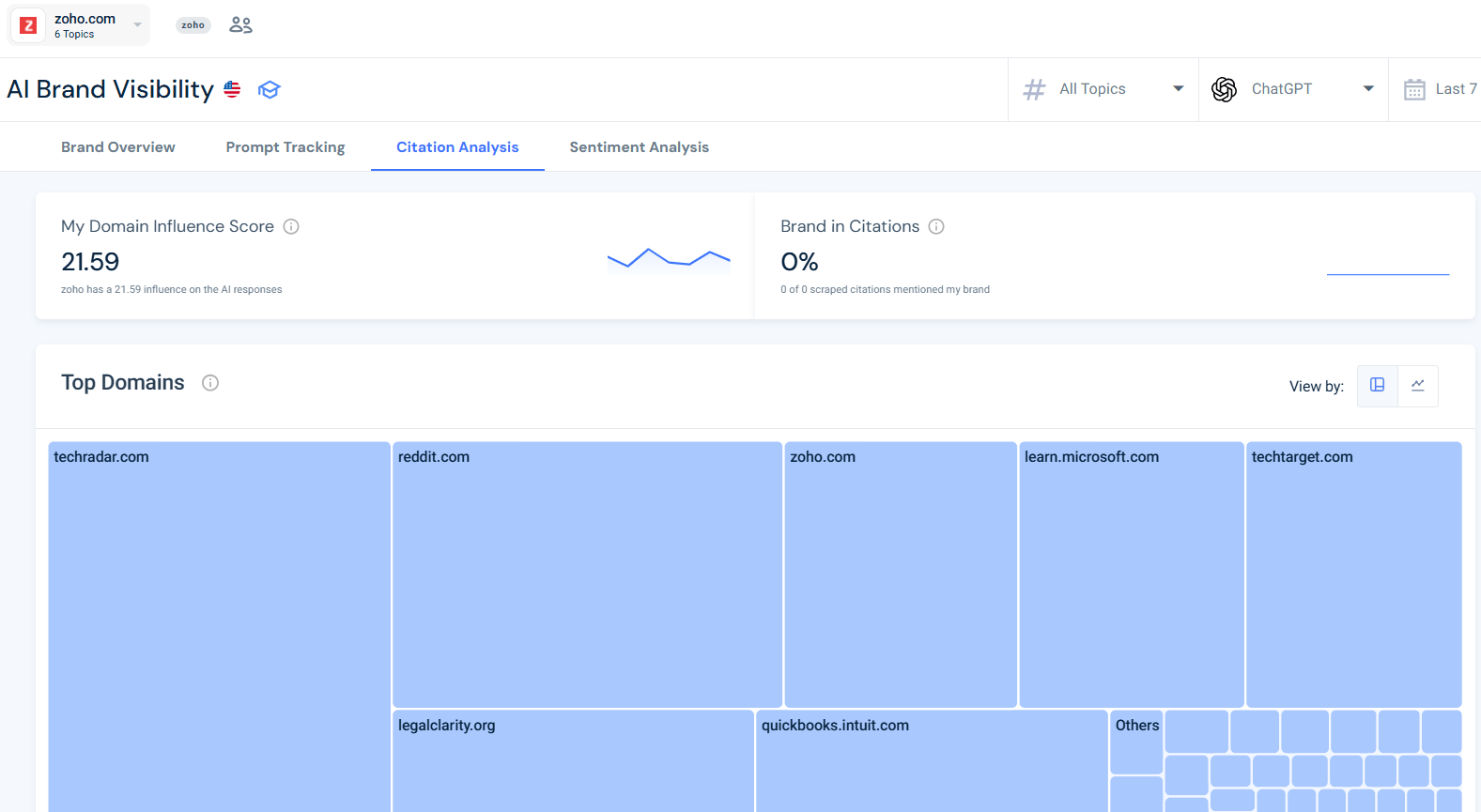
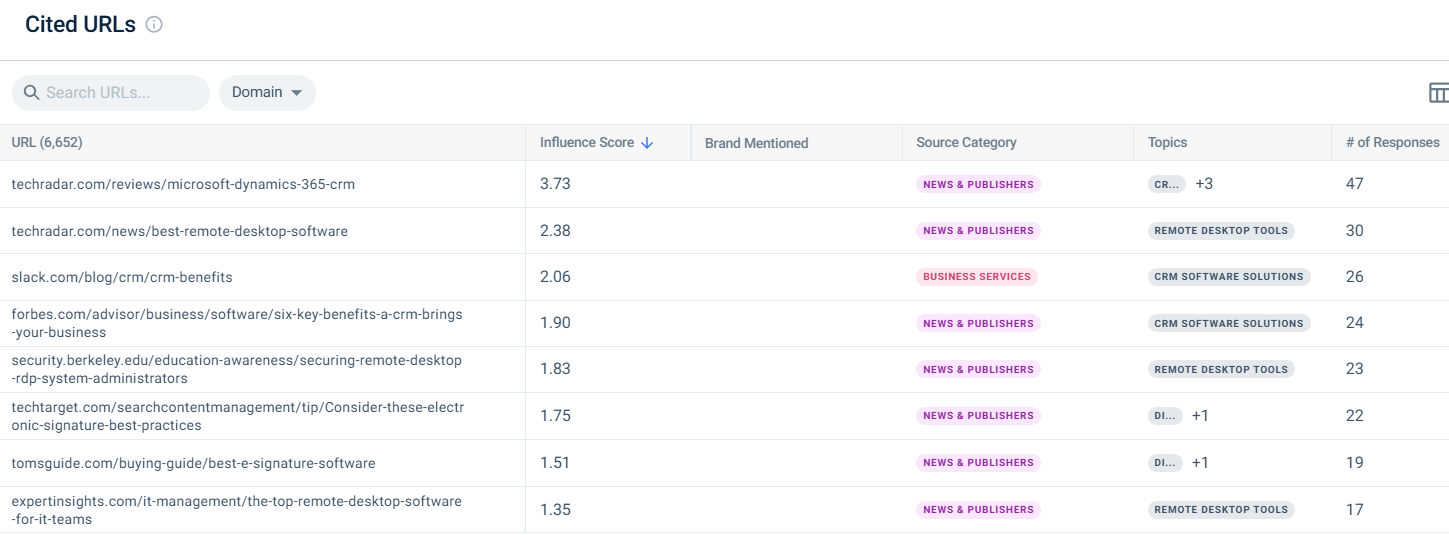
This is the extraction stage made visible: which specific pages, not just which domain, are actually getting pulled into answers, and how often. In practice this list is usually dominated by third-party publishers, not the brand’s own pages: a review site’s product comparison, a business blog’s explainer, a forum thread, each with its own influence score and a count of how many prompts it showed up in. A vendor’s own product page can sit well down that list, or off it entirely, even when the vendor ranks fine on Google for the same topic, because a neutral comparison page is easier to extract a clean, citable paragraph from than a page written to sell something.
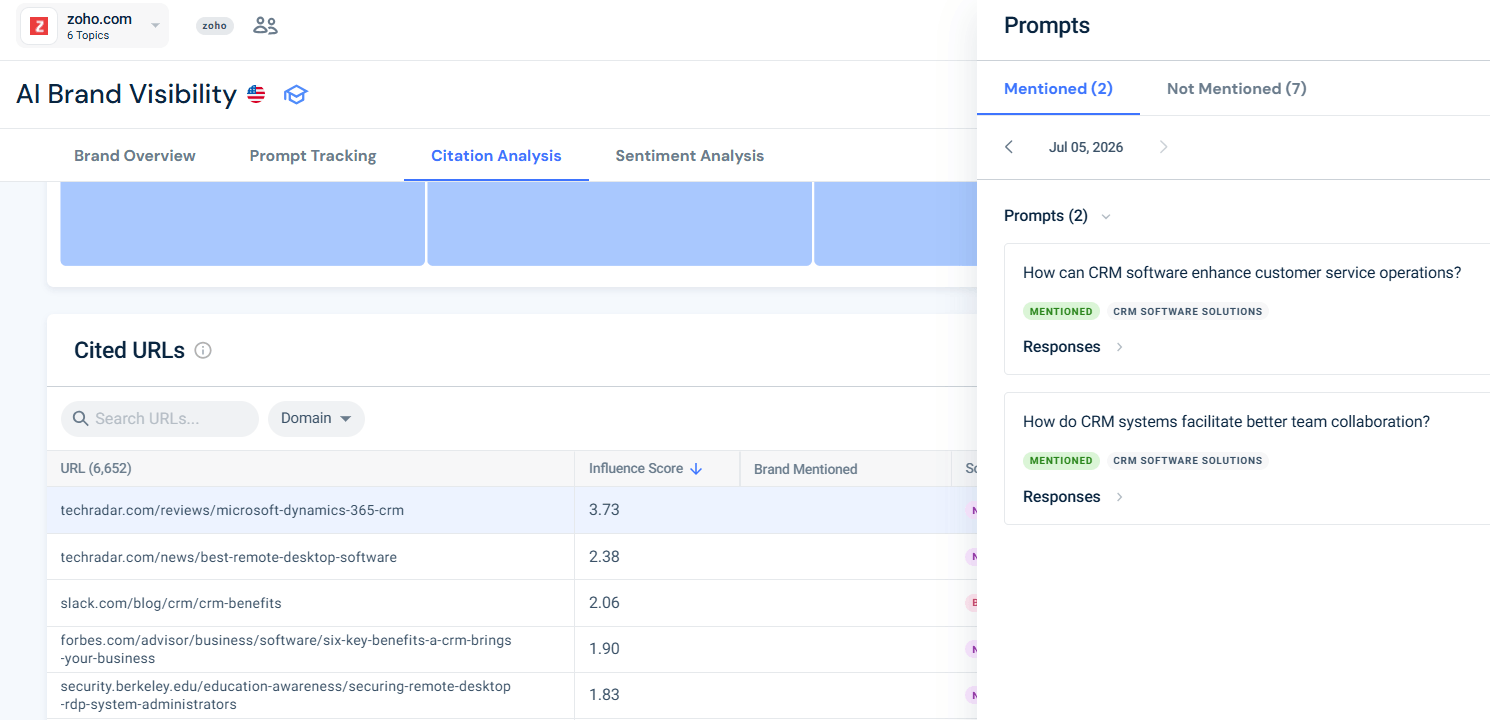
This shows which specific questions your content is winning on and which it’s invisible for, which tells you whether the gap is in step 1 (you’re not even in the retrieval pool for that question) or later (you’re retrieved but not surviving). A common pattern: a brand gets picked up on narrow, feature-specific prompts (“how does X software handle Y”) but goes quiet on broader, evaluative prompts (“best software for Z”), because the broader prompts fan out into more sub-queries where third-party comparison content has an easier time getting extracted cleanly than a single product page trying to answer everything at once.
If a domain shows strong traffic but a low influence score and a short cited-URLs list, the fix usually isn’t more content, it’s tightening the paragraphs that already exist so they read as a single clean claim instead of three sentences of setup and one buried fact.
AI doesn’t rank your site, it filters it, four times, on every single question someone asks. Gather sweeps a wide pool of candidate pages in through fan-out searches. Read pulls out individual paragraphs, not whole pages. Check favors claims it can see corroborated elsewhere. Answer only credits whoever survived all three prior steps, everything else gets quietly dropped, no matter how well it ranks.
That process runs differently on every engine. ChatGPT draws on both Bing’s index and Google’s, and stays selective about when it cites at all. Perplexity searches live on every query and favors freshness. Google AI Mode draws from its own index and often cites its own properties. Claude ties citations directly to whatever it retrieves when search is switched on. None of them share a single scoreboard, which is also why ranking #1 on Google is not a substitute for any of this: Similarweb’s own citation research found engines weigh relevance, clarity, structure, and trust more heavily than traditional rankings, with very little overlap in which sources get cited from one platform to the next.
None of this is visible while it’s happening, which is why tracking and analyzing citation events after the fact is the closest thing to watching the filter work in reverse.
No. A backlink is a static link placed once, by a person, that stays on a page indefinitely. An AI citation is generated fresh for each response and can disappear the next time someone asks a similar question if a different source wins the check step that time. Citations behave more like a constantly re-run competition than a permanent asset.
Because ranking and citation are evaluated differently. Google ranking looks at your whole page against a query over time. AI citation evaluates individual paragraphs against a specific sub-question in the moment, and rewards whichever paragraph is clearest and best corroborated, regardless of how the rest of the page ranks.
Yes. Tools built specifically for AI citation tracking, such as Similarweb’s AI citation analysis tool, show which of your URLs are being cited, how often, and for which specific prompts.
Not directly. What matters more is whether each section can be read and understood on its own. A long page with clearly separated, self-contained sections can perform as well as or better than a short page, because each section gives the model a clean paragraph to extract rather than requiring the whole page as context.
Only a small fraction. Gather casts a wide net through fan-out searches, and read, check, and answer each filter that pool further, so most of what gets swept in during the first pass never makes it into the final response. The exact share varies by engine, topic, and how contested a claim is, but the pattern holds everywhere: getting retrieved is the first of four cuts, not the deciding one.
Senior SEO Specialist at Similarweb
Maayan is a senior SEO specialist with 7+ years of experience in SEO. She loves complex research projects, creating SEO strategies and performing technical audits.
Give it a try or talk to our insights team — don’t worry, it’s free!