


How Publishers Can Improve AI Visibility: 12 Tips Ranked by Confidence and Effort
by Shai Belinsky27 Min.
Nov 03, 2026

When someone asks an AI tool to help them choose a specific product, the tool reads reviews and cites the sources it trusts. That is what OpenAI says about ChatGPT’s shopping research, and it is what a University of Toronto study found when it looked at where AI engines get their sources for “best product” questions. Software buyers tell a similar story: they use AI to build a shortlist, and they still rely on reviews.
This article covers how AI tools use reviews, which sources AI engines cite when people compare products, what software buyers say, what a review profile is linked to, and what a brand can do about it.
Yes. OpenAI says ChatGPT’s shopping research looks across the internet for prices, specs, and reviews, and is trained to read trusted sites and cite reliable sources. Trade press reports that it favors organic content, including review sites and Reddit.
OpenAI launched shopping research in November 2025 for questions like “help me choose between these three bikes.” In its announcement, OpenAI says hundreds of millions of people use ChatGPT to find, understand, and compare products, and that the tool is built for comparisons, constraints, and trade-offs. Modern Retail reported that OpenAI trained the tool to favor trustworthy sites with organic content, including review sites and Reddit, and to avoid pages that are clearly advertising or show suspicious review patterns.
There are three limits. OpenAI does not publish a list of the sites it cites, so this shows that reviews and review sites are part of the process, not which review sites win. The tool is built for consumer products such as electronics, beauty, and home goods, not business software. And it only reads sites that allow OpenAI’s browsing agents, so a review site that blocks them would not appear.
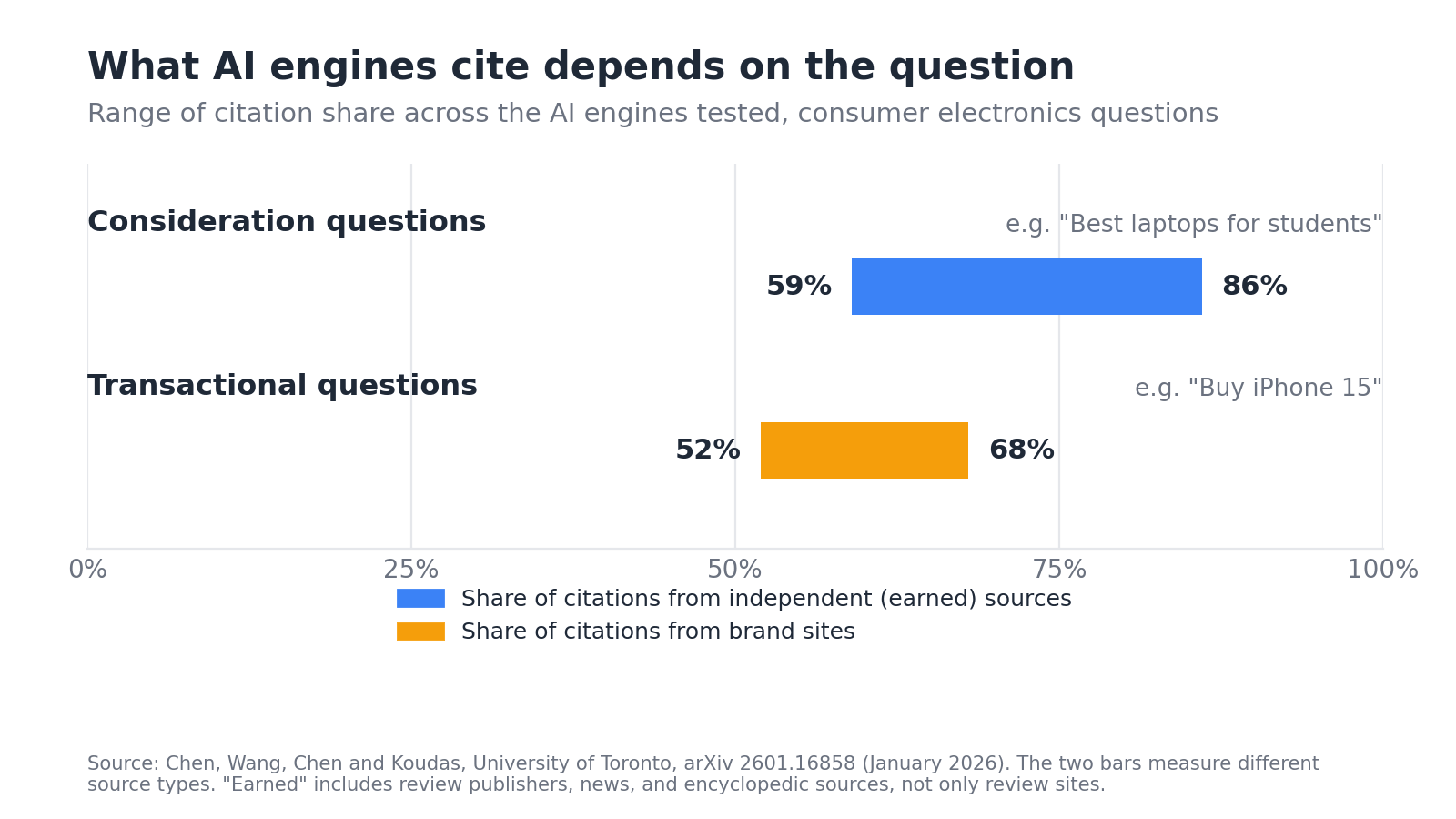
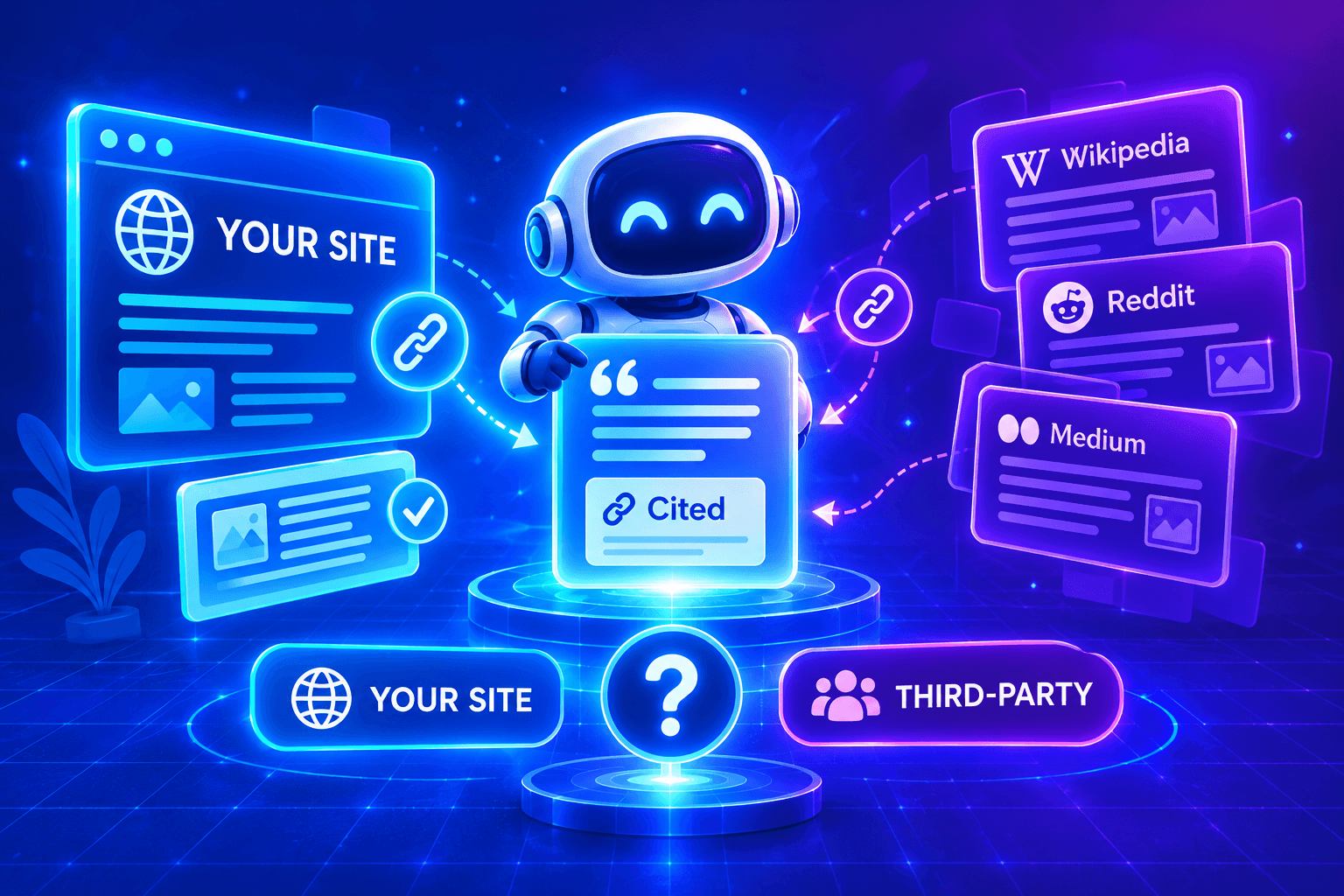
A University of Toronto study found that what AI engines cite depends on the question. For “best X” questions, AI engines drew 59% to 86% of their citations from independent sources such as review publishers. For buy-now questions, citations shifted to brand sites.
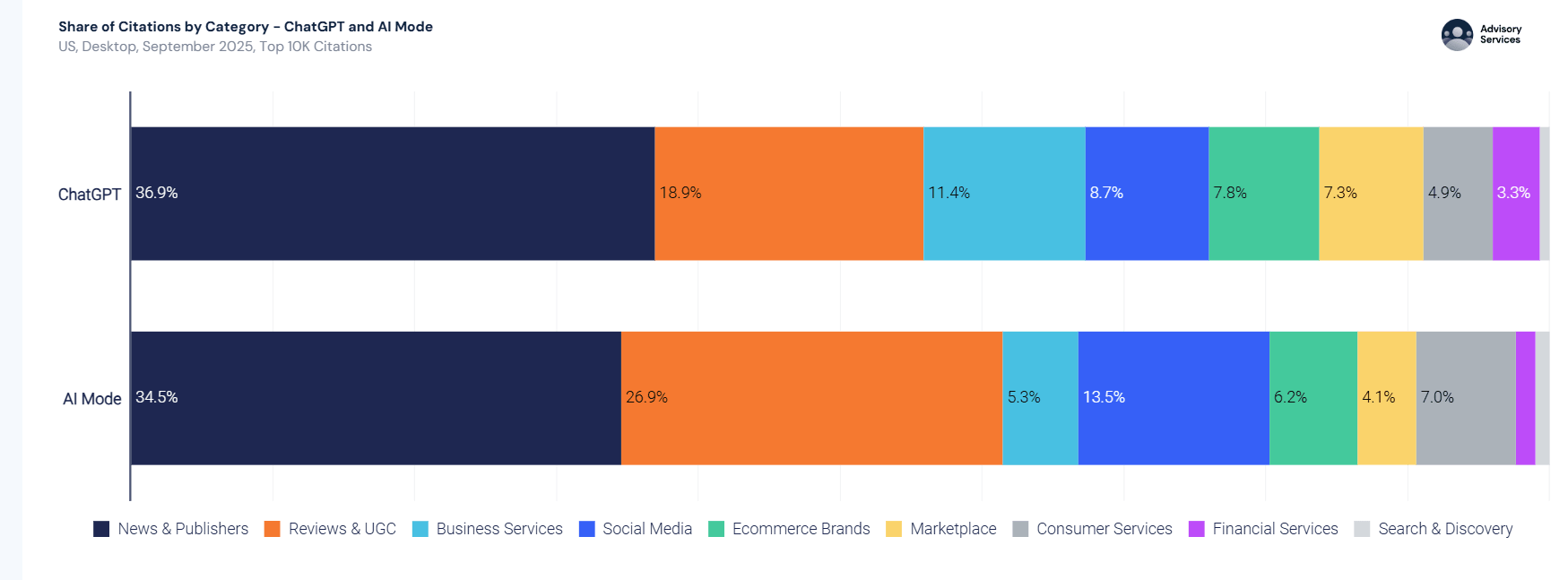
Similarweb’s own citation data gives a broader view. In our analysis of the most cited domains by LLMs, review platforms such as G2, Trustpilot, and Yelp do not appear among the top 20 domains in ChatGPT or Google AI Mode, yet reviews rank as the second-largest citation category after news and publishers. That analysis covers citations across monitored prompts and was not filtered for product-buying questions.
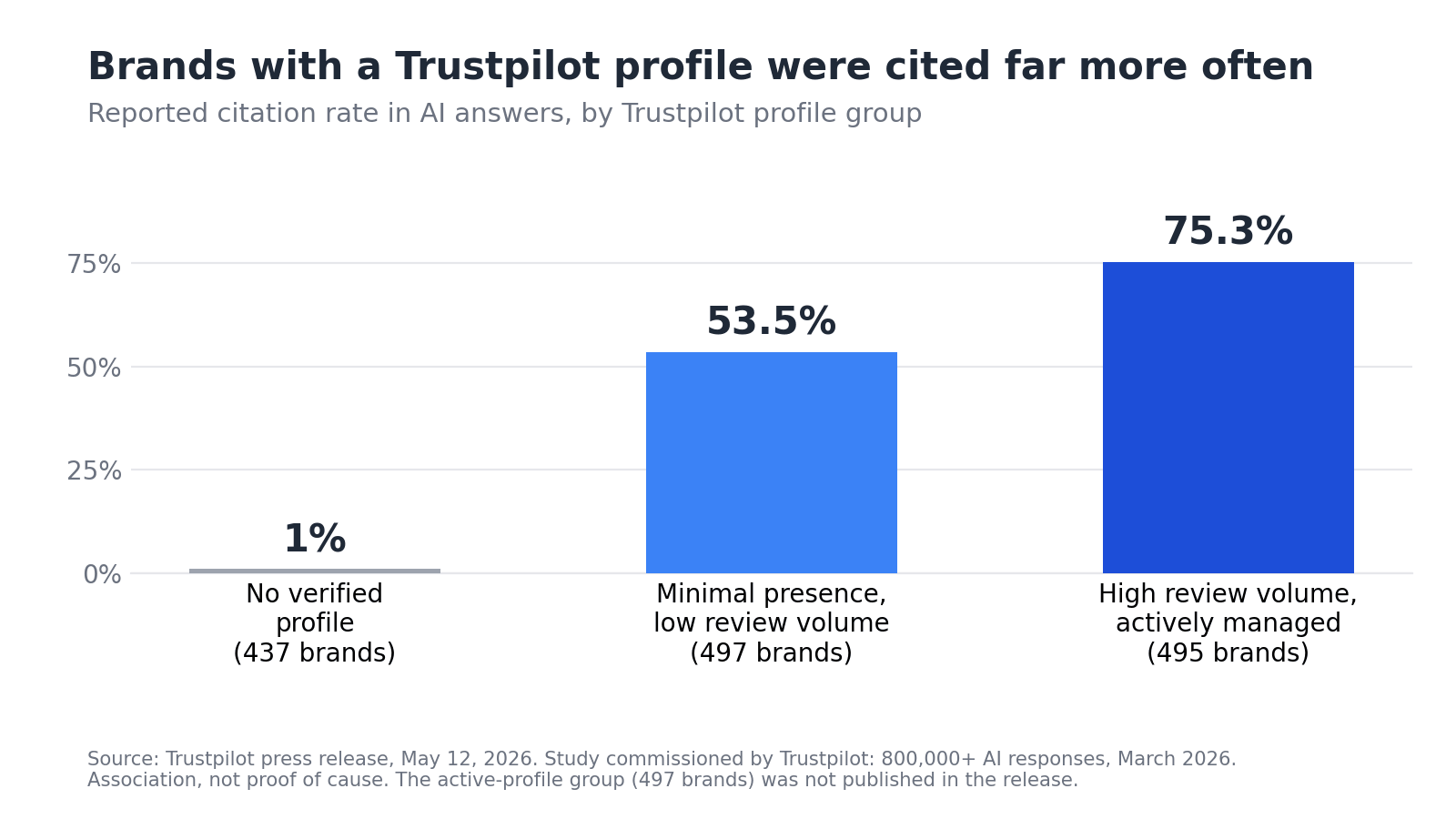
Brands with an active Trustpilot profile were cited far more often in a Trustpilot-commissioned study, but the figure measures association, not cause. Trustpilot reports that brands with no profile were cited in 1% of AI answers, versus 75.3% for brands that collect more than 80 reviews and respond regularly.
The study covered more than 800,000 AI responses across ChatGPT, Gemini, Perplexity, and Google AI Mode, collected in March 2026, using more than 15,000 prompts that replicate the buying journey. Brands were sorted into four groups. According to Trustpilot’s press release, brands that had established a presence showed a citation rate of 53.5% versus 1% for brands with no profile. The release also says review and trust sites are the second most cited source type across AI responses, at 14% of all citations and behind only general brand websites.
A Trustpilot profile shows these details in practice. Our own Similarweb page on Trustpilot shows a TrustScore of 4.4, which Trustpilot labels “Excellent,” from 793 reviews at the time of writing. 72% of those reviews are five stars, 288 were added in the last 12 months, and an AI-generated summary of recurring themes highlights ease of use. This shows what a managed profile looks like.
Claim and complete your profile on the review platform your buyers use, get past the minimal-review threshold, and keep reviews recent. The evidence shows AI tools use reviews and cite review-style sources. It cannot show how often software review sites are cited, or that reviews cause AI recommendations.
Use this review profile audit. Each step is labeled by how well the evidence supports it.
G2’s surveys cover software buyers and Trustpilot’s study covers a range of products and services.
Trustpilot reports a jump from 1% to 53.5% for brands that establish a minimal presence.
Trustpilot’s highest reported rate, 75.3%, was for profiles with more than 80 reviews and regular replies.
Run “is X worth it,” “X vs Y,” and “best X for Y” prompts and see which review sites appear.
Run a citation gap analysis. Start by choosing the topics, prompts, and competitors that matter to your business and what success looks like, then map which sites and pages AI cites for those topics and compare your results with your competitors’ by topic, site, and page, noting which types of sites (news, reviews) dominate. Use the gaps you find to plan content updates, partnerships, or PR.
Review sites are not a citation hack. The evidence shows that AI tools read reviews when people ask which product to buy, that independent review-style sources dominate “best X” answers, and that software buyers use AI to build a shortlist and reviews to check it. AI builds the shortlist, and reviews are the receipts it checks before vouching for a brand.
The practical shift is to stop asking “how do we get cited?” and start asking “what will AI find when it checks us?”.
Yes. OpenAI says ChatGPT’s shopping research looks across the internet for prices, specs, and reviews, and is trained to read trusted sites and cite reliable sources. Modern Retail reported that it favors organic content, including review sites and Reddit. OpenAI does not publish which sites it cites.
Mostly independent sources, according to a University of Toronto study of consumer electronics questions. For “best X” questions, AI engines drew 59% to 86% of citations from independent (earned) sources, including review publishers like TechRadar and CNET. For buy-now questions, citations shifted to brand sites (52% to 68%).
Yes, according to G2’s surveys. In July 2026, review sites (38%) narrowly led AI chatbots (37%) as the top source shaping shortlists among 1,038 software buyers. In April, 85% of buyers said they thought more highly of a vendor that AI included. G2 sells AI visibility analytics, and the surveys are self-reported.
Yes, according to Trustpilot. Its release says AI tools check a brand’s TrustScore, summarize recurring feedback themes, paraphrase reviews, and describe a missing Trustpilot profile as a warning sign for consumers. This is company-reported research, and the release does not publish how often each behavior occurred.
Not in OpenAI’s shopping research. Modern Retail reports that the tool only surfaces information from websites that allow OpenAI’s browsing agents, so a review site that blocks them would not appear. This is reported for one tool, and OpenAI does not publish which review sites it reads.
Senior SEO Specialist at Similarweb
Maayan is a senior SEO specialist with 7+ years of experience in SEO. She loves complex research projects, creating SEO strategies and performing technical audits.
How Publishers Can Improve AI Visibility: 12 Tips Ranked by Confidence and Effort

How to Build an AI Search Optimization Roadmap
Own Site vs. Third-Party AI Citations: Who Really Gets Cited?
Give it a try or talk to our insights team — don’t worry, it’s free!